
5 Dangerous Animals From Hindu Mythology That Still Exist Today


The real animals behind these mythic forms still live today: bulls, serpents, crocodiles, lions, tigers, and great birds of prey. Their stories still breathe through temples, scriptures, and memory. Vahanas in Hindu tradition are not simply “vehicles”; they often carry the deity’s power and reveal human traits that must be mastered.
Nandi
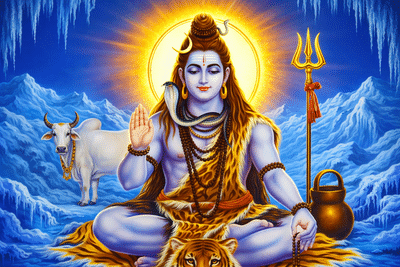
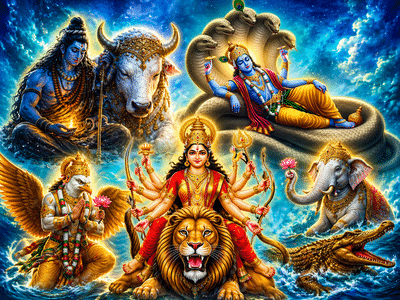 Nandi, Shiva’s sacred bull, sits outside Shiva temples, facing the sanctum with complete attention. There is something almost painful about that stillness. Most of us are not destroyed by lack of strength. We are destroyed by scattered strength. We run toward every noise, every fear, every opinion.
Nandi reminds us that devotion is not always movement. Sometimes it is the courage to sit in front of what matters and not look away. The bull is powerful enough to charge, but sacred enough to wait. Maybe that is what maturity is: not losing your fire, but learning where to place it.
Huhu
In the Gajendra Moksha story from the Bhagavata Purana, the elephant Gajendra is caught by a crocodile, often identified as Huhu, until Vishnu rescues him. A crocodile does not always attack in open ground. It waits in water. That is why this story feels so human. We are rarely caught when life is loud. We are caught when we are comfortable, when we think we are only reaching for one more lotus.
Attachment is like that. One habit. One person. One hope. One memory we keep returning to. At first, it feels like water. Then it becomes a jaw. Gajendra’s prayer begins when his strength ends. Many people feel ashamed of that moment. But sometimes surrender is not weakness. It is the first honest thing we do after trying everything else.
Shesha
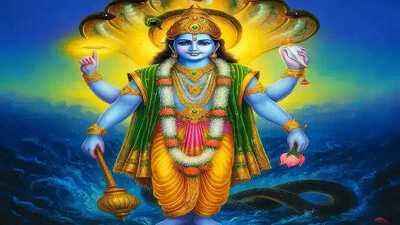
Shesha, also called Ananta, is the great serpent associated with Vishnu. A serpent frightens us because it moves silently. So do many things inside us: jealousy, regret, desire, old wounds. They do not announce themselves. They coil quietly around our thoughts.
But Shesha is not only danger. He is also support. Vishnu rests on him. The same inner force that can poison us can also become our foundation when disciplined. Your intensity is not your enemy. Your unexamined intensity is. Some people spend life trying to kill the serpent within. Hindu wisdom asks something subtler: can you make it steady enough for God to rest upon?
Durga’s Lion
Durga is often shown riding a lion, sometimes called Dawon or Somnandi in tradition. This animal carries the fierce energy of the Goddess in her battle against adharma. There is a part of you that is tired of being polite with your own pain. A part that wants to roar, not to hurt others, but to stop abandoning yourself.
Durga’s animal is dangerous because it is awake. It does not apologize for power. Yet it is not wild for the sake of wildness. It moves under the Mother’s command. That is the difference between anger and sacred courage. Anger burns whatever is near. Courage protects what is precious.
Garuda
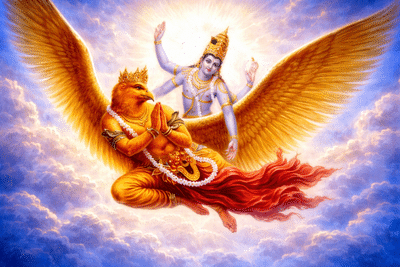
Garuda, the mighty bird of Vishnu, is described as the vahana of Lord Vishnu. An eagle sees from above what we cannot see from the ground. That is why freedom can feel frightening. From below, our problems look like walls. From above, they become patterns.
Garuda asks a difficult question: what if the cage is not only around you, but also familiar to you? What if the thing you call safety is only a smaller sky? To rise is not to escape life. It is to see life without being swallowed by every wave of it.
The Animal Is Still Here
These animals still exist, but perhaps that is not the most important part. The bull, serpent, crocodile, lion, tiger, and eagle also live as movements inside us. The bull waits. The serpent coils. The crocodile grips. The lion roars. The eagle rises. Hindu dharma does not ask us to become less human. It shows us how much of the universe is already moving through us. Maybe the real question is not which dangerous animal still exists today. Maybe the question is: which one has been living inside you, asking to be understood?
Nandi
Focused stillness channels strength better than restless scattered effort.
Nandi reminds us that devotion is not always movement. Sometimes it is the courage to sit in front of what matters and not look away. The bull is powerful enough to charge, but sacred enough to wait. Maybe that is what maturity is: not losing your fire, but learning where to place it.
Huhu
In the Gajendra Moksha story from the Bhagavata Purana, the elephant Gajendra is caught by a crocodile, often identified as Huhu, until Vishnu rescues him. A crocodile does not always attack in open ground. It waits in water. That is why this story feels so human. We are rarely caught when life is loud. We are caught when we are comfortable, when we think we are only reaching for one more lotus.
Attachment is like that. One habit. One person. One hope. One memory we keep returning to. At first, it feels like water. Then it becomes a jaw. Gajendra’s prayer begins when his strength ends. Many people feel ashamed of that moment. But sometimes surrender is not weakness. It is the first honest thing we do after trying everything else.
Shesha
Inner intensity can destroy or support, depending on discipline.
But Shesha is not only danger. He is also support. Vishnu rests on him. The same inner force that can poison us can also become our foundation when disciplined. Your intensity is not your enemy. Your unexamined intensity is. Some people spend life trying to kill the serpent within. Hindu wisdom asks something subtler: can you make it steady enough for God to rest upon?
Durga’s Lion
Durga is often shown riding a lion, sometimes called Dawon or Somnandi in tradition. This animal carries the fierce energy of the Goddess in her battle against adharma. There is a part of you that is tired of being polite with your own pain. A part that wants to roar, not to hurt others, but to stop abandoning yourself.
Durga’s animal is dangerous because it is awake. It does not apologize for power. Yet it is not wild for the sake of wildness. It moves under the Mother’s command. That is the difference between anger and sacred courage. Anger burns whatever is near. Courage protects what is precious.
Garuda
Higher perspective reveals truth beyond familiar emotional limitations.
Garuda, the mighty bird of Vishnu, is described as the vahana of Lord Vishnu. An eagle sees from above what we cannot see from the ground. That is why freedom can feel frightening. From below, our problems look like walls. From above, they become patterns.
Garuda asks a difficult question: what if the cage is not only around you, but also familiar to you? What if the thing you call safety is only a smaller sky? To rise is not to escape life. It is to see life without being swallowed by every wave of it.
The Animal Is Still Here
These animals still exist, but perhaps that is not the most important part. The bull, serpent, crocodile, lion, tiger, and eagle also live as movements inside us. The bull waits. The serpent coils. The crocodile grips. The lion roars. The eagle rises. Hindu dharma does not ask us to become less human. It shows us how much of the universe is already moving through us. Maybe the real question is not which dangerous animal still exists today. Maybe the question is: which one has been living inside you, asking to be understood?
Next Story