
6 Sacred Animals in Hinduism That People Fear as Much as They Worship


In Hinduism, devotion is not limited to what feels safe or comforting. It often extends to what is powerful, unpredictable, and even frightening. This is because Hindu philosophy sees divinity not just in calmness, but also in raw nature, instinct, and energy. Many animals that people instinctively fear are also deeply revered, not in spite of their danger, but because of it. They represent forces humans cannot control but must learn to respect. This unique balance between fear and faith makes these sacred animals more than symbols. They become reminders of how life itself works.
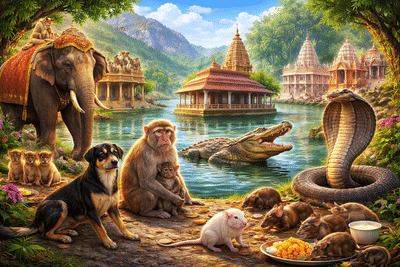 1. When danger becomes divine presence The snake is one of the most feared creatures in the world, yet in Hinduism it holds a sacred place. Associated with Shiva and the Nagas, the serpent represents hidden power, protection, and transformation. Its silent movement and sudden strike create fear, but that same unpredictability makes it spiritually significant. The idea is simple and deeply relatable. What we fear the most often holds the deepest power. The snake teaches respect for forces we cannot see or control, much like life’s uncertainties.
2. Strength that demands respect, not control The bull, represented by Nandi, stands as a symbol of strength, loyalty, and stability. But anyone who has seen a powerful bull knows it is not something to be taken lightly. Its size and force can be overwhelming. Hindu belief does not ignore this reality. Instead, it elevates it. The bull becomes sacred because it represents controlled strength. It reminds us that true power is not about aggression, but about discipline and purpose. Just like in life, strength without control can destroy, but strength with devotion can protect.
3. Wisdom backed by unstoppable force The elephant, through Lord Ganesha, symbolizes intelligence, success, and the removal of obstacles. But beyond symbolism, the elephant is a massive and powerful animal. It can clear paths, uproot trees, and dominate its surroundings. That physical power is what makes its spiritual meaning stronger. It reflects a truth we all experience. Real wisdom is not weak. It is strong, steady, and capable of overcoming anything in its way. The elephant teaches that intelligence and strength together create true success.
4. Energy that can either serve or disrupt Monkeys are associated with Hanuman, one of the most revered figures in Hinduism. He represents devotion, courage, and service. But in reality, monkeys are unpredictable, restless, and often aggressive around humans. This contrast is meaningful. The monkey represents the human mind. Always active, easily distracted, sometimes chaotic. Hanuman shows what happens when that same energy is directed with purpose. It becomes powerful, focused, and unstoppable. The lesson is clear. It is not about removing chaos, but about channeling it.
5. Power that must be admired from a distance The tiger, linked with Goddess Durga, is one of the most feared predators in nature. It represents raw power, dominance, and authority. No one feels completely safe around a tiger, and that is exactly why it holds such strong symbolism. The tiger reflects forces in life that are bigger than us. Challenges, fears, and situations that demand respect. Durga riding the tiger symbolizes control over that power. It shows that fear can be mastered, but never ignored. Some things in life are not meant to be conquered easily, but understood and respected.
6. Loyalty that exists in the shadows Dogs, associated with Bhairava and Dattatreya, hold a unique place in Hindu symbolism. They are loyal companions, yet often seen as creatures that live on the edges of society. This dual identity makes them powerful symbols. The dog represents protection, alertness, and companionship, but also reminds us of life’s darker and less comfortable spaces. It teaches that loyalty is not always found in perfection, but often in the unnoticed and the overlooked. Sometimes, what we ignore holds the deepest connection.
Next Story