
Living Fossils: 7 Fish Species Older Than Dinosaurs

Life on Earth existed long before dinosaurs appeared. Among the most fascinating survivors are ancient fish whose lineages stretch back hundreds of millions of years. Often called “living fossils,” these species have changed very little over time, offering a rare window into prehistoric life . Their continued survival reminds us of life’s resilience and the extraordinary journey of evolution.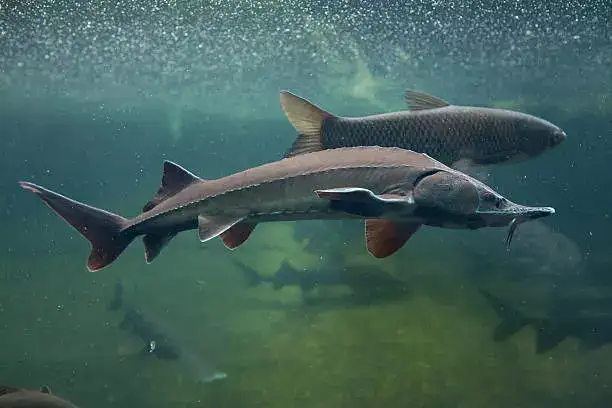
Coelacanth
The coelacanth is perhaps the most famous ancient fish. Once believed extinct, it was astonishingly rediscovered in 1938. Its lineage dates back roughly 400 million years, well before dinosaurs appeared. The coelacanth’s distinctive lobe-shaped fins resemble early limb structures, providing clues about how vertebrates eventually moved from water to land. Living in deep ocean habitats, this fish exemplifies evolutionary stability and the ability to thrive in specialized environments.Sturgeon
Sturgeons are some of the oldest freshwater fish on the planet, with origins stretching over 200 million years. They are slow-growing and can live for decades. Their armoured bodies, elongated snouts, and bottom-feeding habits closely mirror those of their ancient ancestors. Often referred to as living relics, sturgeons give us a glimpse into prehistoric freshwater ecosystems that existed long before the age of dinosaurs.Lungfish
Lungfish are remarkable for their dual breathing system, using both gills and primitive lungs. This adaptation allows them to survive in low-oxygen waters and endure drought conditions by burrowing into mud. Fossil records indicate lungfish have been around for over 400 million years. Their unique biology represents a critical evolutionary transition between aquatic fish and the first land-dwelling vertebrates.Lamprey
Lampreys are jawless, eel-like fish that have persisted for more than 340 million years. Their circular, toothed mouths are adapted for parasitic feeding, a primitive trait that has remained remarkably unchanged. Fossils of related jawless fish extend even further back, highlighting the lamprey’s position as one of the earliest vertebrate lineages still alive today.Hagfish
Hagfish are soft-bodied, slime-producing fish whose origins date back around 500 million years. As some of the earliest vertebrates, they provide rare insight into the initial stages of vertebrate evolution. Despite their age, hagfish lack a true skeleton, which makes fossil evidence scarce. Their defensive slime and unique feeding habits make them one of the most unusual and fascinating survivors from the dawn of vertebrate life.Gar
Gars belong to an ancient lineage of ray-finned fish, with relatives appearing more than 240 million years ago. Modern gars resemble their prehistoric ancestors in both body shape and habits. They have survived multiple mass extinction events, including the one that wiped out the dinosaurs, making them living symbols of resilience and evolutionary continuity.Paddlefish
Paddlefish are primitive bony fish with an ancestry dating back roughly 350 million years. Their elongated, paddle-shaped snouts help detect prey in murky waters, a unique adaptation that has endured for millions of years. Fossils of early relatives confirm the deep evolutionary roots of these fish, whose unusual body design sets them apart from most modern species.Ancient Life Endures
These ancient fish are more than just curiosities; they are living connections to Earth’s distant past. From the deep-sea coelacanth to slime-producing hagfish and armoured sturgeons, these species have survived dramatic environmental shifts and mass extinctions. Studying them enriches our understanding of evolution, highlights the delicate balance of life, and underscores the importance of conserving these remarkable survivors for future generations.Next Story