
7 Animals That Survive Without a Brain: Amazing Brainless Creatures

The idea of animals that survive without a brain may sound impossible, but nature proves otherwise. While humans rely heavily on the brain for every function, from thinking to movement, several species thrive without any central brain or nervous system. Instead, they use nerve nets, simple cells, or chemical signals to interact with their environment and stay alive. These fascinating creatures show that life on Earth does not always depend on intelligence in the way we understand it.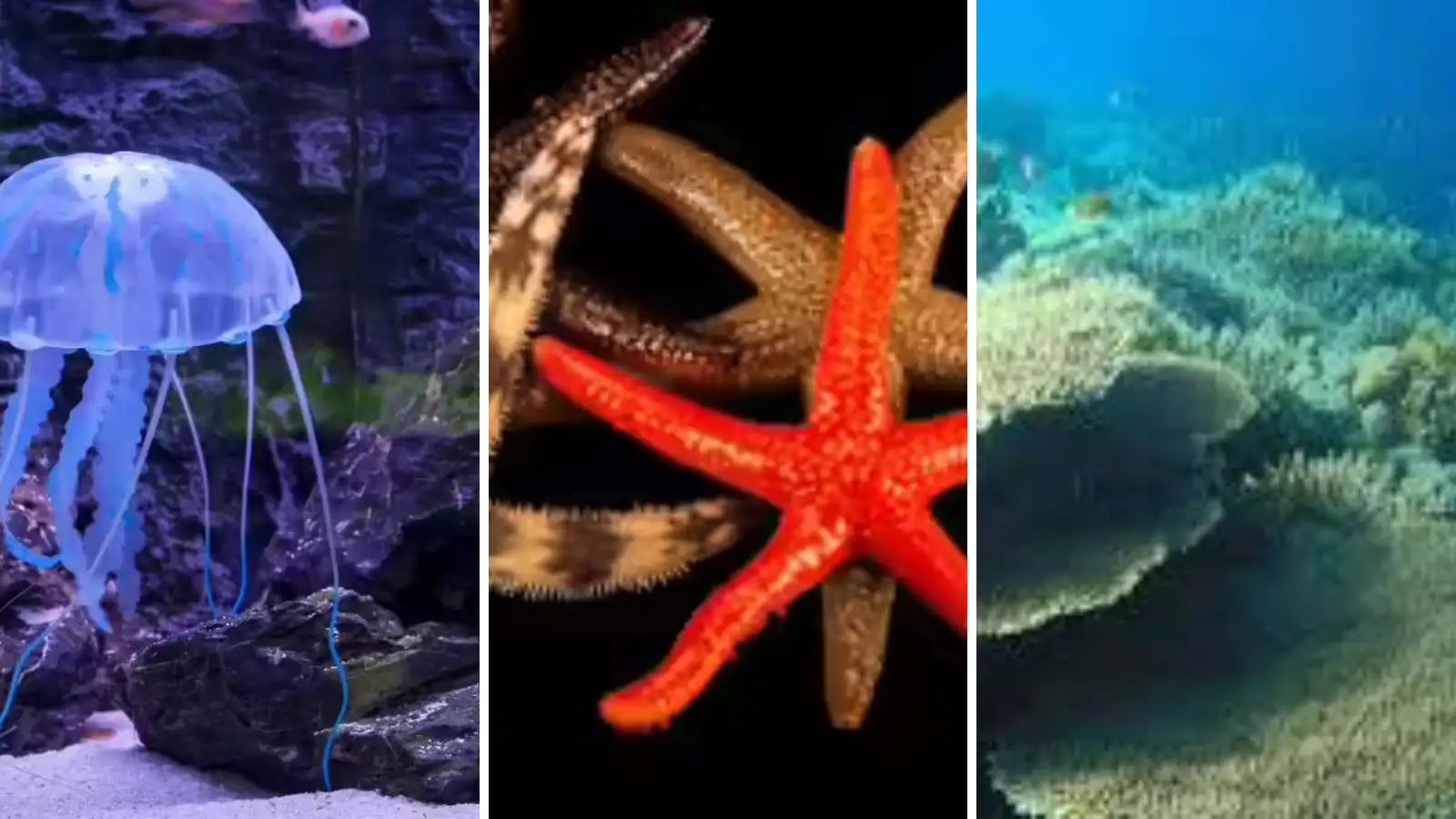
Jellyfish : Ancient Survivors Without a Brain
Jellyfish are one of the most well-known examples of brainless animals that survive without a brain. These ancient creatures have been drifting in oceans for over 500 million years.
Instead of a brain, jellyfish rely on a nerve net spread throughout their bodies. This allows them to detect light, movement, and food. Their tentacles contain special stinging cells that react instantly when prey comes close. Even without a brain, jellyfish can move, hunt, and survive efficiently in the ocean.
Sea Stars : Movement Without Thought
Sea stars (commonly called starfish) are another surprising example of brainless survival. They do not have a central brain but instead use a nerve ring system connected to each arm.
Each arm works like a mini control centre, sending signals when food or danger is nearby. This decentralized system allows sea stars to move, hunt, and even regenerate lost arms. Their survival strategy proves that coordination does not always require a brain.
Sea Urchins : Full-Body Sensory Creatures
Sea urchins also belong to the group of animals that survive without a brain. They rely on a simple nerve ring near their mouth along with tube feet and spines for movement and protection.
Scientists believe sea urchins may even sense light using their entire body surface. Without eyes or a brain, they can still detect shadows and respond to threats, making them surprisingly adaptive ocean creatures .
Corals: Brainless Builders of Ocean Ecosystems
Corals are living animals often mistaken for rocks or plants. Each coral is made up of tiny polyps that function without a brain.
These polyps use basic nerve networks and tentacles to capture food and respond to environmental changes. Over time, colonies of corals build massive reef structures that support thousands of marine species. Despite lacking awareness or intelligence, corals play a crucial role in ocean ecosystems.
Sea Sponges : The Simplest Living Animals
Sea sponges are among the oldest and simplest animals on Earth. They have no brain, no nerves, no muscles, and no internal organs.
They survive by allowing water to flow continuously through their bodies. Special cells filter nutrients and oxygen directly from the water. This extremely simple structure has helped sea sponges survive for millions of years without needing a nervous system.
Sea Anemones: Silent Ocean Hunters
Sea anemones may look like underwater flowers, but they are actually predators without a brain. They rely on a nerve net system, similar to jellyfish.
Their tentacles help them capture prey that drifts too close. Even without a brain, they can react quickly to touch and changes in their environment. Their simple structure makes them efficient yet fascinating ocean survivors.
Hydra: Tiny Creatures with Simple Intelligence
Hydra are small freshwater animals that also survive without a brain. They use a network of nerve cells spread throughout their body to detect movement and capture food.
Despite their simplicity, hydra can respond to stimuli and even show basic learning-like behavior. Their regenerative ability is also remarkable - they can rebuild parts of their body if damaged.
Nature Beyond Intelligence
These animals that survive without a brain challenge our understanding of life and intelligence. From jellyfish drifting in oceans to corals building vast reefs, these creatures prove that survival does not always depend on thinking or awareness.
Instead, nature has created alternative systems - simple, efficient, and perfectly adapted to their environments - showing that life is far more diverse and extraordinary than we often imagine.
Jellyfish : Ancient Survivors Without a Brain
Jellyfish are one of the most well-known examples of brainless animals that survive without a brain. These ancient creatures have been drifting in oceans for over 500 million years.
Instead of a brain, jellyfish rely on a nerve net spread throughout their bodies. This allows them to detect light, movement, and food. Their tentacles contain special stinging cells that react instantly when prey comes close. Even without a brain, jellyfish can move, hunt, and survive efficiently in the ocean.
Sea Stars : Movement Without Thought
Sea stars (commonly called starfish) are another surprising example of brainless survival. They do not have a central brain but instead use a nerve ring system connected to each arm.
Each arm works like a mini control centre, sending signals when food or danger is nearby. This decentralized system allows sea stars to move, hunt, and even regenerate lost arms. Their survival strategy proves that coordination does not always require a brain.
Sea Urchins : Full-Body Sensory Creatures
Sea urchins also belong to the group of animals that survive without a brain. They rely on a simple nerve ring near their mouth along with tube feet and spines for movement and protection.
Scientists believe sea urchins may even sense light using their entire body surface. Without eyes or a brain, they can still detect shadows and respond to threats, making them surprisingly adaptive ocean creatures .
Corals: Brainless Builders of Ocean Ecosystems
Corals are living animals often mistaken for rocks or plants. Each coral is made up of tiny polyps that function without a brain.
These polyps use basic nerve networks and tentacles to capture food and respond to environmental changes. Over time, colonies of corals build massive reef structures that support thousands of marine species. Despite lacking awareness or intelligence, corals play a crucial role in ocean ecosystems.
Sea Sponges : The Simplest Living Animals
Sea sponges are among the oldest and simplest animals on Earth. They have no brain, no nerves, no muscles, and no internal organs.
They survive by allowing water to flow continuously through their bodies. Special cells filter nutrients and oxygen directly from the water. This extremely simple structure has helped sea sponges survive for millions of years without needing a nervous system.
Sea Anemones: Silent Ocean Hunters
Sea anemones may look like underwater flowers, but they are actually predators without a brain. They rely on a nerve net system, similar to jellyfish.
Their tentacles help them capture prey that drifts too close. Even without a brain, they can react quickly to touch and changes in their environment. Their simple structure makes them efficient yet fascinating ocean survivors.
Hydra: Tiny Creatures with Simple Intelligence
Hydra are small freshwater animals that also survive without a brain. They use a network of nerve cells spread throughout their body to detect movement and capture food.
Despite their simplicity, hydra can respond to stimuli and even show basic learning-like behavior. Their regenerative ability is also remarkable - they can rebuild parts of their body if damaged.
Nature Beyond Intelligence
These animals that survive without a brain challenge our understanding of life and intelligence. From jellyfish drifting in oceans to corals building vast reefs, these creatures prove that survival does not always depend on thinking or awareness. Instead, nature has created alternative systems - simple, efficient, and perfectly adapted to their environments - showing that life is far more diverse and extraordinary than we often imagine.
Next Story