
A 900-Year-Old Vishnu Idol Discovered in Telangana Stream


Sometimes history does not appear through planned excavations or major archaeological digs. Instead, it quietly reveals itself in the most unexpected places. Recently, a remarkable discovery in Telangana reminded people that India’s ancient past often lies hidden in plain sight.
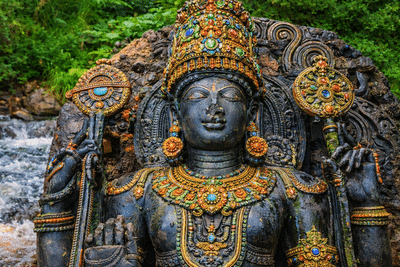
In Jayashankar Bhupalpally district of Telangana, villagers discovered a centuries-old idol of Lord Vishnu lying buried in the sand of a forest stream. What looked like an ordinary stone at first turned out to be a beautifully carved sculpture believed to be nearly 900 years old, dating back to the 12th century Kakatiya period.
The discovery has drawn attention from historians, cultural researchers, and devotees alike, as it offers another glimpse into the rich artistic and religious traditions of medieval South India.
The Discovery in a Forest Stream The ancient idol was found in a stream located near Chinthakani village in Kataram mandal of Jayashankar Bhupalpally district. According to local reports, villagers noticed the sculpture partially buried in the sand when the water level of the stream receded.
Residents had reportedly seen the head portion of the statue earlier when the stream dried up, but it remained buried for years beneath the sand and flowing water. Only recently did locals manage to pull the sculpture out of the stream, after which videos of the idol began circulating on social media.
Soon, people from nearby villages gathered to see the ancient idol that had been hidden beneath the stream for centuries.
A Five-Foot Granite Sculpture According to local reports, the idol is carved from monolithic black granite stone and stands nearly five feet tall. The sculpture depicts Lord Vishnu with detailed ornaments, crown, and symbolic features typical of classical temple icons.
Although most of the statue remains intact, some parts such as the nose and fingers appear to be damaged. Locals suspect that fortune hunters or treasure seekers might have caused the damage while digging in the area in the past.
Despite this damage, the intricate craftsmanship of the sculpture remains visible, showcasing the high level of skill possessed by ancient sculptors.
A Link to the Kakatiya Dynasty Historians and cultural researchers believe the idol belongs to the Kakatiya dynasty, which ruled large parts of the Deccan region between the 12th and 14th centuries.
The Kakatiyas were known for their remarkable temple architecture and stone carvings. Their artistic legacy can still be seen today in famous monuments such as the Thousand Pillar Temple in Hanamkonda, which reflects the advanced architectural style of the period.
Experts studying the newly discovered sculpture say that its style and iconography strongly resemble Kakatiya-era craftsmanship. Some historians believe the idol may represent Chennakesava, a revered form of Lord Vishnu worshipped in many South Indian temples.
This connection places the sculpture within one of the most culturally rich periods in Telangana’s history.
Why the Idol May Not Be Worshipped Although the discovery has generated excitement among devotees, experts have pointed out an important detail. The idol shows signs of damage in several places.
According to traditional Agama Shastra, which guides temple rituals and icon worship in Hinduism, a damaged idol is generally not considered suitable for formal ritual worship.
Because of this, historians have suggested that the sculpture should be preserved primarily as a heritage artifact rather than installed in a temple for regular rituals.
Archaeologists Yet to Conduct Full Study While the discovery has sparked public interest, officials from the archaeology department have not yet conducted a detailed examination of the idol. Authorities are expected to visit the site and study the sculpture to determine its exact historical context and origin.
A proper archaeological assessment could reveal more about where the idol originally came from and whether it belonged to a nearby temple that might have disappeared over time.
In Jayashankar Bhupalpally district of Telangana, villagers discovered a centuries-old idol of Lord Vishnu lying buried in the sand of a forest stream. What looked like an ordinary stone at first turned out to be a beautifully carved sculpture believed to be nearly 900 years old, dating back to the 12th century Kakatiya period.
The discovery has drawn attention from historians, cultural researchers, and devotees alike, as it offers another glimpse into the rich artistic and religious traditions of medieval South India.
The Discovery in a Forest Stream The ancient idol was found in a stream located near Chinthakani village in Kataram mandal of Jayashankar Bhupalpally district. According to local reports, villagers noticed the sculpture partially buried in the sand when the water level of the stream receded.
Residents had reportedly seen the head portion of the statue earlier when the stream dried up, but it remained buried for years beneath the sand and flowing water. Only recently did locals manage to pull the sculpture out of the stream, after which videos of the idol began circulating on social media.
Soon, people from nearby villages gathered to see the ancient idol that had been hidden beneath the stream for centuries.
Although most of the statue remains intact, some parts such as the nose and fingers appear to be damaged. Locals suspect that fortune hunters or treasure seekers might have caused the damage while digging in the area in the past.
Despite this damage, the intricate craftsmanship of the sculpture remains visible, showcasing the high level of skill possessed by ancient sculptors.
A Link to the Kakatiya Dynasty Historians and cultural researchers believe the idol belongs to the Kakatiya dynasty, which ruled large parts of the Deccan region between the 12th and 14th centuries.
The Kakatiyas were known for their remarkable temple architecture and stone carvings. Their artistic legacy can still be seen today in famous monuments such as the Thousand Pillar Temple in Hanamkonda, which reflects the advanced architectural style of the period.
Experts studying the newly discovered sculpture say that its style and iconography strongly resemble Kakatiya-era craftsmanship. Some historians believe the idol may represent Chennakesava, a revered form of Lord Vishnu worshipped in many South Indian temples.
This connection places the sculpture within one of the most culturally rich periods in Telangana’s history.
According to traditional Agama Shastra, which guides temple rituals and icon worship in Hinduism, a damaged idol is generally not considered suitable for formal ritual worship.
Because of this, historians have suggested that the sculpture should be preserved primarily as a heritage artifact rather than installed in a temple for regular rituals.
Archaeologists Yet to Conduct Full Study While the discovery has sparked public interest, officials from the archaeology department have not yet conducted a detailed examination of the idol. Authorities are expected to visit the site and study the sculpture to determine its exact historical context and origin.
A proper archaeological assessment could reveal more about where the idol originally came from and whether it belonged to a nearby temple that might have disappeared over time.
Next Story