
A dual-sex crab discovered in India reveals a rare 'glitch in nature' scientists never expected to see


A revolutionary biological finding has been reported by scientists from MES Mampad College and the University of Kerala in the form of a dual-sex crab (gynandromorph) found in the Gecarcinucidae crab family. The Gecarcinucidae crab, which is a dual-sex crab, was found living in tree hollows located within the Silent Valley National Park. The Gecarcinucidae crab, Vela carli, has a body that is a ‘glitch in nature’ with its body having been divided into two halves - a male half and a female half. According to the study published in the international journal Crustaceana (Brill), this genetic mosaicism features a narrow male abdomen on one side and a broad female structure on the other. This finding provides a unique look at chromosomal anomalies in India’s Western Ghats.
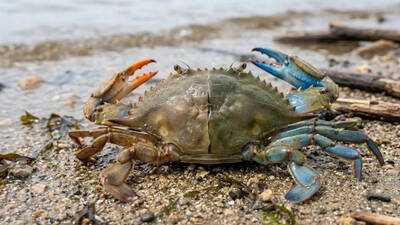
Where was this dual sex crab found in India
The crab was also discovered living in a phytotelm (a small hole in a tree filled with rainwater) rather than a typical river. Because of how pristine and unaltered by human activity the Silent Valley National Park is, researchers conclude that this case of gynandromorphism in the crab occurred naturally during development and not as a result of pollution or chemical exposure.
Rare ‘nature glitch’: Is it male or female
Most animals are created as either males or females, however there are some exceptions to this rule, and the case of gynandromorphy is just one of those exceptions. According to the journal, this crabs one side has male characteristics on one side and female characteristics on the other, with no intermediate characteristics in between.
The looks and appearance of this crab
At first glance, you may not be able to tell that this crab has two distinct halves that are furiously stitched together. Internally, the crab possesses a testis on the left side and an ovary on the right, mirroring the external physical split. The crab has what scientists refer to as a bilateral split, which means there is an actual physical line running through the midline of the crab's ventral (underside) surface, where the narrow male abdomen meets the broad female abdomen. The difference in shape between the male and female halves is also significant; the male abdomen (the area below the tail) is very narrow, while the female abdomen is wide.
A ‘world first’ for this crab family
There have been previous examples of gynandromorphism in different animal groups, such as butterflies and birds, but this research marks the first time that gynandromorphism has been seen in the Gecarcinucidae group of freshwater crabs. This discovery is significant as it shows how animals can develop these unique genetic anomalies independent of their isolation from larger saltwater animals.
What this means for the future
This crab has been deemed a ‘canary in the coal mine’ by geneticists because it was found in a pristine freshwater habitat within the Western Ghats that has no pollutants. Therefore, it will serve as the ‘baseline’ for further research to help scientists gain a clearer understanding of how nature creates errors in the first place. By studying these crabs, researchers will also have a better opportunity to understand the genetic mechanisms of sex determination in crustaceans and help conserve other endangered species, and conserve other endangered species that inhabit the Western Ghats as well.
Where was this dual sex crab found in India
The crab was also discovered living in a phytotelm (a small hole in a tree filled with rainwater) rather than a typical river. Because of how pristine and unaltered by human activity the Silent Valley National Park is, researchers conclude that this case of gynandromorphism in the crab occurred naturally during development and not as a result of pollution or chemical exposure.
Rare ‘nature glitch’: Is it male or female
Most animals are created as either males or females, however there are some exceptions to this rule, and the case of gynandromorphy is just one of those exceptions. According to the journal, this crabs one side has male characteristics on one side and female characteristics on the other, with no intermediate characteristics in between.
The looks and appearance of this crab
At first glance, you may not be able to tell that this crab has two distinct halves that are furiously stitched together. Internally, the crab possesses a testis on the left side and an ovary on the right, mirroring the external physical split. The crab has what scientists refer to as a bilateral split, which means there is an actual physical line running through the midline of the crab's ventral (underside) surface, where the narrow male abdomen meets the broad female abdomen. The difference in shape between the male and female halves is also significant; the male abdomen (the area below the tail) is very narrow, while the female abdomen is wide.
A ‘world first’ for this crab family
There have been previous examples of gynandromorphism in different animal groups, such as butterflies and birds, but this research marks the first time that gynandromorphism has been seen in the Gecarcinucidae group of freshwater crabs. This discovery is significant as it shows how animals can develop these unique genetic anomalies independent of their isolation from larger saltwater animals.
What this means for the future
This crab has been deemed a ‘canary in the coal mine’ by geneticists because it was found in a pristine freshwater habitat within the Western Ghats that has no pollutants. Therefore, it will serve as the ‘baseline’ for further research to help scientists gain a clearer understanding of how nature creates errors in the first place. By studying these crabs, researchers will also have a better opportunity to understand the genetic mechanisms of sex determination in crustaceans and help conserve other endangered species, and conserve other endangered species that inhabit the Western Ghats as well.
Next Story