
Are Meteor Showers Harmful? Myths and Facts Explained

Every year, skywatchers eagerly wait for dazzling meteor showers to light up the night sky. Events like the Perseids meteor shower or the Geminids meteor shower create breathtaking streaks of light. But along with the beauty comes a common question, are meteor showers actually dangerous? Let’s separate myth from reality.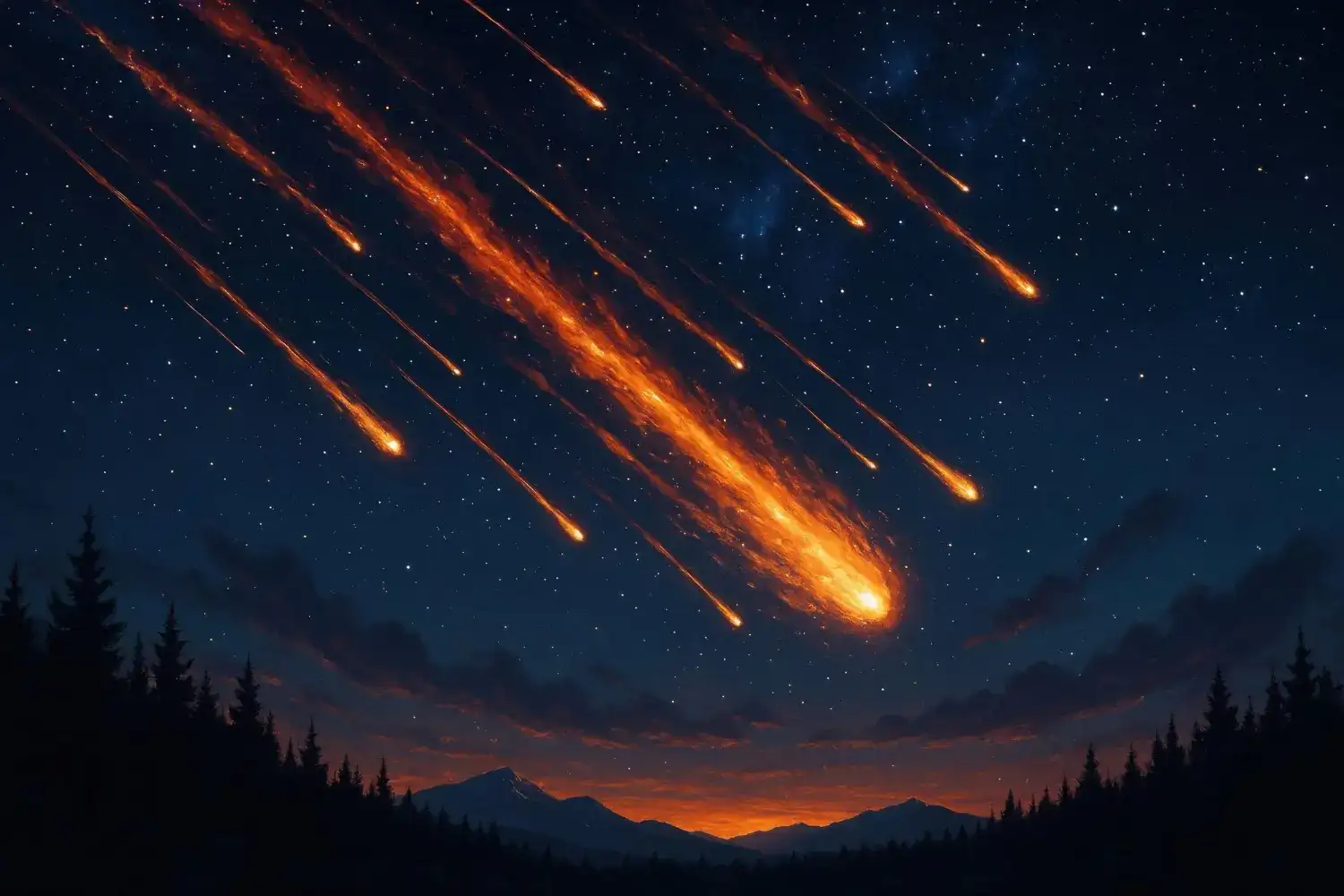
What Exactly Is a Meteor Shower?
A meteor shower happens when Earth passes through a trail of debris left behind by a comet. These tiny particles, often no bigger than grains of sand, burn up as they enter Earth’s atmosphere, creating bright streaks we call meteors or “shooting stars.”
Myth 1: Meteor Showers Can Hit You
Fact: The chances are almost zero.
Most meteoroids disintegrate completely in the atmosphere due to intense heat and friction. By the time anything reaches the ground, it’s extremely small and rarely harmful.
Myth 2: Meteor Showers Cause Major Destruction
Fact: Meteor showers are harmless.
The particles involved are tiny and burn up quickly. Dangerous impacts are usually caused by larger objects, not meteor showers.
Myth 3: Every Meteor Reaches the Ground
Fact: Very few survive the journey.
Only larger space rocks, called meteorites, make it to Earth’s surface. These are rare and not typically associated with regular meteor showers.
Myth 4: Meteor Showers Are Linked to Disasters
Fact: No scientific connection exists.
There’s no evidence linking meteor showers to earthquakes, storms, or any natural disasters. They are purely astronomical events.
When Can Meteors Be Dangerous?
Rarely, larger objects entering Earth’s atmosphere can cause damage. A well-known example is the Chelyabinsk meteor explosion in 2013, which caused injuries due to shockwaves. However, this was not part of a meteor shower but a separate asteroid event.
The Real Risk: Extremely Low
Astronomers, including organizations like NASA, closely monitor near-Earth objects. Meteor showers themselves pose virtually no threat to human life.
Meteor showers are one of nature’s most beautiful light shows, not something to fear. Instead of worrying, step outside on a clear night and enjoy the cosmic spectacle. The universe is putting on a show, and it’s completely safe to watch.
Disclaimer: This article is based on general scientific knowledge and publicly available online sources. NewsPoint does not independently verify the accuracy or authenticity of the information presented.
What Exactly Is a Meteor Shower?
A meteor shower happens when Earth passes through a trail of debris left behind by a comet. These tiny particles, often no bigger than grains of sand, burn up as they enter Earth’s atmosphere, creating bright streaks we call meteors or “shooting stars.” Myth 1: Meteor Showers Can Hit You
Fact: The chances are almost zero.
Most meteoroids disintegrate completely in the atmosphere due to intense heat and friction. By the time anything reaches the ground, it’s extremely small and rarely harmful.
Myth 2: Meteor Showers Cause Major Destruction
Fact: Meteor showers are harmless.
The particles involved are tiny and burn up quickly. Dangerous impacts are usually caused by larger objects, not meteor showers.
Myth 3: Every Meteor Reaches the Ground
Fact: Very few survive the journey.
Only larger space rocks, called meteorites, make it to Earth’s surface. These are rare and not typically associated with regular meteor showers.
You may also like
- Spotted in Delhi, Anushka Sharma nails easy-breezy airport style, while Virat Kohli keeps it cool and casual
- 'I am also someone's father and brother…': A small message inside a Pune auto, is touching hearts across India
- Bid Your Psychologist Goodbye, Your Wounds Are Strengths in Disguise
- The art of saying sorry: Modelling accountability for children
- Why vehicles are banned on most Indian beaches—except one rare exception
Myth 4: Meteor Showers Are Linked to Disasters
Fact: No scientific connection exists.
There’s no evidence linking meteor showers to earthquakes, storms, or any natural disasters. They are purely astronomical events.
When Can Meteors Be Dangerous?
Rarely, larger objects entering Earth’s atmosphere can cause damage. A well-known example is the Chelyabinsk meteor explosion in 2013, which caused injuries due to shockwaves. However, this was not part of a meteor shower but a separate asteroid event. The Real Risk: Extremely Low
Astronomers, including organizations like NASA, closely monitor near-Earth objects. Meteor showers themselves pose virtually no threat to human life. Meteor showers are one of nature’s most beautiful light shows, not something to fear. Instead of worrying, step outside on a clear night and enjoy the cosmic spectacle. The universe is putting on a show, and it’s completely safe to watch.
Disclaimer: This article is based on general scientific knowledge and publicly available online sources. NewsPoint does not independently verify the accuracy or authenticity of the information presented.






More from our partners


Loving Newspoint? Download the app now
