
Beetroot vs Sweet Potato: Which Superfood Deserves a Place on Your Plate?

Beetroot and sweet potato are both celebrated as nutrient-dense superfoods. They are packed with fiber, vitamins, and antioxidants that support overall health. But when it comes to choosing between the two, the answer isn’t so simple. Each offers unique benefits, making them powerful in their own way. Let’s break down their nutrition, health perks, and ideal intake.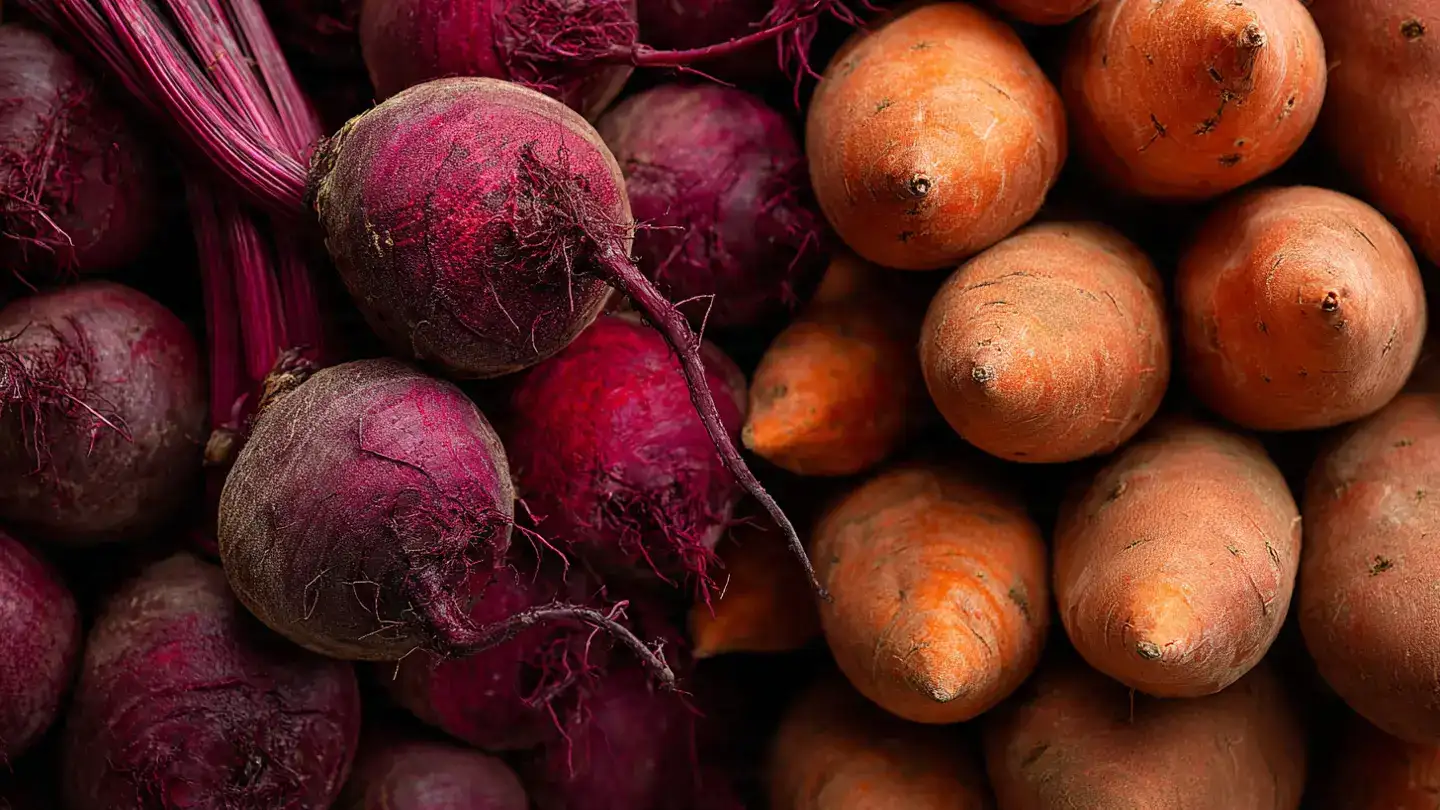
Nutritional Profile: Beetroot
Per 100 g of boiled beetroot:
Health Benefits of Beetroot
Beetroot is known for its natural nitrates, which help the body use oxygen more efficiently. This leads to better stamina and improved heart health by supporting blood vessel relaxation and lowering blood pressure.
It also contains betalains, powerful antioxidants that support liver function and reduce inflammation. Along with folate and iron, beetroot contributes to better brain health and healthy blood production.
Nutritional Profile: Sweet Potato
Per 100 g of boiled sweet potato:
Health Benefits of Sweet Potato
Sweet potatoes stand out for their extremely high vitamin A content, which supports eye health and strengthens immunity. Their fiber content supports digestion and helps keep you full for longer periods.
They also contain beta-carotene and polyphenols, which support overall cellular health. Despite being rich in carbs, they have a low glycemic index, making them suitable in moderation for blood sugar management.
What Research Indicates
Studies highlight beetroot as a functional food. Its betalains help fight oxidative stress, reduce inflammation, and protect DNA from damage. Dietary nitrates in beetroot convert into nitric oxide, improving blood flow and lowering blood pressure. Research also suggests beetroot extracts may help protect the liver and kidneys from oxidative damage.
Sweet potatoes, on the other hand, are linked to improved insulin sensitivity and better blood sugar control. Their flavonoids and carotenoids support heart health by lowering LDL cholesterol, reducing inflammation, and improving blood vessel function.
Which One Is Healthier?
The answer depends on your health goals:
Beetroot: Better for heart health, stamina, blood circulation, and detox support
Sweet potato: Better for eye health, immunity, digestion, and long-lasting energy
Sweet potato also has a slight edge when it comes to fiber and satiety. However, neither is superior overall—they simply serve different purposes. Including both in your diet is the smartest approach.
How Much Should You Eat?
Moderation is key to enjoying their benefits without overloading calories or sugars.
Instead of choosing one over the other, combining beetroot and sweet potato in your weekly diet offers a balanced mix of nutrients. One supports circulation and detox, while the other boosts energy, immunity, and eye health. Together, they make a powerful duo for overall wellness.
DISCLAIMER: This article is based on publicly available information and research references. It is for general awareness only and should not replace professional medical advice.
Nutritional Profile: Beetroot
Per 100 g of boiled beetroot: - Calories: 43
- Carbohydrates: 9.6 g
- Fiber: 2.8 g
- Sugar: 6.8 g
- Vitamin A: 20% DV
- Potassium: 325 mg
Health Benefits of Beetroot
Beetroot is known for its natural nitrates, which help the body use oxygen more efficiently. This leads to better stamina and improved heart health by supporting blood vessel relaxation and lowering blood pressure.It also contains betalains, powerful antioxidants that support liver function and reduce inflammation. Along with folate and iron, beetroot contributes to better brain health and healthy blood production.
Nutritional Profile: Sweet Potato
Per 100 g of boiled sweet potato: - Calories: 86
- Carbohydrates: 20.1 g
- Fiber: 3.0 g
- Sugar: 4.2 g
- Vitamin A: 283% DV
- Potassium: 337 mg
Health Benefits of Sweet Potato
Sweet potatoes stand out for their extremely high vitamin A content, which supports eye health and strengthens immunity. Their fiber content supports digestion and helps keep you full for longer periods. They also contain beta-carotene and polyphenols, which support overall cellular health. Despite being rich in carbs, they have a low glycemic index, making them suitable in moderation for blood sugar management.
What Research Indicates
Studies highlight beetroot as a functional food. Its betalains help fight oxidative stress, reduce inflammation, and protect DNA from damage. Dietary nitrates in beetroot convert into nitric oxide, improving blood flow and lowering blood pressure. Research also suggests beetroot extracts may help protect the liver and kidneys from oxidative damage. Sweet potatoes, on the other hand, are linked to improved insulin sensitivity and better blood sugar control. Their flavonoids and carotenoids support heart health by lowering LDL cholesterol, reducing inflammation, and improving blood vessel function.
Which One Is Healthier?
The answer depends on your health goals: Beetroot: Better for heart health, stamina, blood circulation, and detox support
Sweet potato: Better for eye health, immunity, digestion, and long-lasting energy
Sweet potato also has a slight edge when it comes to fiber and satiety. However, neither is superior overall—they simply serve different purposes. Including both in your diet is the smartest approach.
How Much Should You Eat?
- Beetroot: 80-100 g (½ to 1 cup daily)
- Sweet potato: Around 120 g (½ to ¾ cup daily)
Moderation is key to enjoying their benefits without overloading calories or sugars.
Instead of choosing one over the other, combining beetroot and sweet potato in your weekly diet offers a balanced mix of nutrients. One supports circulation and detox, while the other boosts energy, immunity, and eye health. Together, they make a powerful duo for overall wellness.
DISCLAIMER: This article is based on publicly available information and research references. It is for general awareness only and should not replace professional medical advice.
Next Story