
Can a Whale Protein Help Humans Live Longer? Scientists Think It Might

The secret to a longer, healthier life may be swimming in the cold waters of the Arctic. Scientists are closely studying bowhead whales, a species known for living up to 200 years while staying surprisingly resistant to many diseases that come with age.
This unusual longevity has made bowhead whales a key focus in aging research. Experts believe that understanding how these massive creatures stay healthy for so long could offer clues for extending human life as well.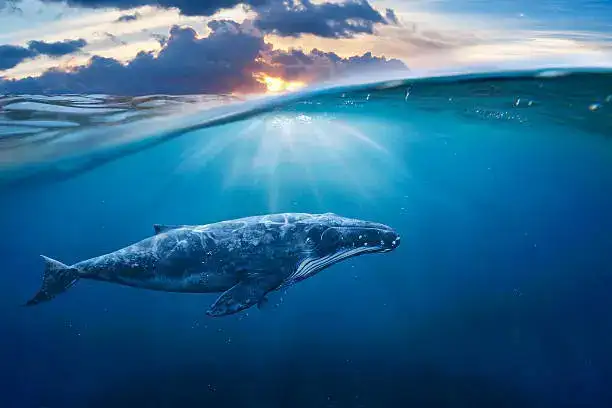
The Science Behind the Discovery
A recent study published in Nature has highlighted a protein called CIRBP as a possible game changer. This protein plays an important role in repairing serious DNA damage, specifically double-strand breaks. Such damage is known to speed up aging and increase the risk of diseases.
What makes bowhead whales stand out is the amount of this protein in their bodies. Researchers found that they have nearly 100 times more CIRBP than other mammals. This suggests that their strong DNA repair system could be one of the reasons they live so long.
Promising Lab Results
To test this idea, scientists carried out experiments using human cells and fruit flies. When CIRBP from bowhead whales was introduced, DNA repair improved in both. In fruit flies, the effect went a step further, helping them live longer than usual.
These results have sparked excitement because they show a direct link between better DNA repair and increased lifespan, at least in simpler organisms.
The Role of Cold Temperatures
Another interesting finding is the connection between cold environments and this protein. Bowhead whales live in freezing Arctic waters, and lower temperatures seem to naturally boost CIRBP levels.
This has led researchers to explore whether cold exposure could trigger similar effects in humans. Ideas like cold showers and temperature-based therapies are being discussed, though scientists stress that these are early theories and need more research.
What This Means for the Future
While the idea of humans living for 200 years is still far from becoming reality, this discovery opens up exciting possibilities. It shows that improving the body’s ability to repair DNA could be a key step toward healthier aging.
Researchers are now looking at ways to safely increase CIRBP levels in humans. The goal is not just to extend lifespan, but to improve the quality of life as people age.
For now, bowhead whales continue to offer a fascinating glimpse into what might one day be possible if science can unlock the secrets hidden in their biology.
This unusual longevity has made bowhead whales a key focus in aging research. Experts believe that understanding how these massive creatures stay healthy for so long could offer clues for extending human life as well.
The Science Behind the Discovery
A recent study published in Nature has highlighted a protein called CIRBP as a possible game changer. This protein plays an important role in repairing serious DNA damage, specifically double-strand breaks. Such damage is known to speed up aging and increase the risk of diseases. What makes bowhead whales stand out is the amount of this protein in their bodies. Researchers found that they have nearly 100 times more CIRBP than other mammals. This suggests that their strong DNA repair system could be one of the reasons they live so long.
Promising Lab Results
To test this idea, scientists carried out experiments using human cells and fruit flies. When CIRBP from bowhead whales was introduced, DNA repair improved in both. In fruit flies, the effect went a step further, helping them live longer than usual. These results have sparked excitement because they show a direct link between better DNA repair and increased lifespan, at least in simpler organisms.
The Role of Cold Temperatures
Another interesting finding is the connection between cold environments and this protein. Bowhead whales live in freezing Arctic waters, and lower temperatures seem to naturally boost CIRBP levels. This has led researchers to explore whether cold exposure could trigger similar effects in humans. Ideas like cold showers and temperature-based therapies are being discussed, though scientists stress that these are early theories and need more research.
What This Means for the Future
While the idea of humans living for 200 years is still far from becoming reality, this discovery opens up exciting possibilities. It shows that improving the body’s ability to repair DNA could be a key step toward healthier aging. Researchers are now looking at ways to safely increase CIRBP levels in humans. The goal is not just to extend lifespan, but to improve the quality of life as people age.
For now, bowhead whales continue to offer a fascinating glimpse into what might one day be possible if science can unlock the secrets hidden in their biology.
Next Story