
Can Fish Recognise Humans? This 30-Year Bond Between Diver and Fish Says Yes

In the calm coastal waters of Tateyama, an unusual and deeply touching story has been unfolding for over three decades. It is not about trained animals or controlled environments, but a real, long-term connection between a human and a wild fish that continues to capture global attention.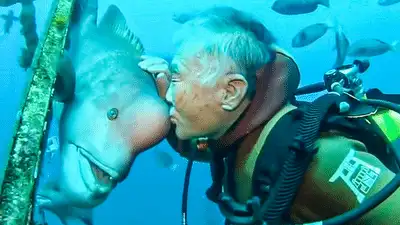
At the centre of this story is Hiroyuki Arakawa, a seasoned diver who has spent years caring for an underwater Shinto shrine gate. His routine dives are part of his work, but what he experiences during these visits goes far beyond maintenance.
A Chance Encounter That Changed Everything
Around 30 years ago, Arakawa came across an injured Asian sheepshead wrasse. The fish was weak and struggling to survive. Instead of ignoring it, he chose to help, feeding it regularly until it regained strength.
The fish recovered, but it did not disappear back into the vast ocean. It stayed.
Arakawa later named the fish Yoriko, and what began as a simple act of care slowly turned into something extraordinary.
From Familiarity to a Lasting Bond
As the years passed, a pattern began to form. Every time Arakawa returned to the site, Yoriko would appear. There was no fixed timing or strict routine, yet the encounters kept happening.
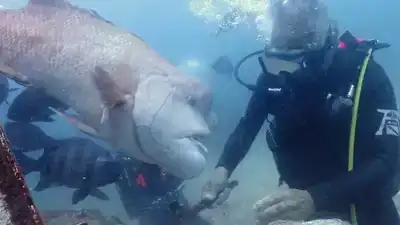
Unlike typical interactions with wild marine life, the fish showed no signs of fear. Instead, it approached him calmly and confidently. In several instances, Yoriko has even made gentle physical contact, behaviour that is rarely seen in wild fish unless there is a strong sense of familiarity.
Arakawa continues to feed Yoriko during many of his dives, maintaining a connection that has now lasted more than 30 years. What makes this bond remarkable is its consistency over time, something rarely documented in marine environments.
What Makes This Story So Unique
Many animal interactions with humans are short-lived or based on immediate rewards like food. But this case stands apart because of its duration and stability.
Yoriko does not just appear once or twice. The fish has been seen returning repeatedly over decades. This suggests a level of recognition or learned behaviour that goes beyond simple instinct.
Footage of their encounters shows a relaxed and almost familiar interaction, raising questions about how much fish can actually remember and recognise.
What Science Reveals About Fish Intelligence
In recent years, scientific research has begun to challenge old assumptions about fish. Studies now suggest that several species are capable of recognising human faces, remembering environments, and learning from experience.
Wrasses, the group to which Yoriko belongs, are considered among the more intelligent fish species. They have been observed using tools, forming social structures, and cooperating with other marine life.
While scientists often explain such behaviour through associative learning, such as linking a person to food or safety, the long-term nature of this interaction makes it especially intriguing.
A Story That Continues to Inspire
The bond between Arakawa and Yoriko is still ongoing. Even after all these years, the diver continues his regular visits, and the fish continues to appear, as if responding to a familiar presence.
This story is more than just a rare encounter. It offers a glimpse into the possibilities of connection in the natural world. It reminds us that even in the vast and often unpredictable ocean, relationships can form in the most unexpected ways.
It also challenges the way we think about animal intelligence and awareness. Perhaps the line between instinct and recognition is not as clear as we once believed.
In the quiet waters of Tateyama, this unique bond continues, simple, consistent, and quietly extraordinary.
At the centre of this story is Hiroyuki Arakawa, a seasoned diver who has spent years caring for an underwater Shinto shrine gate. His routine dives are part of his work, but what he experiences during these visits goes far beyond maintenance.
A Chance Encounter That Changed Everything
Around 30 years ago, Arakawa came across an injured Asian sheepshead wrasse. The fish was weak and struggling to survive. Instead of ignoring it, he chose to help, feeding it regularly until it regained strength.The fish recovered, but it did not disappear back into the vast ocean. It stayed.
Arakawa later named the fish Yoriko, and what began as a simple act of care slowly turned into something extraordinary.
From Familiarity to a Lasting Bond
As the years passed, a pattern began to form. Every time Arakawa returned to the site, Yoriko would appear. There was no fixed timing or strict routine, yet the encounters kept happening. Unlike typical interactions with wild marine life, the fish showed no signs of fear. Instead, it approached him calmly and confidently. In several instances, Yoriko has even made gentle physical contact, behaviour that is rarely seen in wild fish unless there is a strong sense of familiarity.
Arakawa continues to feed Yoriko during many of his dives, maintaining a connection that has now lasted more than 30 years. What makes this bond remarkable is its consistency over time, something rarely documented in marine environments.
What Makes This Story So Unique
Many animal interactions with humans are short-lived or based on immediate rewards like food. But this case stands apart because of its duration and stability. Yoriko does not just appear once or twice. The fish has been seen returning repeatedly over decades. This suggests a level of recognition or learned behaviour that goes beyond simple instinct.
Footage of their encounters shows a relaxed and almost familiar interaction, raising questions about how much fish can actually remember and recognise.
What Science Reveals About Fish Intelligence
In recent years, scientific research has begun to challenge old assumptions about fish. Studies now suggest that several species are capable of recognising human faces, remembering environments, and learning from experience. Wrasses, the group to which Yoriko belongs, are considered among the more intelligent fish species. They have been observed using tools, forming social structures, and cooperating with other marine life.
While scientists often explain such behaviour through associative learning, such as linking a person to food or safety, the long-term nature of this interaction makes it especially intriguing.
A Story That Continues to Inspire
The bond between Arakawa and Yoriko is still ongoing. Even after all these years, the diver continues his regular visits, and the fish continues to appear, as if responding to a familiar presence. This story is more than just a rare encounter. It offers a glimpse into the possibilities of connection in the natural world. It reminds us that even in the vast and often unpredictable ocean, relationships can form in the most unexpected ways.
It also challenges the way we think about animal intelligence and awareness. Perhaps the line between instinct and recognition is not as clear as we once believed.
In the quiet waters of Tateyama, this unique bond continues, simple, consistent, and quietly extraordinary.
Next Story