
Coconut Oil Vs Mustard Oil: Which Cooking Oil Is Healthier For Your Daily Diet

Coconut Oil Vs Mustard Oil ; A Complete Guide To Choosing The Healthier Cooking Oil: Cooking oil plays an essential role in daily meals, influencing both flavour and nutrition. In many households, especially across Asia, coconut oil and mustard oil are two widely used choices. Each oil carries a unique taste, nutritional profile and set of health benefits that have been valued for generations. While coconut oil is commonly associated with tropical cuisines and traditional remedies, mustard oil is deeply rooted in many regional cooking styles. Understanding the differences between coconut oil vs mustard oil can help people make more informed decisions about which oil best suits their diet, lifestyle and health goals.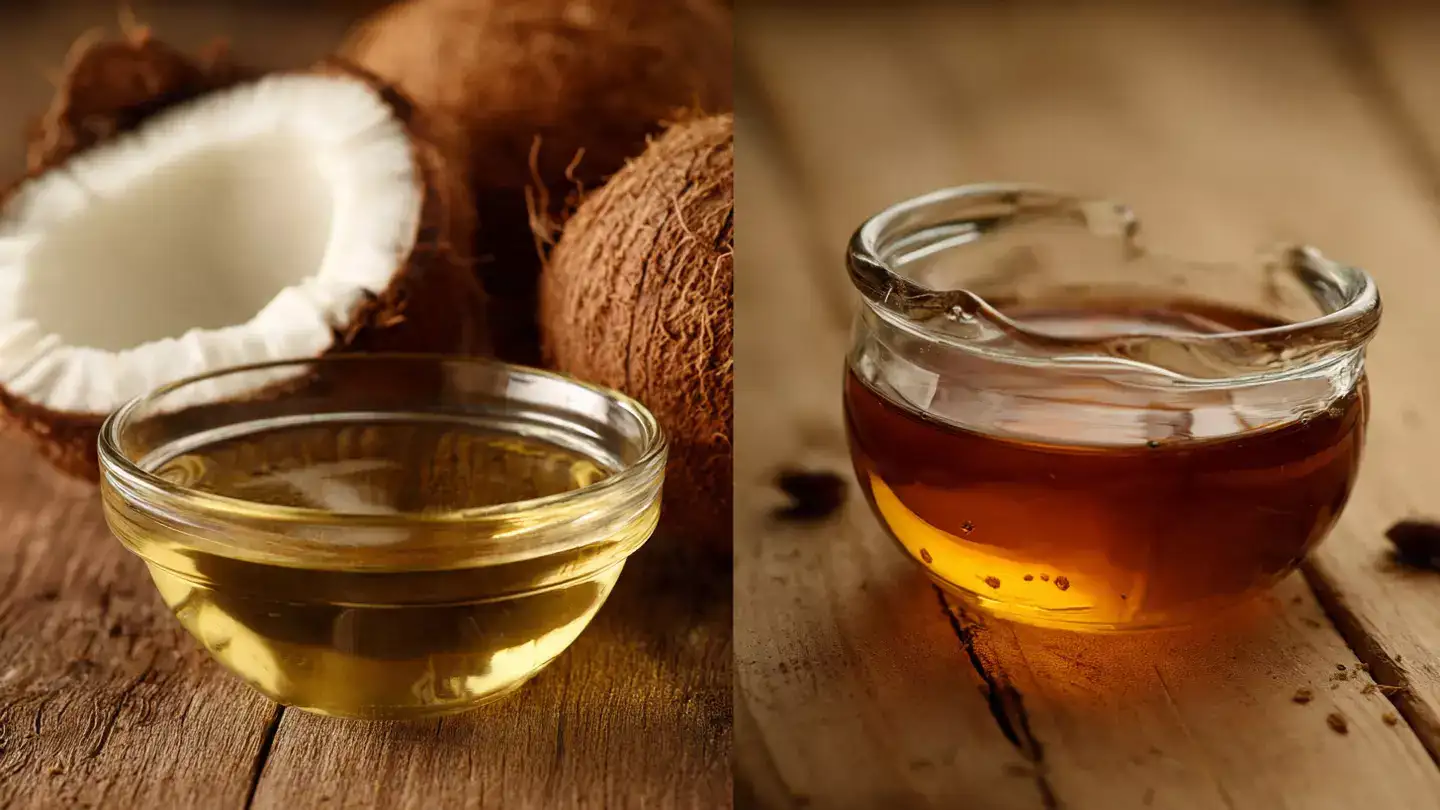
Medium-chain fats are metabolised differently from many other types of fat. They are absorbed quickly and converted into energy by the body, which is why coconut oil is sometimes associated with improved energy levels and metabolism. Coconut oil nutrition also includes small amounts of vitamin E and antioxidants that help protect cells from oxidative stress.
Another advantage of coconut oil is its stability at high temperatures. It has a relatively high smoke point, making it suitable for frying, sautéing and baking. Because of this stability, it does not break down easily during cooking, which helps preserve its nutritional qualities.
The mild sweetness and distinctive aroma of coconut oil make it particularly suitable for certain cuisines and dishes. Many people also use it in beverages, desserts and even for oil pulling in traditional wellness practices.
One of the most significant health benefits of mustard oil lies in its fatty acid composition. Mustard oil contains a high proportion of monounsaturated and polyunsaturated fats, which are generally considered beneficial for heart health when consumed in moderation. These fats can help maintain healthy cholesterol levels and support cardiovascular function.
Mustard oil also contains omega-3 and omega-6 fatty acids, both of which are essential for the body. These fatty acids support brain function, reduce inflammation and contribute to overall wellbeing.
In addition, mustard oil is known to contain natural compounds with antibacterial and antifungal properties. Traditionally, it has been used not only in cooking but also for massage and skin care due to its warming and stimulating qualities.
Its strong flavour enhances many savoury dishes, particularly pickles, curries and stir-fried preparations.
Coconut oil is rich in saturated fats, especially medium-chain triglycerides. While saturated fats have long been debated in nutritional science, moderate consumption of coconut oil can still be part of a balanced diet. Its MCTs may provide quick energy and may support metabolism.
Mustard oil, on the other hand, contains a higher proportion of unsaturated fats, which are generally considered heart-friendly. The presence of omega-3 fatty acids further contributes to its reputation as a beneficial cooking oil.
Another factor to consider is how these oils behave during cooking. Coconut oil is extremely stable at higher temperatures, making it suitable for frying and baking. Mustard oil also performs well for high-heat cooking, but it is often heated to its smoking point first to reduce its sharp flavour before being used in recipes.
From a nutritional perspective, both oils offer benefits when used appropriately. The key lies in moderation and variety in cooking fats.
Mustard oil has a bold, pungent flavour that can dramatically enhance savoury dishes. It is widely used in pickles, marinades and regional recipes that rely on its characteristic aroma.
Because of these flavour differences, many cooks choose the oil based on the cuisine they are preparing rather than strictly on health considerations.
Both oils also have traditional uses beyond cooking. Coconut oil is widely used in hair care and skincare, while mustard oil has long been used for body massage and traditional wellness practices.
Coconut oil may be a suitable option for those who prefer a stable oil for high-temperature cooking and enjoy its flavour in specific dishes. Mustard oil, with its beneficial unsaturated fats and omega-3 content, may support heart health when used in moderation.
Nutrition experts often suggest rotating different healthy cooking oils rather than relying on only one. Using a variety of oils can help provide a broader range of nutrients and fatty acids.
Ultimately, the choice between coconut oil vs mustard oil depends on personal taste, dietary needs and cooking preferences. Both oils can be part of a balanced diet when consumed in reasonable amounts and paired with nutritious foods such as vegetables, whole grains and lean proteins.
Understanding Coconut Oil And Its Nutritional Profile
Coconut oil is extracted from the kernel or meat of mature coconuts. It has been widely used in cooking, skincare and traditional remedies for centuries. One of the most notable characteristics of coconut oil is its high content of saturated fats, particularly medium-chain triglycerides (MCTs).Medium-chain fats are metabolised differently from many other types of fat. They are absorbed quickly and converted into energy by the body, which is why coconut oil is sometimes associated with improved energy levels and metabolism. Coconut oil nutrition also includes small amounts of vitamin E and antioxidants that help protect cells from oxidative stress.
Another advantage of coconut oil is its stability at high temperatures. It has a relatively high smoke point, making it suitable for frying, sautéing and baking. Because of this stability, it does not break down easily during cooking, which helps preserve its nutritional qualities.
The mild sweetness and distinctive aroma of coconut oil make it particularly suitable for certain cuisines and dishes. Many people also use it in beverages, desserts and even for oil pulling in traditional wellness practices.
Mustard Oil And Its Nutritional Benefits
Mustard oil is extracted from mustard seeds and has long been a staple cooking oil in several regions of India and neighbouring countries. It is known for its strong aroma, pungent flavour and distinctive golden colour.One of the most significant health benefits of mustard oil lies in its fatty acid composition. Mustard oil contains a high proportion of monounsaturated and polyunsaturated fats, which are generally considered beneficial for heart health when consumed in moderation. These fats can help maintain healthy cholesterol levels and support cardiovascular function.
Mustard oil also contains omega-3 and omega-6 fatty acids, both of which are essential for the body. These fatty acids support brain function, reduce inflammation and contribute to overall wellbeing.
In addition, mustard oil is known to contain natural compounds with antibacterial and antifungal properties. Traditionally, it has been used not only in cooking but also for massage and skin care due to its warming and stimulating qualities.
Its strong flavour enhances many savoury dishes, particularly pickles, curries and stir-fried preparations.
Comparing Coconut Oil Vs Mustard Oil For Health
When comparing coconut oil vs mustard oil, the primary difference lies in their fat composition.Coconut oil is rich in saturated fats, especially medium-chain triglycerides. While saturated fats have long been debated in nutritional science, moderate consumption of coconut oil can still be part of a balanced diet. Its MCTs may provide quick energy and may support metabolism.
Mustard oil, on the other hand, contains a higher proportion of unsaturated fats, which are generally considered heart-friendly. The presence of omega-3 fatty acids further contributes to its reputation as a beneficial cooking oil.
Another factor to consider is how these oils behave during cooking. Coconut oil is extremely stable at higher temperatures, making it suitable for frying and baking. Mustard oil also performs well for high-heat cooking, but it is often heated to its smoking point first to reduce its sharp flavour before being used in recipes.
From a nutritional perspective, both oils offer benefits when used appropriately. The key lies in moderation and variety in cooking fats.
Cooking Uses And Culinary Differences
Beyond nutrition, coconut oil and mustard oil bring distinct flavours to food. Coconut oil provides a mild, slightly sweet taste that works well in baked goods, desserts, curries and tropical dishes.Mustard oil has a bold, pungent flavour that can dramatically enhance savoury dishes. It is widely used in pickles, marinades and regional recipes that rely on its characteristic aroma.
Because of these flavour differences, many cooks choose the oil based on the cuisine they are preparing rather than strictly on health considerations.
Both oils also have traditional uses beyond cooking. Coconut oil is widely used in hair care and skincare, while mustard oil has long been used for body massage and traditional wellness practices.
Which Cooking Oil Is Better For Everyday Use
The question of the best cooking oil for health does not have a single universal answer. Coconut oil and mustard oil both offer unique nutritional properties and culinary advantages.Coconut oil may be a suitable option for those who prefer a stable oil for high-temperature cooking and enjoy its flavour in specific dishes. Mustard oil, with its beneficial unsaturated fats and omega-3 content, may support heart health when used in moderation.
Nutrition experts often suggest rotating different healthy cooking oils rather than relying on only one. Using a variety of oils can help provide a broader range of nutrients and fatty acids.
Ultimately, the choice between coconut oil vs mustard oil depends on personal taste, dietary needs and cooking preferences. Both oils can be part of a balanced diet when consumed in reasonable amounts and paired with nutritious foods such as vegetables, whole grains and lean proteins.
Next Story