
Did You Know This Country Has No Rivers? Here’s How It Survives Without Them

When you glance at a world map, rivers usually stand out as blue lifelines cutting through land. They shape cities, support agriculture, and influence culture. Now imagine a country where those blue lines are completely missing. It may sound impossible, but Saudi Arabia is the world’s largest nation with no permanent rivers at all.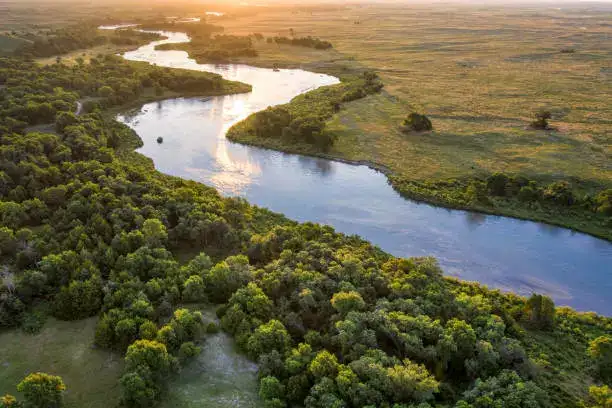
Despite covering a vast area and supporting millions of people, not a single river flows through its land year-round. This rare geographic feature makes Saudi Arabia truly unique.
A Land Shaped by Desert and Dry Climate
Saudi Arabia’s landscape is dominated by arid terrain. Huge stretches of the country are covered by deserts, including the massive Rub' al Khali, also known as the Empty Quarter. It is one of the largest continuous sand deserts on Earth, stretching across several countries.
Rivers require steady rainfall or melting snow from mountains to keep flowing. Saudi Arabia has neither. Rainfall is scarce and unpredictable, with many regions receiving less than 100 millimetres annually. In contrast, countries like India receive many times that amount, allowing rivers to flow continuously.
Without regular water input, rivers simply cannot survive.
Seasonal Water Without Permanent Rivers
Although there are no permanent rivers, rain does fall occasionally. When it does, water rushes across dry land through temporary channels known as wadis. These channels can fill quickly during storms and look like rivers for a short while.
One well-known example is Wadi Hanifah, located near Riyadh. During heavy rainfall, water flows through the wadi, but it soon dries up due to heat, evaporation, and absorption into the ground.
These wadis prove that water does move across the land but not long enough to create lasting rivers.
How Does Saudi Arabia Meet Its Water Needs?
Living without rivers requires long-term planning and innovation. Saudi Arabia depends on two main water sources. The first is ancient underground water stored deep beneath the earth, accumulated over thousands of years when the climate was wetter.
The second and most important solution is desalination. Saudi Arabia operates some of the largest desalination plants in the world, converting seawater from the Arabian Gulf and the Red Sea into clean drinking water. Today, the country is among the world’s leading producers of desalinated water, supplying homes, cities, and industries.
Daily Life in a Riverless Nation
Because water is limited, conservation is deeply ingrained in daily life. People are encouraged to avoid waste, homes use water-efficient systems, and landscaping focuses on plants that need very little water. Instead of riverside parks and boat rides, desert scenery, oases, and dunes define the natural beauty of the land.
Water is not just a resource it is a responsibility.
Are There Other Riverless Countries?
A few small desert nations and city-states also lack rivers, but Saudi Arabia stands apart due to its sheer size. Spanning more than 2 million square kilometres without a single permanent river, it is unmatched anywhere in the world.
Saudi Arabia’s geography proves that nature doesn’t follow one pattern everywhere. While some countries grow around rivers, others adapt to deserts. With careful planning, technology, and respect for water, Saudi Arabia shows that life can flourish even without rivers flowing through the land.
Despite covering a vast area and supporting millions of people, not a single river flows through its land year-round. This rare geographic feature makes Saudi Arabia truly unique.
A Land Shaped by Desert and Dry Climate
Saudi Arabia’s landscape is dominated by arid terrain. Huge stretches of the country are covered by deserts, including the massive Rub' al Khali, also known as the Empty Quarter. It is one of the largest continuous sand deserts on Earth, stretching across several countries.Rivers require steady rainfall or melting snow from mountains to keep flowing. Saudi Arabia has neither. Rainfall is scarce and unpredictable, with many regions receiving less than 100 millimetres annually. In contrast, countries like India receive many times that amount, allowing rivers to flow continuously.
Without regular water input, rivers simply cannot survive.
Seasonal Water Without Permanent Rivers
Although there are no permanent rivers, rain does fall occasionally. When it does, water rushes across dry land through temporary channels known as wadis. These channels can fill quickly during storms and look like rivers for a short while. One well-known example is Wadi Hanifah, located near Riyadh. During heavy rainfall, water flows through the wadi, but it soon dries up due to heat, evaporation, and absorption into the ground.
These wadis prove that water does move across the land but not long enough to create lasting rivers.
How Does Saudi Arabia Meet Its Water Needs?
Living without rivers requires long-term planning and innovation. Saudi Arabia depends on two main water sources. The first is ancient underground water stored deep beneath the earth, accumulated over thousands of years when the climate was wetter.The second and most important solution is desalination. Saudi Arabia operates some of the largest desalination plants in the world, converting seawater from the Arabian Gulf and the Red Sea into clean drinking water. Today, the country is among the world’s leading producers of desalinated water, supplying homes, cities, and industries.
Daily Life in a Riverless Nation
Because water is limited, conservation is deeply ingrained in daily life. People are encouraged to avoid waste, homes use water-efficient systems, and landscaping focuses on plants that need very little water. Instead of riverside parks and boat rides, desert scenery, oases, and dunes define the natural beauty of the land. Water is not just a resource it is a responsibility.
Are There Other Riverless Countries?
A few small desert nations and city-states also lack rivers, but Saudi Arabia stands apart due to its sheer size. Spanning more than 2 million square kilometres without a single permanent river, it is unmatched anywhere in the world. Saudi Arabia’s geography proves that nature doesn’t follow one pattern everywhere. While some countries grow around rivers, others adapt to deserts. With careful planning, technology, and respect for water, Saudi Arabia shows that life can flourish even without rivers flowing through the land.
Next Story