
Did You Know Tulsidas Wrote Hanuman Chalisa In Jail?


“बुद्धिहीन तनु जानिके, सुमिरौं पवन कुमार। बल बुद्धि विद्या देहु मोहिं, हरहु कलेश विकार॥”
The Hanuman Chalisa is one of the most widely recited prayers in India today. Millions of people chant it every Tuesday, Saturday, or during difficult phases of life without realizing that its origins are linked to one of the darkest moments in Tulsidas’s life.
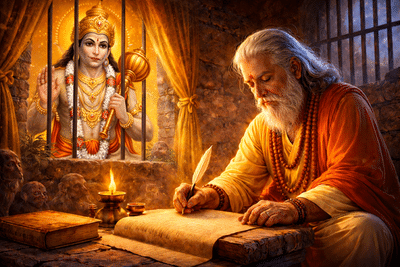
According to popular tradition, Goswami Tulsidas wrote the Hanuman Chalisa while imprisoned during the Mughal era. The story is not confirmed by historians in the same way as political history, but it has been passed down for generations in devotional literature and oral tradition. For devotees, the story is powerful because it shows that one of Hinduism’s most comforting prayers was born not in peace, but in fear, uncertainty, and struggle.
1. The Story Begins With Tulsidas Refusing To Perform A Miracle
According to the popular story, Emperor Akbar had heard about Tulsidas and his growing spiritual influence. Curious about his fame, Akbar summoned him to the royal court and reportedly asked him to perform a miracle.
Tulsidas is believed to have refused. He is said to have replied that he was only a devotee of Lord Ram and Hanuman and had no personal powers to display. This answer reportedly angered the emperor, leading to Tulsidas being imprisoned.
2. Hanuman Chalisa Was Said To Be Written During Forty Days In JailMany traditions believe that Tulsidas remained in prison for forty days. During this period, instead of giving in to fear, he turned to Hanuman for strength and protection.
It is said that he composed one verse each day, which is why the Hanuman Chalisa contains forty chaupais. The word “Chalisa” itself comes from the Hindi word “chalis,” meaning forty. Over time, the prayer became not just a hymn to Hanuman, but also a symbol of devotion during difficult times.
3. The Monkey Story Made The Legend Even More FamousOne of the most dramatic parts of the story comes after Tulsidas completed the Hanuman Chalisa. According to popular belief, large groups of monkeys suddenly entered Fatehpur Sikri and caused chaos in the palace and surrounding areas.
People saw this as Hanuman’s divine intervention because Hanuman himself is associated with monkeys in the Ramayana. The story says that Akbar became frightened, realized Tulsidas’s spiritual power, apologized, and released him from prison. While this story belongs more to faith and tradition than recorded history, it remains one of the reasons the Hanuman Chalisa is so strongly linked with protection from crisis.
4. Hanuman Chalisa Was Written In A Language Common People Understood A visually calming and spiritually powerful thumbnail showing a peaceful early morning scene. In the center a young devotee is seated cross legged with eyes closed holding a Hanuman Chalisa book close to the chest. A soft golden glow surrounds the figure symbolising inner strength peace and divine protection. In the background a subtle image of Lord Hanuman appears in a gentle blessing posture, not overpowering but protective and reassuring. Warm saffron and soft white tones dominate the image creating a sense of devotion calm and positivity. The overall mood reflects mental peace courage focus and spiritual balance, making it relatable for modern lifestyle and spirituality focused readers.
One reason the Hanuman Chalisa became so popular is because Tulsidas wrote it in Awadhi, a language ordinary people could understand. At a time when many religious texts were only available in Sanskrit, this made the prayer more accessible.
Tulsidas wanted devotion to reach everyone, not just scholars or priests. That is why the Hanuman Chalisa became a prayer that farmers, travelers, workers, students, and families could easily memorize and chant.
5. The Forty Verses Focus On Strength, Wisdom, And DevotionThe Hanuman Chalisa is not only a praise song. Each verse highlights a different quality of Hanuman, including courage, intelligence, loyalty, humility, and fearlessness.
Hanuman is described as someone who can remove fear, destroy negativity, give wisdom, and protect devotees during hard times. This is why people often turn to the Hanuman Chalisa when they feel anxious, weak, confused, or emotionally overwhelmed.
6. Many People Believe Daily Chanting Brings Peace And ConfidenceFor many devotees, the Hanuman Chalisa is more than a prayer. It becomes part of daily life. People believe regular chanting helps reduce fear, calm the mind, improve focus, and create a feeling of emotional strength.
Some traditions especially recommend chanting it on Tuesdays and Saturdays because these days are closely associated with Hanuman worship. Many also believe that reciting the Hanuman Chalisa during difficult phases brings mental peace and a sense of divine protection.
The Hanuman Chalisa is one of the most widely recited prayers in India today. Millions of people chant it every Tuesday, Saturday, or during difficult phases of life without realizing that its origins are linked to one of the darkest moments in Tulsidas’s life.
According to popular tradition, Goswami Tulsidas wrote the Hanuman Chalisa while imprisoned during the Mughal era. The story is not confirmed by historians in the same way as political history, but it has been passed down for generations in devotional literature and oral tradition. For devotees, the story is powerful because it shows that one of Hinduism’s most comforting prayers was born not in peace, but in fear, uncertainty, and struggle.
1. The Story Begins With Tulsidas Refusing To Perform A Miracle
According to the popular story, Emperor Akbar had heard about Tulsidas and his growing spiritual influence. Curious about his fame, Akbar summoned him to the royal court and reportedly asked him to perform a miracle.
Tulsidas is believed to have refused. He is said to have replied that he was only a devotee of Lord Ram and Hanuman and had no personal powers to display. This answer reportedly angered the emperor, leading to Tulsidas being imprisoned.
2. Hanuman Chalisa Was Said To Be Written During Forty Days In JailMany traditions believe that Tulsidas remained in prison for forty days. During this period, instead of giving in to fear, he turned to Hanuman for strength and protection.
It is said that he composed one verse each day, which is why the Hanuman Chalisa contains forty chaupais. The word “Chalisa” itself comes from the Hindi word “chalis,” meaning forty. Over time, the prayer became not just a hymn to Hanuman, but also a symbol of devotion during difficult times.
3. The Monkey Story Made The Legend Even More FamousOne of the most dramatic parts of the story comes after Tulsidas completed the Hanuman Chalisa. According to popular belief, large groups of monkeys suddenly entered Fatehpur Sikri and caused chaos in the palace and surrounding areas.
People saw this as Hanuman’s divine intervention because Hanuman himself is associated with monkeys in the Ramayana. The story says that Akbar became frightened, realized Tulsidas’s spiritual power, apologized, and released him from prison. While this story belongs more to faith and tradition than recorded history, it remains one of the reasons the Hanuman Chalisa is so strongly linked with protection from crisis.
4. Hanuman Chalisa Was Written In A Language Common People Understood
One reason the Hanuman Chalisa became so popular is because Tulsidas wrote it in Awadhi, a language ordinary people could understand. At a time when many religious texts were only available in Sanskrit, this made the prayer more accessible.
Tulsidas wanted devotion to reach everyone, not just scholars or priests. That is why the Hanuman Chalisa became a prayer that farmers, travelers, workers, students, and families could easily memorize and chant.
5. The Forty Verses Focus On Strength, Wisdom, And DevotionThe Hanuman Chalisa is not only a praise song. Each verse highlights a different quality of Hanuman, including courage, intelligence, loyalty, humility, and fearlessness.
Hanuman is described as someone who can remove fear, destroy negativity, give wisdom, and protect devotees during hard times. This is why people often turn to the Hanuman Chalisa when they feel anxious, weak, confused, or emotionally overwhelmed.
6. Many People Believe Daily Chanting Brings Peace And ConfidenceFor many devotees, the Hanuman Chalisa is more than a prayer. It becomes part of daily life. People believe regular chanting helps reduce fear, calm the mind, improve focus, and create a feeling of emotional strength.
Some traditions especially recommend chanting it on Tuesdays and Saturdays because these days are closely associated with Hanuman worship. Many also believe that reciting the Hanuman Chalisa during difficult phases brings mental peace and a sense of divine protection.
Next Story