
Do Elephants Really Have 'Names' for Each Other? New Research Says It’s Possible

Elephants are already considered one of the most intelligent animals on Earth, known for their deep memory, strong family bonds, and emotional awareness. Now, new research is adding another surprising layer to their behaviour. Scientists believe elephants may use unique vocal sounds to address each other, almost like calling out “names”.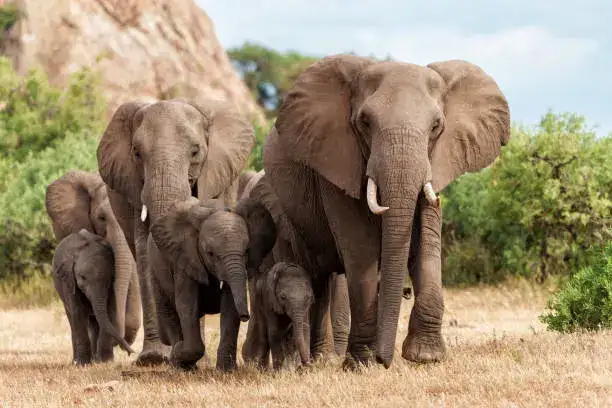
If confirmed, this would mean elephants are far more advanced in communication than previously thought.
A highly developed communication system
Elephants live in tightly connected social groups where communication is essential for survival. Their interactions are not random. They rely on a combination of low-frequency rumbles, body language, and physical touch to stay in contact.
One of the most fascinating aspects of their communication is their ability to send sound signals over long distances, sometimes covering several kilometres. These rumbles are so low that humans often cannot hear them, but they carry important social information across the herd.
Researchers now believe these sounds may have more structure than simple emotional signals.
As noted in scientific observations on elephant behaviour:
“Elephants use learned vocal labels for addressing other members of their group.”
This suggests that their communication is not just instinctive noise but something learned and meaningful within their social groups.
Evidence that elephants may use “names”
The idea that elephants might use name-like calls came from studies analysing how they respond to different vocalisations. Scientists noticed that elephants react more strongly when a call seems specifically directed at them compared to general herd sounds.
In one detailed study, researchers used advanced machine learning models to examine elephant calls. They discovered that certain vocal patterns were closely linked to individual elephants, far more than what would happen by chance.
To understand this better, scientists compared calls within herds and found consistent patterns suggesting individual recognition through sound.
One of the researchers explained an important finding:
“Contrary to mimicry-based naming systems, it looks like elephants do not echo the call of the receiver. The call itself is arbitrary.”
This is a key point. In many animals, vocal signals may imitate sounds or emotional states. But in elephants, the sound used to “label” another elephant does not appear to mimic them in any way. Instead, it seems to function more like a symbolic tag, similar to how humans use names.
Deep memory and lifelong social bonds
Elephants are famous for their exceptional memory, especially when it comes to recognising individuals after long separations. They can remember members of their herd, other elephant groups, and even humans they have encountered years earlier.
Their social lives are equally impressive. Elephant families are usually led by older females, and these family groups can remain together for many years, sometimes even for life. Strong emotional connections and cooperation are central to their survival.
Long-term research has highlighted how important these bonds are. As described by a leading elephant researcher:
“Elephants lead socially complex lives, with family associations lasting many years.”
In such a complex society, having a system to directly address individuals would be extremely useful. It would help coordinate movement, maintain group unity, and strengthen social relationships.
What this means for understanding intelligence
If elephants truly use name-like vocal labels, it challenges the long-standing belief that symbolic language is uniquely human. It suggests that the ability to assign sounds to individuals may have evolved in other species as well.
This discovery also provides clues about how language itself may have developed. Scientists believe that social needs, such as maintaining relationships in large groups, may have driven the evolution of naming systems in more than one species.
Researchers summarised this idea clearly:
"This ability may be an important feature of complex social cognition."
In other words, using name-like calls could be a sign of advanced thinking, emotional awareness, and social intelligence.
A new perspective on elephants
For a long time, elephants have been admired for their intelligence and emotional depth. But this new research suggests there may be even more going on beneath the surface of their communication.
If elephants are truly calling each other using individual vocal labels, it reveals a world of interaction that is structured, meaningful, and surprisingly similar to human communication.
It also reminds us that animal intelligence is still not fully understood. With every new discovery, elephants continue to surprise us, showing that their inner world may be far richer than we ever imagined.
If confirmed, this would mean elephants are far more advanced in communication than previously thought.
A highly developed communication system
Elephants live in tightly connected social groups where communication is essential for survival. Their interactions are not random. They rely on a combination of low-frequency rumbles, body language, and physical touch to stay in contact.One of the most fascinating aspects of their communication is their ability to send sound signals over long distances, sometimes covering several kilometres. These rumbles are so low that humans often cannot hear them, but they carry important social information across the herd.
Researchers now believe these sounds may have more structure than simple emotional signals.
As noted in scientific observations on elephant behaviour:
“Elephants use learned vocal labels for addressing other members of their group.”
This suggests that their communication is not just instinctive noise but something learned and meaningful within their social groups.
Evidence that elephants may use “names”
The idea that elephants might use name-like calls came from studies analysing how they respond to different vocalisations. Scientists noticed that elephants react more strongly when a call seems specifically directed at them compared to general herd sounds. In one detailed study, researchers used advanced machine learning models to examine elephant calls. They discovered that certain vocal patterns were closely linked to individual elephants, far more than what would happen by chance.
To understand this better, scientists compared calls within herds and found consistent patterns suggesting individual recognition through sound.
One of the researchers explained an important finding:
“Contrary to mimicry-based naming systems, it looks like elephants do not echo the call of the receiver. The call itself is arbitrary.”
This is a key point. In many animals, vocal signals may imitate sounds or emotional states. But in elephants, the sound used to “label” another elephant does not appear to mimic them in any way. Instead, it seems to function more like a symbolic tag, similar to how humans use names.
Deep memory and lifelong social bonds
Elephants are famous for their exceptional memory, especially when it comes to recognising individuals after long separations. They can remember members of their herd, other elephant groups, and even humans they have encountered years earlier. Their social lives are equally impressive. Elephant families are usually led by older females, and these family groups can remain together for many years, sometimes even for life. Strong emotional connections and cooperation are central to their survival.
You may also like
- Raising readers: Simple ways parents can build strong reading habits
- Staying in that room in Dharamshala changed my entire trip: An experience I will never forget
- The Glow You Want Is Missing And This Could Be Why
- Why Your Hair Refuses to Grow No Matter What You Do
- The Health Benefits of Garlic and How to Consume It Properly
Long-term research has highlighted how important these bonds are. As described by a leading elephant researcher:
“Elephants lead socially complex lives, with family associations lasting many years.”
In such a complex society, having a system to directly address individuals would be extremely useful. It would help coordinate movement, maintain group unity, and strengthen social relationships.
What this means for understanding intelligence
If elephants truly use name-like vocal labels, it challenges the long-standing belief that symbolic language is uniquely human. It suggests that the ability to assign sounds to individuals may have evolved in other species as well. This discovery also provides clues about how language itself may have developed. Scientists believe that social needs, such as maintaining relationships in large groups, may have driven the evolution of naming systems in more than one species.
Researchers summarised this idea clearly:
"This ability may be an important feature of complex social cognition."
In other words, using name-like calls could be a sign of advanced thinking, emotional awareness, and social intelligence.
A new perspective on elephants
For a long time, elephants have been admired for their intelligence and emotional depth. But this new research suggests there may be even more going on beneath the surface of their communication. If elephants are truly calling each other using individual vocal labels, it reveals a world of interaction that is structured, meaningful, and surprisingly similar to human communication.
It also reminds us that animal intelligence is still not fully understood. With every new discovery, elephants continue to surprise us, showing that their inner world may be far richer than we ever imagined.






More from our partners


Loving Newspoint? Download the app now
