
English, Hindi, Arabic… How many languages does Zohran Mamdani speak?


Imagine not having to have a teleprompter or a translator on the stage when you address the crowd. Or not *having to have* a lackey by your side every time you go out and greet common people of a vibrant city with a very dynamic and cosmopolitan crowd!
Zohran Mamdani did that — and did that with ease!
And not just in one language, i.e., English — he was doing it in multiple languages. Think Hindi, Arabic, or even Bengali! Now, as much as these greetings and speeches have connected with the people who have rallied behind the 34-year-old and voted for him, making him the first ever Muslim and South Asian mayor-elect of New York City, those also have sparked curiosity in them — how many languages does Mamdani know, actually?
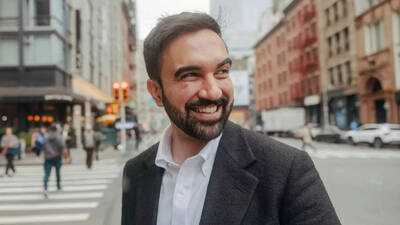
The multilingual orator
Zohran Mamdani — the Uganda-born, Queens-based, and making waves in New York politics — has captured the grassroots people as well as the Gen Z, thanks to his dynamic campaign and multicultural background. But the force behind that captivating trait? It’s his international upbringing — born in Kampala, Uganda, and having lived in different cultural contexts — that is reflected in his linguistic abilities.
According to his Wikipedia profile and his campaign videos, he speaks at least five languages in addition to English: Hindi-Urdu, Bengali, Spanish, Luganda, and Arabic. His campaign has highlighted the multilingual outreach he achieved in Queens, using his language skills to connect with diverse immigrant communities. For example, in campaign videos, he delivered messages in Urdu and Bangla as part of his grassroots strategy, and those videos showed that his communication goes well beyond English-only outreach.
Imagine being able to speak well and do so in at least six languages!
But where did he study? Did he go to Harvard like his parents?
But Mamdani’s multilingual ability isn’t something that’s lifted out of just the confines of a classroom — in fact, Zohran wasn’t as bright an academic star, especially as compared to his parents’ educational milestones and achievements.
Both his parents — Mira Nair and Mahmood Mamdani — are Harvard scholars, and Mahmood Mamdani, at present, is the Herbert Lehman Professor of Government and a professor of anthropology, political science, and African studies at Columbia University. He also serves as the chancellor of Kampala International University in Uganda. Meanwhile, Mira Nair, who studied at Miranda House (a college for women at Delhi University), went off to study at Harvard University — after turning down the offer of a full scholarship to Cambridge University in England.
Contrary to what some might assume, given his parents’ illustrious academic careers, Zohran did not attend Harvard University. In fact, he earned his bachelor’s degree from Bowdoin College in Maine, graduating in 2014 with a major in Africana Studies. While Mamdani does come from a family with Harvard credentials, his own collegiate path took a different institution and set of experiences.
Why does Zohran’s educational trajectory matter
While Mamdani did not have big names in his educational resume, what his political journey and rise underline is: in order to carve out one’s own identity, Ivy League names are not a must-have as the foundation. In the case of Zohran, his Africana Studies major aligned with his early interest in social justice, global histories of colonialism, and community organising. The fact that he immersed himself in a liberal arts setting rather than a traditional Ivy League environment may also speak to the grassroots, progressive message he promotes.
His multilingual outreach complemented his campaign orientation: engaging communities in Queens, New York, where many residents speak non-English languages at home, he was able to better connect across cultural lines.
Not just that, not following his parents’ Ivy League route, he, in fact, presented a more relatable image to working-class and immigrant constituents. His campaign has emphasised that his intellectual formation, activism, and housing-counsellor background were more important than premium credentials, which, in the end, yielded results, making him the “Suitable Boy” to lead New York City into a new era — one that’s built on affordability, accessibility, and equal opportunity.
Zohran Mamdani did that — and did that with ease!
And not just in one language, i.e., English — he was doing it in multiple languages. Think Hindi, Arabic, or even Bengali! Now, as much as these greetings and speeches have connected with the people who have rallied behind the 34-year-old and voted for him, making him the first ever Muslim and South Asian mayor-elect of New York City, those also have sparked curiosity in them — how many languages does Mamdani know, actually?
The multilingual orator
Zohran Mamdani — the Uganda-born, Queens-based, and making waves in New York politics — has captured the grassroots people as well as the Gen Z, thanks to his dynamic campaign and multicultural background. But the force behind that captivating trait? It’s his international upbringing — born in Kampala, Uganda, and having lived in different cultural contexts — that is reflected in his linguistic abilities.
According to his Wikipedia profile and his campaign videos, he speaks at least five languages in addition to English: Hindi-Urdu, Bengali, Spanish, Luganda, and Arabic. His campaign has highlighted the multilingual outreach he achieved in Queens, using his language skills to connect with diverse immigrant communities. For example, in campaign videos, he delivered messages in Urdu and Bangla as part of his grassroots strategy, and those videos showed that his communication goes well beyond English-only outreach.
Imagine being able to speak well and do so in at least six languages!
But where did he study? Did he go to Harvard like his parents?
But Mamdani’s multilingual ability isn’t something that’s lifted out of just the confines of a classroom — in fact, Zohran wasn’t as bright an academic star, especially as compared to his parents’ educational milestones and achievements.
Both his parents — Mira Nair and Mahmood Mamdani — are Harvard scholars, and Mahmood Mamdani, at present, is the Herbert Lehman Professor of Government and a professor of anthropology, political science, and African studies at Columbia University. He also serves as the chancellor of Kampala International University in Uganda. Meanwhile, Mira Nair, who studied at Miranda House (a college for women at Delhi University), went off to study at Harvard University — after turning down the offer of a full scholarship to Cambridge University in England.
Contrary to what some might assume, given his parents’ illustrious academic careers, Zohran did not attend Harvard University. In fact, he earned his bachelor’s degree from Bowdoin College in Maine, graduating in 2014 with a major in Africana Studies. While Mamdani does come from a family with Harvard credentials, his own collegiate path took a different institution and set of experiences.
Why does Zohran’s educational trajectory matter
While Mamdani did not have big names in his educational resume, what his political journey and rise underline is: in order to carve out one’s own identity, Ivy League names are not a must-have as the foundation. In the case of Zohran, his Africana Studies major aligned with his early interest in social justice, global histories of colonialism, and community organising. The fact that he immersed himself in a liberal arts setting rather than a traditional Ivy League environment may also speak to the grassroots, progressive message he promotes.
His multilingual outreach complemented his campaign orientation: engaging communities in Queens, New York, where many residents speak non-English languages at home, he was able to better connect across cultural lines.
Not just that, not following his parents’ Ivy League route, he, in fact, presented a more relatable image to working-class and immigrant constituents. His campaign has emphasised that his intellectual formation, activism, and housing-counsellor background were more important than premium credentials, which, in the end, yielded results, making him the “Suitable Boy” to lead New York City into a new era — one that’s built on affordability, accessibility, and equal opportunity.
Next Story