
From Fast Feet To Big Eyes: 5 Things You Didn’t Know About Ostriches

Ostriches, the world’s largest and heaviest birds, often captivate with their unique characteristics. But did you know there's more to them than just being big? Let’s explore five lesser-known facts about these fascinating creatures: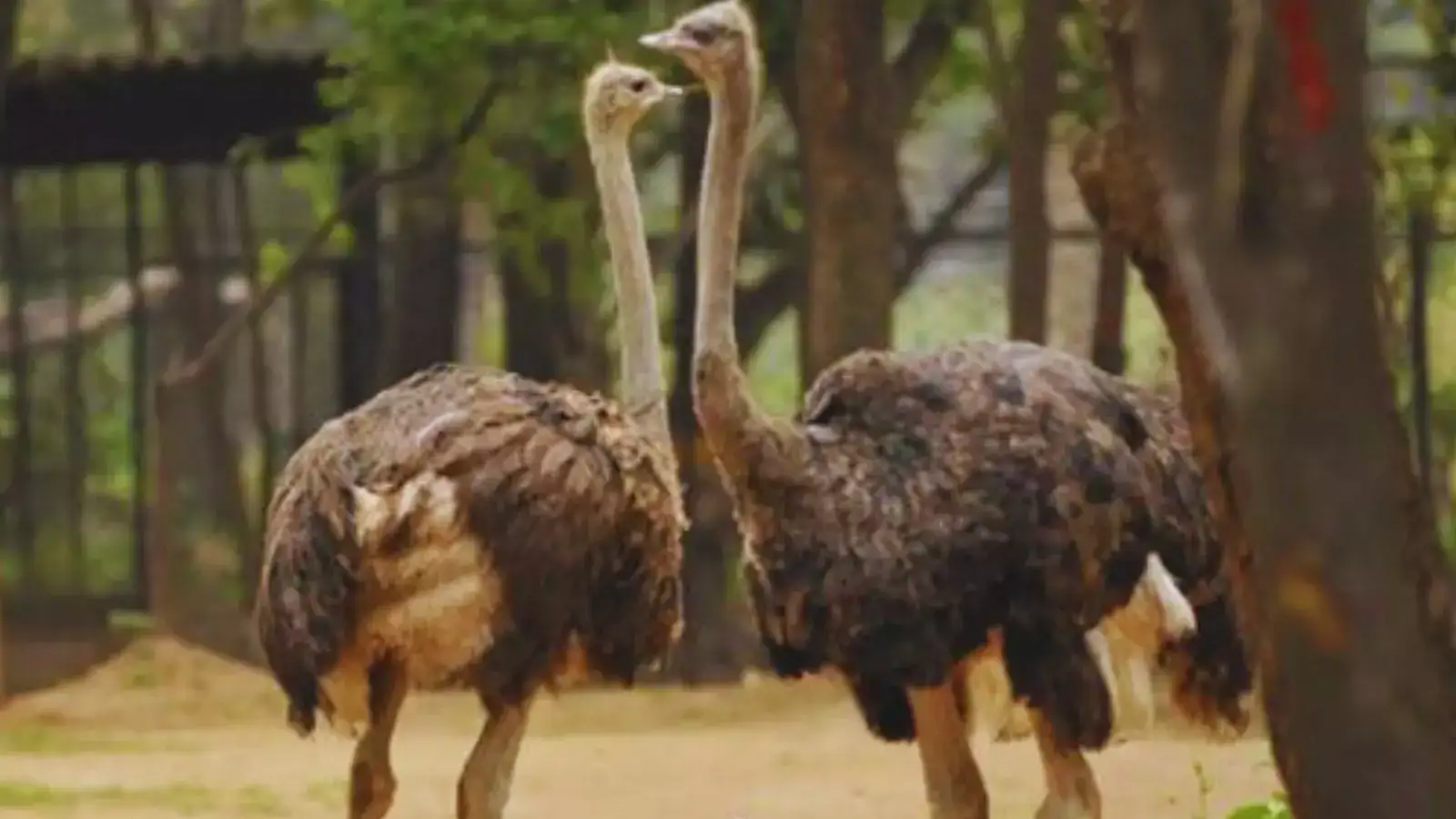
Ostriches Can’t Fly, But They’re Great Runners
While ostriches have large wings, they can't fly. However, they are exceptional runners, capable of reaching speeds up to 45 miles per hour (72 km/h). Their powerful legs are built for sprinting, and they can maintain a steady pace for long distances, which is useful in avoiding predators.
They Have Three Stomachs
Ostriches possess an incredible digestive system with three stomachs, which helps them process tough food. The first stomach, like ours, begins the digestion process. The second stomach grinds the food, and the third further breaks it down before absorption, making them efficient at extracting nutrients.
Ostriches Can Live for Decades
Unlike most birds, ostriches have a surprisingly long lifespan. They can live up to 40 to 45 years in the wild, thanks to their size and their ability to defend themselves. In captivity, with proper care, some have been known to live even longer.
Their Eyes Are Larger Than Their Brains
An ostrich’s eye is the largest of any land animal, measuring up to 2 inches (5 cm) in diameter. Interestingly, their eyes are bigger than their brains, providing excellent vision for spotting predators from a distance. However, their brains are small compared to their massive bodies.
Ostriches Have Unique Feet
Instead of the typical three or four toes that most birds have, ostriches only have two toes on each foot. This adaptation allows for better running efficiency, with one large toe used for powerful thrusts and the other for balance.
Ostriches are more than just a giant bird; they’re a marvel of nature, with unique adaptations that help them survive and thrive in their environments. From their impressive speed to their amazing digestive system, these birds continue to intrigue both scientists and nature enthusiasts alike.
Ostriches Can’t Fly, But They’re Great Runners
While ostriches have large wings, they can't fly. However, they are exceptional runners, capable of reaching speeds up to 45 miles per hour (72 km/h). Their powerful legs are built for sprinting, and they can maintain a steady pace for long distances, which is useful in avoiding predators.
They Have Three Stomachs
Ostriches possess an incredible digestive system with three stomachs, which helps them process tough food. The first stomach, like ours, begins the digestion process. The second stomach grinds the food, and the third further breaks it down before absorption, making them efficient at extracting nutrients.
You may also like
- In these 5 situations, a person's true face is revealed, Acharya Chanakya revealed the truth
- Iconic! Anna Wintour and Anne Hathaway recreate Devil Wears Prada moment at the Oscars
- Celebrating Milestones: Aamir Khan's Birthday and Cameron Diaz's Comeback
- The Evolution of Villains in Hindi Cinema: Anticipated Performances for 2026
- Anne Hathaway owns the Oscars 2026 red carpet in a stunning floral mermaid gown
Ostriches Can Live for Decades
Unlike most birds, ostriches have a surprisingly long lifespan. They can live up to 40 to 45 years in the wild, thanks to their size and their ability to defend themselves. In captivity, with proper care, some have been known to live even longer.
Their Eyes Are Larger Than Their Brains
An ostrich’s eye is the largest of any land animal, measuring up to 2 inches (5 cm) in diameter. Interestingly, their eyes are bigger than their brains, providing excellent vision for spotting predators from a distance. However, their brains are small compared to their massive bodies.
Ostriches Have Unique Feet
Instead of the typical three or four toes that most birds have, ostriches only have two toes on each foot. This adaptation allows for better running efficiency, with one large toe used for powerful thrusts and the other for balance.
Ostriches are more than just a giant bird; they’re a marvel of nature, with unique adaptations that help them survive and thrive in their environments. From their impressive speed to their amazing digestive system, these birds continue to intrigue both scientists and nature enthusiasts alike.






More from our partners


Loving Newspoint? Download the app now
