
God of Chaos' Asteroid Apophis Set for Rare Close Flyby of Earth in 2029, Says NASA

A massive asteroid is heading for an unusually close encounter with Earth in the coming years, giving scientists a once-in-a-lifetime opportunity to study a large space object at close range. The asteroid, known as Apophis, has attracted global attention because of its size, name and the precision of its predicted flyby.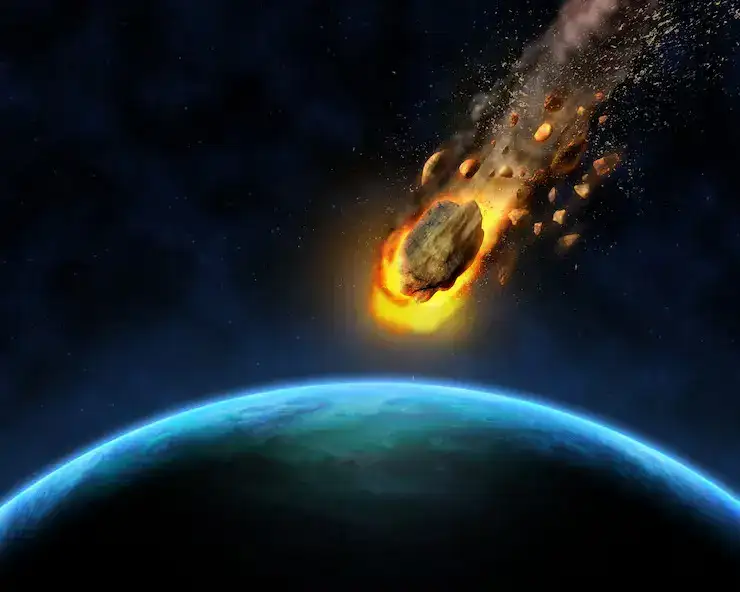
A Close Pass in 2029
According to NASA, Apophis will pass near Earth on April 13, 2029. At its closest point, it is expected to come within about 20,000 miles of Earth’s surface.
This distance is even closer than many of the satellites that orbit our planet, which usually stay around 22,000 miles above the equator. Despite how dramatic this sounds, scientists have made it clear that there is no threat to Earth.
NASA has stated that the asteroid poses no danger “to Earth, to anyone or anything living on it, or to astronauts or satellites in space.”
Why It Is Called the “God of Chaos”
The asteroid’s name comes from Apophis, an ancient Egyptian deity associated with chaos and disorder. While the name sounds alarming, the space rock itself is not expected to cause any harm.
Instead, scientists are focusing on the scientific value of the event. A close pass like this allows researchers to observe the asteroid in detail and collect data that would otherwise be impossible to obtain.
NASA has described it as “an amazing and totally unprecedented opportunity to learn much more about Apophis and similar near-Earth asteroids.”
A Rare Event in Space
Events like this are extremely uncommon. Scientists estimate that an asteroid of this size passing this close to Earth happens only once every few thousand years.
This makes Apophis a major point of interest for astronomers around the world. The flyby will allow space agencies to study how near-Earth objects behave when they come under the influence of Earth’s gravity.
What People on Earth Might See
One of the most exciting aspects of this event is that it may be visible from Earth. If skies are clear, people in parts of the Eastern Hemisphere could see Apophis with the naked eye as it passes by.
This makes it not just a scientific event but also a rare skywatching moment that many people may be able to experience without telescopes.
Possible Effects During the Flyby
Scientists also expect Earth’s gravity to have a small impact on the asteroid as it passes by. The gravitational pull could slightly stretch or squeeze its structure.
In some cases, this stress might even trigger small surface movements or landslides on the asteroid. These changes will help researchers understand how space rocks respond to strong gravitational forces.
A Closer Look at Its Origins
Apophis is believed to be made of ancient material left over from the early formation of the solar system. Studying it could provide valuable clues about how planets and other celestial bodies formed billions of years ago.
The asteroid is estimated to be about 1,115 feet in diameter. It was first discovered on June 19, 2004, by astronomers at Kitt Peak National Observatory in Arizona, with additional observations later confirmed in Australia.
No Risk to Earth
Although Apophis is classified as a potentially hazardous asteroid, NASA has confirmed there is no danger of impact.
Instead of concern, scientists are viewing the event as a rare chance for discovery and learning. The focus is on using advanced instruments to gather as much information as possible during the flyby.
The 2029 passage of Apophis is not something to fear but something to observe and study. It offers a rare opportunity to learn more about near-Earth objects while also giving people on Earth a chance to witness a remarkable moment in space.
As NASA puts it, it is a unique event that will help deepen our understanding of asteroids and the solar system itself.
A Close Pass in 2029
According to NASA, Apophis will pass near Earth on April 13, 2029. At its closest point, it is expected to come within about 20,000 miles of Earth’s surface. This distance is even closer than many of the satellites that orbit our planet, which usually stay around 22,000 miles above the equator. Despite how dramatic this sounds, scientists have made it clear that there is no threat to Earth.
NASA has stated that the asteroid poses no danger “to Earth, to anyone or anything living on it, or to astronauts or satellites in space.”
Why It Is Called the “God of Chaos”
The asteroid’s name comes from Apophis, an ancient Egyptian deity associated with chaos and disorder. While the name sounds alarming, the space rock itself is not expected to cause any harm.Instead, scientists are focusing on the scientific value of the event. A close pass like this allows researchers to observe the asteroid in detail and collect data that would otherwise be impossible to obtain.
NASA has described it as “an amazing and totally unprecedented opportunity to learn much more about Apophis and similar near-Earth asteroids.”
A Rare Event in Space
Events like this are extremely uncommon. Scientists estimate that an asteroid of this size passing this close to Earth happens only once every few thousand years. This makes Apophis a major point of interest for astronomers around the world. The flyby will allow space agencies to study how near-Earth objects behave when they come under the influence of Earth’s gravity.
You may also like
- Raghu Rai and the shift from memory to metadata
- Anushka Sharma said 'keep it casual' and then dropped lakhs on a Cartier watch with a Rs 17k white top at the RCB vs GT match
- Crocodile climbs into hotel kitchen near Victoria Falls, safely returned to wild
- Retired IT analyst wins 'Who Wants To Be A Millionaire?': The final question that led to the jackpot win
- Jammu–Srinagar Vande Bharat Express set to launch on April 30; travel time cut to 5 hours
What People on Earth Might See
One of the most exciting aspects of this event is that it may be visible from Earth. If skies are clear, people in parts of the Eastern Hemisphere could see Apophis with the naked eye as it passes by. This makes it not just a scientific event but also a rare skywatching moment that many people may be able to experience without telescopes.
Possible Effects During the Flyby
Scientists also expect Earth’s gravity to have a small impact on the asteroid as it passes by. The gravitational pull could slightly stretch or squeeze its structure. In some cases, this stress might even trigger small surface movements or landslides on the asteroid. These changes will help researchers understand how space rocks respond to strong gravitational forces.
A Closer Look at Its Origins
Apophis is believed to be made of ancient material left over from the early formation of the solar system. Studying it could provide valuable clues about how planets and other celestial bodies formed billions of years ago.The asteroid is estimated to be about 1,115 feet in diameter. It was first discovered on June 19, 2004, by astronomers at Kitt Peak National Observatory in Arizona, with additional observations later confirmed in Australia.
No Risk to Earth
Although Apophis is classified as a potentially hazardous asteroid, NASA has confirmed there is no danger of impact. Instead of concern, scientists are viewing the event as a rare chance for discovery and learning. The focus is on using advanced instruments to gather as much information as possible during the flyby.
The 2029 passage of Apophis is not something to fear but something to observe and study. It offers a rare opportunity to learn more about near-Earth objects while also giving people on Earth a chance to witness a remarkable moment in space.
As NASA puts it, it is a unique event that will help deepen our understanding of asteroids and the solar system itself.






More from our partners


Loving Newspoint? Download the app now
