
How Animals Survive Without Water for Days, Months, or Years

Water is often called the foundation of life, yet nature offers surprising exceptions. While humans rely on regular hydration, many animals have evolved to survive in environments where water is scarce or nearly absent. From scorching deserts to underground habitats, these species have developed remarkable ways to manage without direct access to water.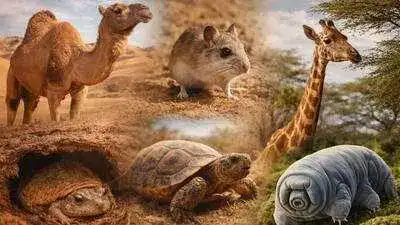
Their survival is not accidental. It is the result of millions of years of adaptation, allowing them to conserve moisture, reduce water loss, and even create water internally. These strategies reveal how flexible and resourceful life can be under extreme conditions.
Why Some Animals Can Go Without Water
Animals living in dry regions do not necessarily avoid water altogether. Instead, they use it differently. Many obtain moisture from the food they eat, such as seeds, plants, or prey. Others rely on metabolic water, which is produced when the body breaks down fat and nutrients.
To reduce water loss, these animals have highly efficient biological systems. They sweat less, produce concentrated urine, and limit unnecessary fluid loss. Behaviour also plays a role. Many desert animals avoid the heat by staying inactive during the day and becoming active at night.
Some species take survival even further by slowing their metabolism to extremely low levels. This allows them to remain inactive for long periods, sometimes without needing water for months or even years.
Camel: A Master of Desert Survival
Camels are among the most well-known desert survivors. They can live without water for around 10 days or longer, depending on environmental conditions.
Their strength lies in efficiency rather than simple storage. Camels conserve water by minimising sweat and producing highly concentrated waste. The fat stored in their hump serves as an energy reserve and can also generate metabolic water when broken down. When water is available, camels can drink large quantities at once, quickly rehydrating their bodies.
Kangaroo Rat: The Animal That Never Drinks
The kangaroo rat is a fascinating example of extreme adaptation. It can survive its entire life without ever drinking water.
Instead, it gets all the moisture it needs from dry seeds. Its kidneys are incredibly efficient, producing very concentrated urine to prevent water loss. Even its breathing system is designed to conserve moisture, ensuring that almost no water is lost during respiration.
Water-holding Frog: Waiting Out the Dry Season
Some amphibians have evolved a completely different survival method. Water-holding frogs survive dry periods through aestivation, a state similar to hibernation.
They burrow into the ground and enter a deep rest where their metabolism slows down significantly. In this state, they can survive for long periods without water. When rain returns, they emerge, rehydrate, and continue their life cycle.
Tortoise: Built to Store and Conserve
Tortoises are well adapted to dry environments thanks to their ability to store water internally. They can hold large amounts of water in their bodies, especially in their bladder, and use it gradually over time.
Their naturally slow metabolism reduces the need for frequent hydration. This combination allows them to survive for months without drinking, making them highly suited to desert life.
Giraffe: Hydration from Leaves
“Giraffes obtain most of their required water from their diet.”
Giraffes rarely need to drink water because they get sufficient moisture from the leaves they consume, particularly from acacia trees. These leaves contain enough water to meet their needs, allowing giraffes to go long periods without visiting water sources.
Tardigrade: The Ultimate Survivor
One of the most extraordinary survivors is the tardigrade, also known as the water bear. Despite being microscopic, it can endure extreme dehydration by entering a state called cryptobiosis.
In this state, the organism loses almost all its water content and essentially pauses its metabolism. It can remain in this condition for years or even decades. When water becomes available again, it rehydrates and resumes life as if nothing happened.
What These Creatures Teach Us
These animals show that survival is not just about access to resources, but about how efficiently those resources are used. Through specialised adaptations, they have learned to conserve, recycle, and even temporarily suspend life processes to endure harsh conditions.
Their ability to thrive without regular water highlights the power of evolution and adaptation. In some of the toughest environments on Earth, these species continue to survive and even flourish, proving that life can find a way even in the most unlikely places.
Their survival is not accidental. It is the result of millions of years of adaptation, allowing them to conserve moisture, reduce water loss, and even create water internally. These strategies reveal how flexible and resourceful life can be under extreme conditions.
Why Some Animals Can Go Without Water
Animals living in dry regions do not necessarily avoid water altogether. Instead, they use it differently. Many obtain moisture from the food they eat, such as seeds, plants, or prey. Others rely on metabolic water, which is produced when the body breaks down fat and nutrients.To reduce water loss, these animals have highly efficient biological systems. They sweat less, produce concentrated urine, and limit unnecessary fluid loss. Behaviour also plays a role. Many desert animals avoid the heat by staying inactive during the day and becoming active at night.
Some species take survival even further by slowing their metabolism to extremely low levels. This allows them to remain inactive for long periods, sometimes without needing water for months or even years.
Camel: A Master of Desert Survival
Camels are among the most well-known desert survivors. They can live without water for around 10 days or longer, depending on environmental conditions. Their strength lies in efficiency rather than simple storage. Camels conserve water by minimising sweat and producing highly concentrated waste. The fat stored in their hump serves as an energy reserve and can also generate metabolic water when broken down. When water is available, camels can drink large quantities at once, quickly rehydrating their bodies.
Kangaroo Rat: The Animal That Never Drinks
The kangaroo rat is a fascinating example of extreme adaptation. It can survive its entire life without ever drinking water. Instead, it gets all the moisture it needs from dry seeds. Its kidneys are incredibly efficient, producing very concentrated urine to prevent water loss. Even its breathing system is designed to conserve moisture, ensuring that almost no water is lost during respiration.
You may also like
- Delicious Coconut Barfi Recipe for Chaitra Navratri Celebrations
- Significance of Ram Navami 2026: A Day of Celestial Blessings
- Celebrate Ram Navami 2026: Wishes, Messages, and Images
- Significance of Ram Navami 2026: Astrological Insights and Remedies
- Ram Navami 2026: Astrological Insights for Each Zodiac Sign
Water-holding Frog: Waiting Out the Dry Season
Some amphibians have evolved a completely different survival method. Water-holding frogs survive dry periods through aestivation, a state similar to hibernation. They burrow into the ground and enter a deep rest where their metabolism slows down significantly. In this state, they can survive for long periods without water. When rain returns, they emerge, rehydrate, and continue their life cycle.
Tortoise: Built to Store and Conserve
Tortoises are well adapted to dry environments thanks to their ability to store water internally. They can hold large amounts of water in their bodies, especially in their bladder, and use it gradually over time. Their naturally slow metabolism reduces the need for frequent hydration. This combination allows them to survive for months without drinking, making them highly suited to desert life.
Giraffe: Hydration from Leaves
“Giraffes obtain most of their required water from their diet.”
Giraffes rarely need to drink water because they get sufficient moisture from the leaves they consume, particularly from acacia trees. These leaves contain enough water to meet their needs, allowing giraffes to go long periods without visiting water sources.
Tardigrade: The Ultimate Survivor
One of the most extraordinary survivors is the tardigrade, also known as the water bear. Despite being microscopic, it can endure extreme dehydration by entering a state called cryptobiosis. In this state, the organism loses almost all its water content and essentially pauses its metabolism. It can remain in this condition for years or even decades. When water becomes available again, it rehydrates and resumes life as if nothing happened.
What These Creatures Teach Us
These animals show that survival is not just about access to resources, but about how efficiently those resources are used. Through specialised adaptations, they have learned to conserve, recycle, and even temporarily suspend life processes to endure harsh conditions. Their ability to thrive without regular water highlights the power of evolution and adaptation. In some of the toughest environments on Earth, these species continue to survive and even flourish, proving that life can find a way even in the most unlikely places.






More from our partners


Loving Newspoint? Download the app now
