
How To Keep Your Cat’s Fur Mat-Free With Simple Daily Grooming Habits For A Healthy And Comfortable Coat

Keeping your cat’s coat smooth and mat-free is not just about appearance, but also about comfort and overall wellbeing. Mats in fur can cause discomfort, skin irritation and even restrict movement if left untreated. While cats are naturally clean animals, they still need regular support from their owners to maintain healthy coats. With the right approach, cat grooming tips can become a simple part of your routine rather than a stressful task. Understanding how to care for your pet’s fur properly helps you prevent cat mats before they even start forming, ensuring your cat stays happy and comfortable.
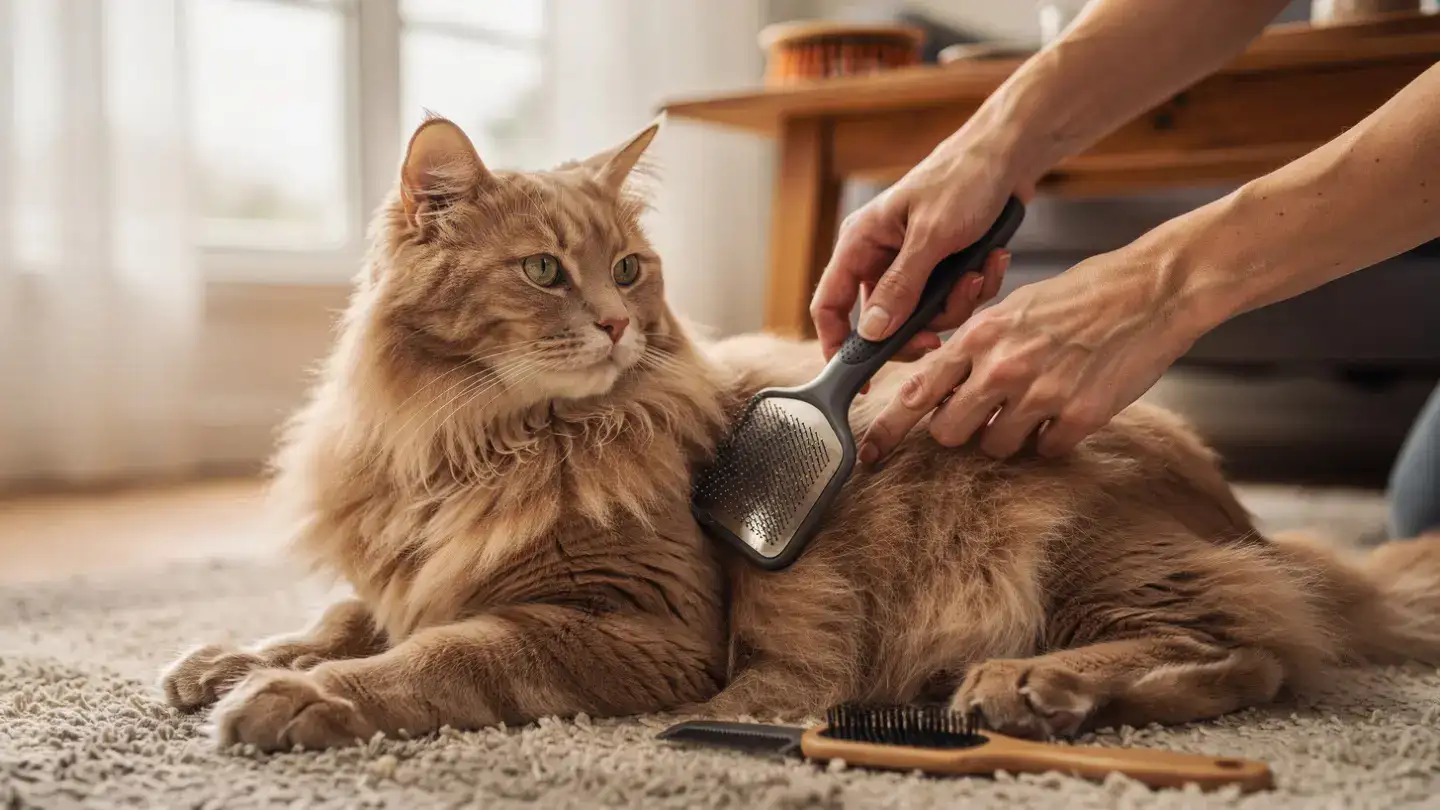
To prevent cat mats effectively, it is important to establish a brushing schedule early. Even a few minutes every few days can make a noticeable difference. This not only keeps the coat clean but also helps you detect skin issues or parasites at an early stage.
When brushing, always work gently from head to tail. Avoid pulling on knots as this can cause discomfort. Instead, hold the fur near the skin and slowly work through tangles. This approach reduces stress and helps your cat associate grooming with a calm experience. Regular long-haired cat grooming is especially important because mats can form quickly if the coat is not maintained properly.
It is also helpful to make grooming part of bonding time. A calm voice, gentle strokes and short sessions can gradually build trust. Over time, your cat will become more cooperative, making maintenance much easier for both of you.
Including high-quality nutrition ensures that your cat’s fur remains strong and less prone to breakage. When the coat is healthy from within, external grooming becomes far more effective and matting reduces significantly. This internal care supports your overall cat fur care routine and contributes to long-term coat health.
Using a soft brush for daily touch-ups in these areas can significantly reduce the risk of heavy tangles. If a mat is already forming, addressing it gently with patience is key. This is where careful detangling cat fur techniques become important. Rushing the process can cause discomfort, so gradual and gentle handling always works best.
Seasonal changes also affect shedding patterns. During heavier shedding periods, grooming frequency should be increased to manage loose hair effectively. This prevents build-up and supports a healthier coat throughout the year.
Positive reinforcement such as gentle petting after grooming can help build trust. Over time, your cat will begin to tolerate and even enjoy the process. Consistency is key, as irregular grooming often leads to more matting and stress for both pet and owner.
By combining proper tools, routine care and patience, you can effectively manage your cat’s coat and maintain its natural beauty. Regular grooming not only enhances appearance but also strengthens your bond with your pet while ensuring long-term comfort and health.
Image Courtesy: Meta AI
Why Cat Fur Becomes Matted And How To Prevent It Early
Matting usually occurs when loose hair gets trapped and forms tight knots, especially in areas where friction is common such as under the legs, behind the ears and around the neck. Long-haired breeds are more prone to this issue, but even short-haired cats can develop tangles if grooming is neglected. Regular cat fur care plays a crucial role in preventing this problem. When loose hair is removed consistently, it cannot clump together and form mats. Environmental factors like humidity, dirt and inactivity can also contribute to tangles, so a consistent routine is essential.To prevent cat mats effectively, it is important to establish a brushing schedule early. Even a few minutes every few days can make a noticeable difference. This not only keeps the coat clean but also helps you detect skin issues or parasites at an early stage.
Building A Simple And Effective Grooming Routine At Home
A consistent routine is the foundation of detangling cat fur successfully. Start by choosing the right brush based on your cat’s coat type. For long-haired cats, wider-toothed combs work best, while short-haired cats benefit from soft bristle brushes. Gradually introduce grooming sessions so your cat becomes comfortable with the process.When brushing, always work gently from head to tail. Avoid pulling on knots as this can cause discomfort. Instead, hold the fur near the skin and slowly work through tangles. This approach reduces stress and helps your cat associate grooming with a calm experience. Regular long-haired cat grooming is especially important because mats can form quickly if the coat is not maintained properly.
It is also helpful to make grooming part of bonding time. A calm voice, gentle strokes and short sessions can gradually build trust. Over time, your cat will become more cooperative, making maintenance much easier for both of you.
Nutrition And Hydration For A Healthier Coat
Good cat coat maintenance is not only about external grooming. Diet plays a significant role in fur health. A balanced diet rich in essential fatty acids supports a soft, shiny coat and reduces excessive shedding. Proper hydration is equally important, as dry skin can lead to more tangling and mat formation.Including high-quality nutrition ensures that your cat’s fur remains strong and less prone to breakage. When the coat is healthy from within, external grooming becomes far more effective and matting reduces significantly. This internal care supports your overall cat fur care routine and contributes to long-term coat health.
Managing Problem Areas Before Mats Form
Certain areas of a cat’s body are more prone to matting and require extra attention. These include the belly, underarms and behind the ears. Regular checking of these zones helps you catch small knots early before they become difficult to remove.You may also like
- In 1893, Milton Hershey's encounter with a chocolate-making machine at the Chicago World's Fair established the foundation for his chocolate empire
- Terrace Makeover: Turn Your 100-Yard Rooftop Into Cool Garden Cafe With These 4 Budget Ideas!
- In 2012, Stewart Butterfield tried saving a game company, and that one workplace tool ended up becoming Slack
- In 2001, Elon Musk tried purchasing Russian rockets, but the failed deal led to SpaceX
- The incredible monitor lizard legend behind Maharashtra's famous Sinhagad Fort has long fascinated travellers
Using a soft brush for daily touch-ups in these areas can significantly reduce the risk of heavy tangles. If a mat is already forming, addressing it gently with patience is key. This is where careful detangling cat fur techniques become important. Rushing the process can cause discomfort, so gradual and gentle handling always works best.
Seasonal changes also affect shedding patterns. During heavier shedding periods, grooming frequency should be increased to manage loose hair effectively. This prevents build-up and supports a healthier coat throughout the year.
Making Grooming A Stress-Free Experience For Your Cat
One of the most overlooked aspects of grooming is creating a calm environment. Cats are sensitive to mood and surroundings, so a peaceful setting makes a big difference. Choose a quiet time of day when your cat is relaxed and avoid forcing long sessions.Positive reinforcement such as gentle petting after grooming can help build trust. Over time, your cat will begin to tolerate and even enjoy the process. Consistency is key, as irregular grooming often leads to more matting and stress for both pet and owner.
By combining proper tools, routine care and patience, you can effectively manage your cat’s coat and maintain its natural beauty. Regular grooming not only enhances appearance but also strengthens your bond with your pet while ensuring long-term comfort and health.
Image Courtesy: Meta AI






More from our partners


Loving Newspoint? Download the app now
