
I didn't choose dance for the spotlight, I chose it for the joy it brings: Shakti Mohan


For dancer and choreographer Shakti Mohan , the journey into dance began not with certainty but with a battle for recovery. After a serious childhood accident left her with a broken leg and spinal injury, doctors warned she might never walk again. Today, the celebrated performer says that experience shaped her resilience and her approach to both life and the dance industry.
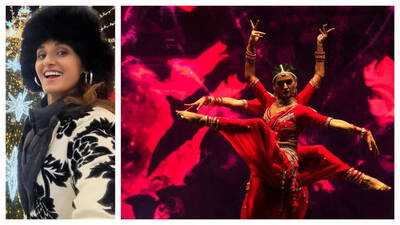
Shakti recalls, “I couldn’t sit up for seven months. It was a very critical time, and the doctors had told my parents that I might never be able to walk again. But it was my mother who refused to give up on me. She continued to push me, and she’s the reason I’m able to walk today,” she says, adding that her support helped her not only walk but eventually pursue dance professionally.
Now a prominent figure in India’s contemporary dance space and founder of a dance collective, Shakti believes that dancers must take responsibility for their own physical and mental well-being rather than expecting the industry to manage it.
“I don’t think any industry is responsible for someone’s physical or mental health,” she says. “Whether you work in dance, a corporate job or any other field, it’s your responsibility to take care of yourself.” She emphasizes discipline as essential for dancers, from proper nutrition and rest, to mindful recovery from injuries.
While acknowledging that dance can still be a difficult profession to sustain in India, Shakti says, “Yes, it is challenging, but that’s exactly what I want to change. I’m working towards creating more opportunities and jobs for dancers. Over the last 15 years, things have improved with the rise of reality shows and dance films. I truly believe that if we continue creating opportunities, the situation will keep getting better for dancers. It may still be challenging today, but it’s not impossible.”
On whether dancers remain undervalued compared to actors and singers in the entertainment industry, Shakti offers a pragmatic perspective. “When it comes to hardships, every profession has them. For instance, a theatre actor trying to enter the commercial space faces their own set of challenges. Obstacles exist across every area of the performing arts; it really depends on how you choose to see them. Yes, there are difficulties, but dancers also receive respect and recognition. When I chose dance, I didn’t choose it for the spotlight, I chose it for the joy it brings. That joy matters far more to me. If I had been chasing fame or attention, I probably wouldn’t have picked dance, especially at a time when opportunities were almost non-existent and no way of imagining that something like Dance India Dance would come along and change my life. Ultimately, it is a personal choice. Once you make that choice, you learn to accept the industry the way it is.”
Shakti is currently promoting the latest episode of her travel-dance series Dance Across the World , which explores traditional dance forms across different cultures. “Dance Across the World is my passion project. It started two years ago with Season One, and my vision has always been to bring folk dances from around the world to today’s youth,” she said.
According to Shakti, many traditional dance forms risk fading away as younger audiences gravitate towards trending and Western styles. “So many people are consuming Western and trending dance forms, but these ancient dance traditions—some thousands of years old—are fading away, even though they are so pure and raw. My goal is to glorify and revive these folk dance forms,” she said.
The series has already travelled across several countries. “In Season One, we covered Sri Lanka, Kazakhstan, Mauritius, Tanzania, the US and the UAE. In Season Two, we’ve explored Georgia, Australia, Bhutan and now Russia,” she said. Filming the Russia episode proved to be a particularly memorable experience for the dancer.
“The Russia episode was especially challenging for me. I travelled there during peak winter, and I tend to feel cold even in normal weather—even in Mumbai when it’s just slightly windy and pleasant! So adjusting to the extreme cold, along with the language and food, was definitely a challenge,” she said, adding that the experience was ultimately rewarding.
“But the episode turned out beautifully, and I’m so grateful I got to experience that in my lifetime.” She believes her early training shaped her deep respect for traditional dance forms. “My childhood is the reason I feel so deeply connected to folk and classical dance. I trained in Bharatanatyam for eight years and continued learning folk dances in Rajasthan,” she said. “Later, when I moved to bigger cities, I realised those forms weren’t as widely accepted there, so I began training in contemporary and other Western dance styles.” Now, she hopes her series will help audiences rediscover the beauty of traditional forms. “But now, I feel it’s time to change that perception and show the world just how beautiful and powerful these traditional dance forms are. They deserve much more recognition. That’s what Dance Across the World is about, and I truly hope you all watch it.”
Shakti recalls, “I couldn’t sit up for seven months. It was a very critical time, and the doctors had told my parents that I might never be able to walk again. But it was my mother who refused to give up on me. She continued to push me, and she’s the reason I’m able to walk today,” she says, adding that her support helped her not only walk but eventually pursue dance professionally.
Now a prominent figure in India’s contemporary dance space and founder of a dance collective, Shakti believes that dancers must take responsibility for their own physical and mental well-being rather than expecting the industry to manage it.
“I don’t think any industry is responsible for someone’s physical or mental health,” she says. “Whether you work in dance, a corporate job or any other field, it’s your responsibility to take care of yourself.” She emphasizes discipline as essential for dancers, from proper nutrition and rest, to mindful recovery from injuries.
While acknowledging that dance can still be a difficult profession to sustain in India, Shakti says, “Yes, it is challenging, but that’s exactly what I want to change. I’m working towards creating more opportunities and jobs for dancers. Over the last 15 years, things have improved with the rise of reality shows and dance films. I truly believe that if we continue creating opportunities, the situation will keep getting better for dancers. It may still be challenging today, but it’s not impossible.”
On whether dancers remain undervalued compared to actors and singers in the entertainment industry, Shakti offers a pragmatic perspective. “When it comes to hardships, every profession has them. For instance, a theatre actor trying to enter the commercial space faces their own set of challenges. Obstacles exist across every area of the performing arts; it really depends on how you choose to see them. Yes, there are difficulties, but dancers also receive respect and recognition. When I chose dance, I didn’t choose it for the spotlight, I chose it for the joy it brings. That joy matters far more to me. If I had been chasing fame or attention, I probably wouldn’t have picked dance, especially at a time when opportunities were almost non-existent and no way of imagining that something like Dance India Dance would come along and change my life. Ultimately, it is a personal choice. Once you make that choice, you learn to accept the industry the way it is.”
Shakti is currently promoting the latest episode of her travel-dance series Dance Across the World , which explores traditional dance forms across different cultures. “Dance Across the World is my passion project. It started two years ago with Season One, and my vision has always been to bring folk dances from around the world to today’s youth,” she said.
According to Shakti, many traditional dance forms risk fading away as younger audiences gravitate towards trending and Western styles. “So many people are consuming Western and trending dance forms, but these ancient dance traditions—some thousands of years old—are fading away, even though they are so pure and raw. My goal is to glorify and revive these folk dance forms,” she said.
The series has already travelled across several countries. “In Season One, we covered Sri Lanka, Kazakhstan, Mauritius, Tanzania, the US and the UAE. In Season Two, we’ve explored Georgia, Australia, Bhutan and now Russia,” she said. Filming the Russia episode proved to be a particularly memorable experience for the dancer.
“The Russia episode was especially challenging for me. I travelled there during peak winter, and I tend to feel cold even in normal weather—even in Mumbai when it’s just slightly windy and pleasant! So adjusting to the extreme cold, along with the language and food, was definitely a challenge,” she said, adding that the experience was ultimately rewarding.
“But the episode turned out beautifully, and I’m so grateful I got to experience that in my lifetime.” She believes her early training shaped her deep respect for traditional dance forms. “My childhood is the reason I feel so deeply connected to folk and classical dance. I trained in Bharatanatyam for eight years and continued learning folk dances in Rajasthan,” she said. “Later, when I moved to bigger cities, I realised those forms weren’t as widely accepted there, so I began training in contemporary and other Western dance styles.” Now, she hopes her series will help audiences rediscover the beauty of traditional forms. “But now, I feel it’s time to change that perception and show the world just how beautiful and powerful these traditional dance forms are. They deserve much more recognition. That’s what Dance Across the World is about, and I truly hope you all watch it.”
Next Story