
If Mothers Give Birth - Why Do Kids Carry Father's Surname, Not Mother's?


We honor gods because they create us. We bow to the creator, not the creation. No one builds a temple for the clay and ignores the sculptor. But when it comes to motherhood, society flips the equation. The creator steps back. The claim comes from elsewhere. And no one pauses to ask why.
Creation has authority. We just chose to ignore it
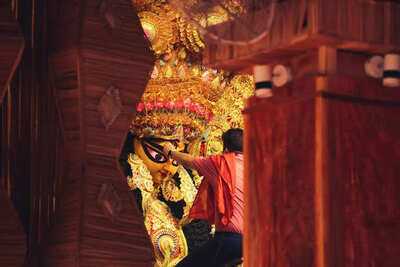
 In every belief system, creation carries authority. Humans submit to God because God is the source. The logic is simple: what creates you holds a deeper claim than what merely surrounds you. Now apply that logic to life itself. A mother does not just “give birth.” She builds a human being cell by cell. Her body becomes the first home, the first system, the first environment. The child’s existence is literally processed through her.
And yet, when identity is assigned, that authority disappears. Suddenly, the one who created becomes secondary to the one who is associated. And we accept this inversion so casually that it feels normal. That is how deeply it is embedded - not in truth, but in repetition.
The only certainty is the one we overlook
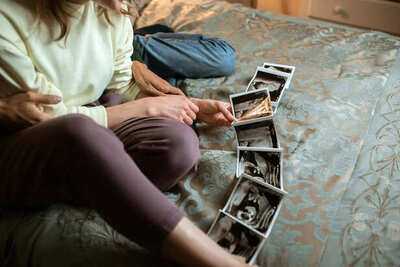
There is a quiet, uncomfortable fact sitting at the center of this system: a mother knows the child is hers. A father believes. Biology made that distinction very clear. Society decided to ignore it. If lineage were built on certainty, surnames would follow the mother without debate. There would be no confusion, no need for control, no obsession with “bloodlines.” It would simply be fact.
But patriarchy did not grow out of certainty. It grew out of insecurity. The need to ensure inheritance, to establish ownership, to remove doubt where nature had left space for it. So instead of aligning with truth, the system restructured reality. Control the woman, define the lineage, assign the name. Problem solved - at least on paper. And once something is written down enough times, people start mistaking documentation for truth.
What we call “natural” is often just familiar

People defend paternal surnames as if they are some ancient, unquestionable law of nature. They are not. They are habits - old ones, repeated enough to feel sacred. There have always been societies where lineage follows the mother. Where identity is tied to the one who creates, not the one who claims. These systems did not collapse under the weight of logic. They functioned just fine.
Matriarchy is seen in human societies like Khasi, Garo, Mosuo, Minangkabau, Nair, Bunts, BriBri, Umoja, Iroquois, Hopi, and in animal species such as African elephants, spotted hyenas, orcas, bonobos, ring-tailed lemurs, and naked mole rats But familiarity has a strange power over the human mind. If something has always been done a certain way, questioning it feels like rebellion, even if the system itself makes no sense. “Normal” is often just unexamined.
Naming was never neutral. It was ownership disguised as tradition
A surname is not just a label. It is a signal. It tells the world who you belong to, whose line you extend, whose legacy you carry forward. When property, inheritance, and power became central to society, men needed a system that ensured continuity. So the child became the bridge. The name became the claim. And motherhood - the actual creation - was quietly reduced to a biological function, not a legacy.
It is the cleanest kind of takeover. No noise, no confrontation. Just structure. Even today, you see echoes of it everywhere. The person doing the most work is rarely the one getting the credit. The loudest voice often claims the deepest impact. Visibility replaces truth. And we keep participating because it is easier than questioning the foundation. The unsettling part is not that this system exists. It is how easily we accept it.
Creation has authority. We just chose to ignore it
We honor creators, not their creations.
And yet, when identity is assigned, that authority disappears. Suddenly, the one who created becomes secondary to the one who is associated. And we accept this inversion so casually that it feels normal. That is how deeply it is embedded - not in truth, but in repetition.
The only certainty is the one we overlook
Mothers know their children; fathers rely on belief.
But patriarchy did not grow out of certainty. It grew out of insecurity. The need to ensure inheritance, to establish ownership, to remove doubt where nature had left space for it. So instead of aligning with truth, the system restructured reality. Control the woman, define the lineage, assign the name. Problem solved - at least on paper. And once something is written down enough times, people start mistaking documentation for truth.
What we call “natural” is often just familiar
Some societies recognized maternal lineage successfully.
People defend paternal surnames as if they are some ancient, unquestionable law of nature. They are not. They are habits - old ones, repeated enough to feel sacred. There have always been societies where lineage follows the mother. Where identity is tied to the one who creates, not the one who claims. These systems did not collapse under the weight of logic. They functioned just fine.
Matriarchy is seen in human societies like Khasi, Garo, Mosuo, Minangkabau, Nair, Bunts, BriBri, Umoja, Iroquois, Hopi, and in animal species such as African elephants, spotted hyenas, orcas, bonobos, ring-tailed lemurs, and naked mole rats But familiarity has a strange power over the human mind. If something has always been done a certain way, questioning it feels like rebellion, even if the system itself makes no sense. “Normal” is often just unexamined.
Naming was never neutral. It was ownership disguised as tradition
Familiarity disguises illogical systems as natural law.
A surname is not just a label. It is a signal. It tells the world who you belong to, whose line you extend, whose legacy you carry forward. When property, inheritance, and power became central to society, men needed a system that ensured continuity. So the child became the bridge. The name became the claim. And motherhood - the actual creation - was quietly reduced to a biological function, not a legacy.
It is the cleanest kind of takeover. No noise, no confrontation. Just structure. Even today, you see echoes of it everywhere. The person doing the most work is rarely the one getting the credit. The loudest voice often claims the deepest impact. Visibility replaces truth. And we keep participating because it is easier than questioning the foundation. The unsettling part is not that this system exists. It is how easily we accept it.
Next Story