
India’s Last Road: Where It Is, Why It Is Famous, and Interesting Facts

At the southern tip of the country, where the land slowly fades into endless blue waters, lies a road that feels like it carries you to the very boundary of India. This narrow coastal stretch is not just a route on the map but an experience that blends geography, history and deep emotion.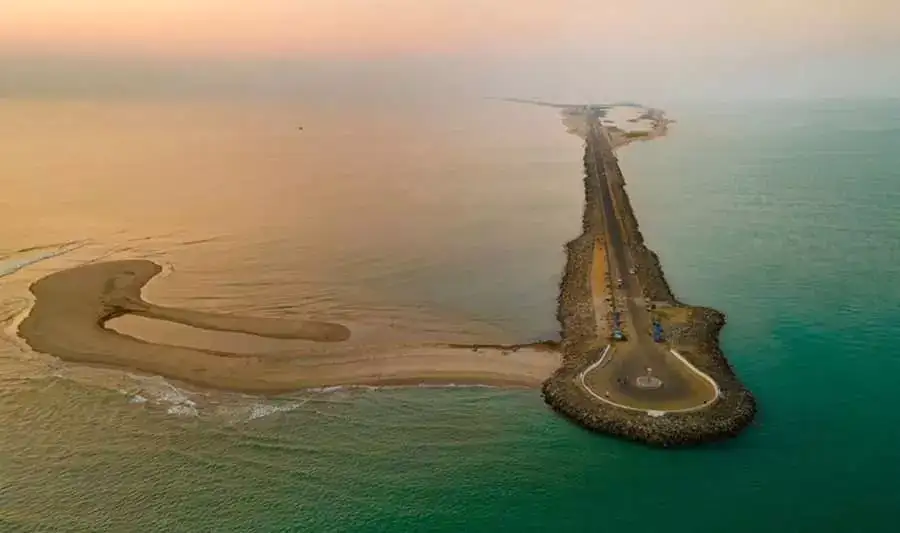
As you move closer to the end, the land begins to thin, the waves grow louder, and the sky seems wider. With the sea shimmering on both sides and strong coastal winds brushing past, the experience feels almost surreal. This is not just a road trip. It is a journey to the very edge of India.
Which Is the Last Road of India ?
The last road of India is the final stretch of National Highway 87 that connects Rameswaram to Dhanushkodi in Tamil Nadu and ends at Arichal Munai. This road runs through the Ramanathapuram district on Pamban Island, positioned between the Bay of Bengal and the Indian Ocean.
It is one of the rare drives in the country where water surrounds you on both sides for most of the journey. On especially clear days, locals and visitors claim they can see the faint outline of Sri Lanka across the waters, adding to the excitement of reaching this unique spot.
Where Exactly Is It Located?
The journey begins from Rameswaram, a sacred town known for its religious importance and stunning coastal views. From here, the road stretches nearly 20 kilometres toward Dhanushkodi, once a lively coastal settlement.
After crossing Dhanushkodi, the road continues to Arichal Munai, the last motorable point before the land disappears into the sea. This sandy strip marks the closest accessible Indian point to Sri Lanka, located around 18 to 20 kilometres away across the waters.
Standing here, with waves stretching endlessly in front of you, it truly feels like the edge of the nation.
The Mythological Significance
The region holds deep roots in Indian mythology. According to the ancient epic Ramayana, this is believed to be the place where Rama began constructing the legendary Rama Setu, a bridge built to reach Lanka. The name Dhanushkodi translates to end of the bow, symbolising the point where Rama is said to have marked the start of the bridge.
This connection gives the location immense spiritual value, drawing pilgrims who wish to witness the land linked to one of India’s most powerful epics.
The Tragic History of Dhanushkodi
Beyond mythology, Dhanushkodi also carries a moving chapter of modern history. Until the mid twentieth century, it was a thriving port town with a railway station, a post office and busy markets. Life here revolved around fishing, trade and rail connectivity.
Everything changed in December 1964 when a devastating cyclone struck the coast. The powerful storm destroyed buildings, submerged large areas and swept away the railway track. The destruction was so severe that the town was later declared unfit for habitation. Today, the broken walls, remnants of churches and scattered structures remain as haunting reminders of the past.
Visitors often describe the abandoned ruins against the backdrop of the sea as both beautiful and deeply emotional.
What Makes This Road So Special?
There are several reasons why India’s last road fascinates travellers.
First, the unique geography. Very few roads in the country offer uninterrupted sea views on both sides. Second, the blend of mythology and history makes every kilometre feel meaningful. Third, the quiet atmosphere and open landscape create a sense of calm that is hard to find elsewhere.
It is also one of the most scenic coastal drives in India, especially during sunrise and sunset when the sky turns shades of gold and orange.
Accessibility and Travel Today
In recent years, infrastructure improvements have made the road fully motorable. Private vehicles, taxis and local transport can travel comfortably up to Arichal Munai. Beyond that point, entry is restricted to protect the fragile coastal ecosystem.
Tourists are advised to check weather conditions before planning their visit, as strong winds and tides can affect accessibility.
A Place That Stays With You
Reaching India’s last road is more than a geographical achievement. It is an emotional experience. As you stand at the sandy tip, with nothing but endless water ahead, you feel both small and connected to something vast.
It is a place where legend meets reality, where tragedy meets beauty, and where the land gently surrenders to the sea. For many travellers, that final stretch of road becomes one of the most unforgettable journeys of their lives.
As you move closer to the end, the land begins to thin, the waves grow louder, and the sky seems wider. With the sea shimmering on both sides and strong coastal winds brushing past, the experience feels almost surreal. This is not just a road trip. It is a journey to the very edge of India.
Which Is the Last Road of India ?
The last road of India is the final stretch of National Highway 87 that connects Rameswaram to Dhanushkodi in Tamil Nadu and ends at Arichal Munai. This road runs through the Ramanathapuram district on Pamban Island, positioned between the Bay of Bengal and the Indian Ocean.It is one of the rare drives in the country where water surrounds you on both sides for most of the journey. On especially clear days, locals and visitors claim they can see the faint outline of Sri Lanka across the waters, adding to the excitement of reaching this unique spot.
Where Exactly Is It Located?
The journey begins from Rameswaram, a sacred town known for its religious importance and stunning coastal views. From here, the road stretches nearly 20 kilometres toward Dhanushkodi, once a lively coastal settlement.After crossing Dhanushkodi, the road continues to Arichal Munai, the last motorable point before the land disappears into the sea. This sandy strip marks the closest accessible Indian point to Sri Lanka, located around 18 to 20 kilometres away across the waters.
Standing here, with waves stretching endlessly in front of you, it truly feels like the edge of the nation.
The Mythological Significance
The region holds deep roots in Indian mythology. According to the ancient epic Ramayana, this is believed to be the place where Rama began constructing the legendary Rama Setu, a bridge built to reach Lanka. The name Dhanushkodi translates to end of the bow, symbolising the point where Rama is said to have marked the start of the bridge. This connection gives the location immense spiritual value, drawing pilgrims who wish to witness the land linked to one of India’s most powerful epics.
The Tragic History of Dhanushkodi
Beyond mythology, Dhanushkodi also carries a moving chapter of modern history. Until the mid twentieth century, it was a thriving port town with a railway station, a post office and busy markets. Life here revolved around fishing, trade and rail connectivity. Everything changed in December 1964 when a devastating cyclone struck the coast. The powerful storm destroyed buildings, submerged large areas and swept away the railway track. The destruction was so severe that the town was later declared unfit for habitation. Today, the broken walls, remnants of churches and scattered structures remain as haunting reminders of the past.
Visitors often describe the abandoned ruins against the backdrop of the sea as both beautiful and deeply emotional.
What Makes This Road So Special?
There are several reasons why India’s last road fascinates travellers.
First, the unique geography. Very few roads in the country offer uninterrupted sea views on both sides. Second, the blend of mythology and history makes every kilometre feel meaningful. Third, the quiet atmosphere and open landscape create a sense of calm that is hard to find elsewhere. It is also one of the most scenic coastal drives in India, especially during sunrise and sunset when the sky turns shades of gold and orange.
Accessibility and Travel Today
In recent years, infrastructure improvements have made the road fully motorable. Private vehicles, taxis and local transport can travel comfortably up to Arichal Munai. Beyond that point, entry is restricted to protect the fragile coastal ecosystem. Tourists are advised to check weather conditions before planning their visit, as strong winds and tides can affect accessibility.
A Place That Stays With You
Reaching India’s last road is more than a geographical achievement. It is an emotional experience. As you stand at the sandy tip, with nothing but endless water ahead, you feel both small and connected to something vast. It is a place where legend meets reality, where tragedy meets beauty, and where the land gently surrenders to the sea. For many travellers, that final stretch of road becomes one of the most unforgettable journeys of their lives.
Next Story