
Inside Uganda's chimpanzee civil war: How a peaceful community split into deadly rival groups


War is said to be an exclusively human concept; however, extensive research done in Kibale National Park under The Kibale Chimpanzee Project reveals otherwise. Inside the depths of the forests in this particular park, the largest community of chimpanzees ever recorded has split into two groups that engage in brutal warfare for many years. This remarkable occurrence has been likened to the civil wars waged by humans due to the nature of the aggression as well as the complexity of the social relations. The breaking up of established relationships of those living harmoniously within a highly organized society is a factor that has made this comparison quite plausible.
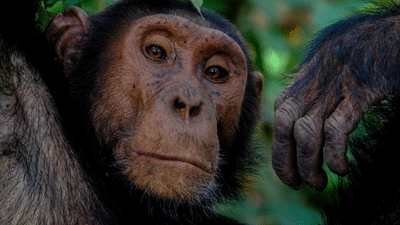
The chimpanzee conflict in Uganda: How did it begin
The Ngogo chimpanzee community existed in peace for almost two decades, having developed strong relationships and social cooperations among themselves. However, this period of harmony took a turn for the worst from 2015 to 2018. As mentioned in a study ‘ Lethal conflict after group fission in wild chimpanzees’ done by Department of Anthropology, University of Texas, the death of important older males who acted as ‘social bridges’ had played an important role in the chaos experienced within the community.
According to primatologist John Mitani, "They will do this even when those neighbors are former friends and allies," revealing how these chimps have transformed from their peaceful ways and have adopted a much more violent behavior towards each other.
As the leadership became weak and power dynamics changed, the harmonious society turned into two hostile groups.
Violence, strategy and survival
The subsequent behaviour exhibited, however, was not mere senseless brutality but well-organised, planned violence. The smaller group would conduct targeted attacks, frequently against lone individuals. As the conflict wore on, as many as 24 chimps, both adults and infants, had been brutally murdered.
These actions bore close resemblance to human warfare, such as territorial incursions, forming coalitions, and even infanticide. This violence, moreover, did not seem to be unpremeditated; it seems that the chimps had strategically intended to weaken their competitors.
In any case, this is reminiscent of the famous Gombe Chimpanzee War conducted by Jane Goodall, which involved former companions attacking each other.
What this means for understanding humans
The chimpanzee civil war sheds light on the evolution of conflicts as well. As reported by researchers, chimpanzee wars emerge not due to external factors, but rather as a result of internal stress factors within the community, conflicts, hierarchies, competition, and resource scarcity.
In the case of the chimpanzee war under discussion, Aaron Sandel stated that the departure of important individuals made social relations weaker and vulnerable to the split.
The most significant lesson from this case is that the notion of inherent violence in humans must be rejected. Humans possess the ability to both work together and engage in conflict; thus, these characteristics have an evolutionary basis.
With the shrinking habitat of chimpanzees and rising environmental pressure, experts predict that such conflicts will only increase further.
Overall, this tragedy demonstrates the fragility of even highly organised societies; whether human or chimpanzee.
The chimpanzee conflict in Uganda: How did it begin
The Ngogo chimpanzee community existed in peace for almost two decades, having developed strong relationships and social cooperations among themselves. However, this period of harmony took a turn for the worst from 2015 to 2018. As mentioned in a study ‘ Lethal conflict after group fission in wild chimpanzees’ done by Department of Anthropology, University of Texas, the death of important older males who acted as ‘social bridges’ had played an important role in the chaos experienced within the community.
According to primatologist John Mitani, "They will do this even when those neighbors are former friends and allies," revealing how these chimps have transformed from their peaceful ways and have adopted a much more violent behavior towards each other.
As the leadership became weak and power dynamics changed, the harmonious society turned into two hostile groups.
Violence, strategy and survival
The subsequent behaviour exhibited, however, was not mere senseless brutality but well-organised, planned violence. The smaller group would conduct targeted attacks, frequently against lone individuals. As the conflict wore on, as many as 24 chimps, both adults and infants, had been brutally murdered.
These actions bore close resemblance to human warfare, such as territorial incursions, forming coalitions, and even infanticide. This violence, moreover, did not seem to be unpremeditated; it seems that the chimps had strategically intended to weaken their competitors.
In any case, this is reminiscent of the famous Gombe Chimpanzee War conducted by Jane Goodall, which involved former companions attacking each other.
What this means for understanding humans
The chimpanzee civil war sheds light on the evolution of conflicts as well. As reported by researchers, chimpanzee wars emerge not due to external factors, but rather as a result of internal stress factors within the community, conflicts, hierarchies, competition, and resource scarcity.
In the case of the chimpanzee war under discussion, Aaron Sandel stated that the departure of important individuals made social relations weaker and vulnerable to the split.
The most significant lesson from this case is that the notion of inherent violence in humans must be rejected. Humans possess the ability to both work together and engage in conflict; thus, these characteristics have an evolutionary basis.
With the shrinking habitat of chimpanzees and rising environmental pressure, experts predict that such conflicts will only increase further.
Overall, this tragedy demonstrates the fragility of even highly organised societies; whether human or chimpanzee.
Next Story