
Iran's lost prince: Who is Reza Pahlavi and why is he trending again?


Iran is going through one of its most heated moments in years. People are out on the streets, angry, protesting, openly calling out those in charge. And right in the middle of all that noise, one old name has suddenly become trendy again: Reza Pahlavi .
So… who exactly is he, and why is everyone suddenly talking about him?
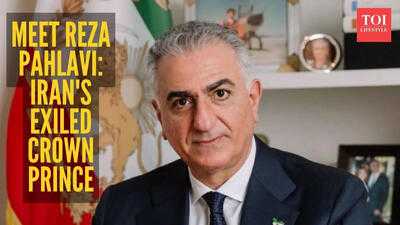
Reza Pahlavi is the son of Iran’s last shah. He was born on 31 October 1960 into a life most people only ever see in films - palaces, guards, big ceremonies, all of it. His father, Mohammad Reza Pahlavi, ruled Iran until the 1979 Islamic Revolution swept the monarchy away and changed the country completely. Reza grew up as “the future king”… except he never actually got to be king.
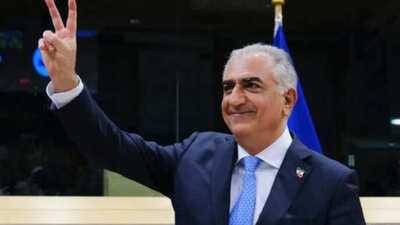
His childhood was nothing like that of regular kids in Iran. He lived in royal estates, travelled the world, met presidents and leaders. There’s even a story about him playing loud rock music inside the palace during US President Jimmy Carter’s visit. But behind all the sparkle, things were falling apart. People were angry about repression, inequality and the feared secret police. By the time teenage Reza left for flight school in the US, the system was already cracking. Soon after, his father fled the country, and the revolution took over.
Since then, Reza Pahlavi has never gone back to live in Iran. He’s spent most of his life abroad, mainly in the United States, between Los Angeles and Washington, DC. When his father passed away, royal loyalists declared him shah on his 20th birthday. In reality, it was just a title. There was no throne, no crown, only the name.
Even from exile, he has tried to stay part of Iran’s political story. Back in the 1980s, he even appeared in secret TV broadcasts beamed into Iran, promising he’d return one day. Today, social media is his loudspeaker. His videos and statements spread quickly, especially whenever protests flare up back home.
Now he doesn’t really market himself as “king waiting in the wings.” Instead, he talks more about democracy and reform. Sometimes he mentions a constitutional monarchy, sometimes he simply says he wants change, and that whatever Iran becomes should be decided by its people.
But here’s where it gets messy.
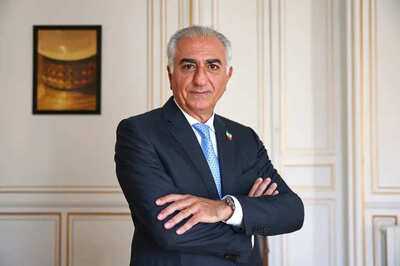
Not everyone is on board with him. A lot of Iranians still remember the bad parts of his father’s regime - fear, censorship, inequality. Younger generations weren’t even born when the monarchy ended, so the Pahlavi name doesn’t automatically feel magical to them. Some think he’s too distant from real life in Iran. Others question his closeness to the West and his open support for Israel.
Still, during the latest protest waves, his name keeps resurfacing. Some people chant slogans about the shah’s era, others wonder out loud whether Iran could have taken another path. Whether they actually want him as a leader, or just want something totally different from the present, is still a big question mark.
Today, he’s 65, living abroad, watching all of this unfold from a distance. Will he ever return to lead Iran? No one really knows. For now, he remains what he has been for nearly fifty years, the exiled crown prince whose life is forever tied to a country he left as a teenager, but has never truly been able to leave behind.
So… who exactly is he, and why is everyone suddenly talking about him?
Reza Pahlavi is the son of Iran’s last shah. He was born on 31 October 1960 into a life most people only ever see in films - palaces, guards, big ceremonies, all of it. His father, Mohammad Reza Pahlavi, ruled Iran until the 1979 Islamic Revolution swept the monarchy away and changed the country completely. Reza grew up as “the future king”… except he never actually got to be king.
His childhood was nothing like that of regular kids in Iran. He lived in royal estates, travelled the world, met presidents and leaders. There’s even a story about him playing loud rock music inside the palace during US President Jimmy Carter’s visit. But behind all the sparkle, things were falling apart. People were angry about repression, inequality and the feared secret police. By the time teenage Reza left for flight school in the US, the system was already cracking. Soon after, his father fled the country, and the revolution took over.
Since then, Reza Pahlavi has never gone back to live in Iran. He’s spent most of his life abroad, mainly in the United States, between Los Angeles and Washington, DC. When his father passed away, royal loyalists declared him shah on his 20th birthday. In reality, it was just a title. There was no throne, no crown, only the name.
Even from exile, he has tried to stay part of Iran’s political story. Back in the 1980s, he even appeared in secret TV broadcasts beamed into Iran, promising he’d return one day. Today, social media is his loudspeaker. His videos and statements spread quickly, especially whenever protests flare up back home.
Now he doesn’t really market himself as “king waiting in the wings.” Instead, he talks more about democracy and reform. Sometimes he mentions a constitutional monarchy, sometimes he simply says he wants change, and that whatever Iran becomes should be decided by its people.
But here’s where it gets messy.
Not everyone is on board with him. A lot of Iranians still remember the bad parts of his father’s regime - fear, censorship, inequality. Younger generations weren’t even born when the monarchy ended, so the Pahlavi name doesn’t automatically feel magical to them. Some think he’s too distant from real life in Iran. Others question his closeness to the West and his open support for Israel.
Still, during the latest protest waves, his name keeps resurfacing. Some people chant slogans about the shah’s era, others wonder out loud whether Iran could have taken another path. Whether they actually want him as a leader, or just want something totally different from the present, is still a big question mark.
Today, he’s 65, living abroad, watching all of this unfold from a distance. Will he ever return to lead Iran? No one really knows. For now, he remains what he has been for nearly fifty years, the exiled crown prince whose life is forever tied to a country he left as a teenager, but has never truly been able to leave behind.
Next Story