
Is Lord Shiva's Destruction a Blessing- or Warning for You?


There are moments in life when everything you thought was stable suddenly begins to crumble, when relationships shift, plans collapse, and the very identity you built over years starts to feel uncertain, and in those moments, the question does not feel philosophical, it feels deeply personal: is this breakdown a sign that something is going wrong, or is it a signal that something far more meaningful is unfolding beneath the surface? Within Hindu thought, especially in the understanding of Lord Shiva, this question is not new, and it has never had a simple answer. Because Shiva’s destruction has always carried two faces, one that feels like a warning, and another that reveals itself later as a blessing. And the truth is, both can exist at the same time.
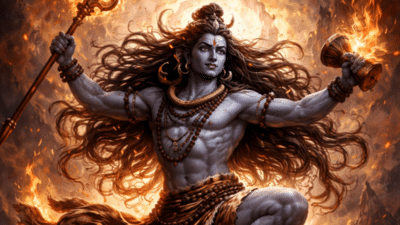
The Real Meaning of Shiva’s “Destruction”

To understand whether Shiva’s destruction is a blessing or a warning, one must first move beyond the surface meaning of the word “destruction.” In Hindu philosophy, Shiva is known as the force of dissolution within the cosmic cycle, not as a bringer of meaningless ruin, but as the one who clears the old so that the new can emerge. This destruction is not negative in its essence. It is described as constructive and transformative, dissolving what no longer serves growth, whether in the universe or within an individual life. In that sense, Shiva does not destroy existence. He transforms it.
When It Feels Like a Warning

There are phases in life that feel like unmistakable warnings, moments when things begin to fall apart in ways that seem targeted and intense, forcing you to confront uncomfortable truths you may have been avoiding for years. In spiritual interpretation, these phases are often seen as signals. Signals that something in your life is out of alignment. Signals that attachments, habits, or decisions are leading you away from growth. In many mythological narratives, destruction follows imbalance, especially when dharma is ignored or ego dominates action, suggesting that dissolution can act as a form of cosmic correction rather than punishment. Seen this way, Shiva’s destruction can feel like a warning, not because it is meant to harm, but because it reveals what is no longer sustainable.
When It Reveals Itself as a Blessing

And yet, what makes Shiva’s nature so profound is that the same destruction that feels like loss in one moment often reveals itself as transformation in another. Because what is being removed is rarely random. It is often what stands in the way of growth. Hindu philosophy consistently emphasises that Shiva destroys ignorance, ego, and illusion, the very elements that prevent deeper awareness and progress. This is why many spiritual traditions describe Shiva not just as a destroyer, but as a liberator, someone who dissolves limitations so that something more aligned can emerge. The blessing is not separate from the destruction. It is hidden within it.
The Cycle Most People Don’t Notice
If you observe life closely, a pattern begins to emerge, one that mirrors Shiva’s cosmic role. There is first a phase of disruption. Then a phase of confusion. Then, slowly, a phase of clarity. And finally, a phase of rebuilding. This pattern reflects the deeper philosophical idea that destruction and creation are not opposites, but interconnected processes within the same cycle, where one cannot exist without the other. What feels like an ending is often a transition. What feels like loss is often preparation.
Why It Feels So Personal
What makes this concept so powerful is not its cosmic scale, but its personal relevance. Because Shiva’s destruction is not always dramatic or visible. Sometimes it appears as the quiet ending of a relationship. Sometimes as the loss of certainty. Sometimes as a sudden shift that forces you to rethink everything. And in those moments, it rarely feels divine. It feels uncomfortable. Unfair. Even painful. But within spiritual interpretation, these moments are not random interruptions. They are part of a deeper process of realignment.
So Is It a Blessing or a Warning?
The question itself may be limited. Because Shiva’s destruction is rarely just one or the other. It is a warning when something must change. It is a blessing when that change leads to growth. It is a warning in the moment. It is a blessing in hindsight. And sometimes, it is both at once.
Conclusion: The Truth That Changes Everything
The deeper understanding is not about choosing between blessing and warning, but about recognising the role of transformation itself. Because in the philosophy surrounding Lord Shiva, destruction is not an end. It is a passage. A passage from illusion to clarity. From attachment to awareness. From one version of yourself to another. So the next time something in your life begins to fall apart, the question may not be whether it is a blessing or a warning. The question may be this: What is being removed, and what is it making space for?
Explore the latest trends and tips in Health & Fitness, Spiritual, Travel, Life Hacks, Trending, Fashion & Beauty, and Relationships at Times Life!
The Real Meaning of Shiva’s “Destruction”
To understand whether Shiva’s destruction is a blessing or a warning, one must first move beyond the surface meaning of the word “destruction.” In Hindu philosophy, Shiva is known as the force of dissolution within the cosmic cycle, not as a bringer of meaningless ruin, but as the one who clears the old so that the new can emerge. This destruction is not negative in its essence. It is described as constructive and transformative, dissolving what no longer serves growth, whether in the universe or within an individual life. In that sense, Shiva does not destroy existence. He transforms it.
When It Feels Like a Warning
There are phases in life that feel like unmistakable warnings, moments when things begin to fall apart in ways that seem targeted and intense, forcing you to confront uncomfortable truths you may have been avoiding for years. In spiritual interpretation, these phases are often seen as signals. Signals that something in your life is out of alignment. Signals that attachments, habits, or decisions are leading you away from growth. In many mythological narratives, destruction follows imbalance, especially when dharma is ignored or ego dominates action, suggesting that dissolution can act as a form of cosmic correction rather than punishment. Seen this way, Shiva’s destruction can feel like a warning, not because it is meant to harm, but because it reveals what is no longer sustainable.
When It Reveals Itself as a Blessing
And yet, what makes Shiva’s nature so profound is that the same destruction that feels like loss in one moment often reveals itself as transformation in another. Because what is being removed is rarely random. It is often what stands in the way of growth. Hindu philosophy consistently emphasises that Shiva destroys ignorance, ego, and illusion, the very elements that prevent deeper awareness and progress. This is why many spiritual traditions describe Shiva not just as a destroyer, but as a liberator, someone who dissolves limitations so that something more aligned can emerge. The blessing is not separate from the destruction. It is hidden within it.
The Cycle Most People Don’t Notice
If you observe life closely, a pattern begins to emerge, one that mirrors Shiva’s cosmic role. There is first a phase of disruption. Then a phase of confusion. Then, slowly, a phase of clarity. And finally, a phase of rebuilding. This pattern reflects the deeper philosophical idea that destruction and creation are not opposites, but interconnected processes within the same cycle, where one cannot exist without the other. What feels like an ending is often a transition. What feels like loss is often preparation.
Why It Feels So Personal
What makes this concept so powerful is not its cosmic scale, but its personal relevance. Because Shiva’s destruction is not always dramatic or visible. Sometimes it appears as the quiet ending of a relationship. Sometimes as the loss of certainty. Sometimes as a sudden shift that forces you to rethink everything. And in those moments, it rarely feels divine. It feels uncomfortable. Unfair. Even painful. But within spiritual interpretation, these moments are not random interruptions. They are part of a deeper process of realignment.
So Is It a Blessing or a Warning?
The question itself may be limited. Because Shiva’s destruction is rarely just one or the other. It is a warning when something must change. It is a blessing when that change leads to growth. It is a warning in the moment. It is a blessing in hindsight. And sometimes, it is both at once.
Conclusion: The Truth That Changes Everything
Explore the latest trends and tips in Health & Fitness, Spiritual, Travel, Life Hacks, Trending, Fashion & Beauty, and Relationships at Times Life!
Next Story