
Is the Moon Slowly Shrinking? Scientists Discuss the Impact If It Disappeared

The Moon may look calm and constant in the night sky, but scientists say it is quietly changing. New research suggests that Earth’s only natural satellite is slowly shrinking as its interior cools. While this process has been happening for billions of years, experts now believe the contraction could be occurring faster than earlier estimates suggested.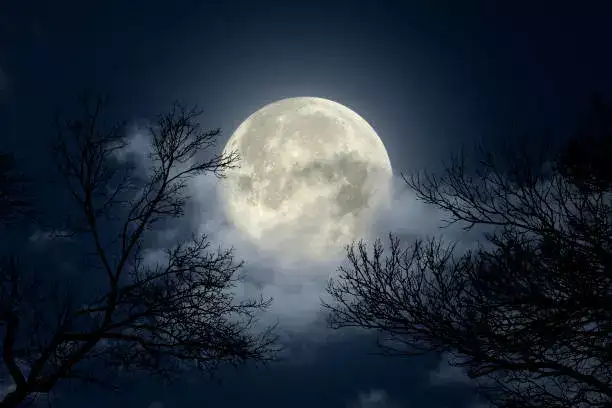
Why the Moon Is Getting Smaller
Like many rocky bodies in space, the Moon was once much hotter inside. Over time, that internal heat has steadily escaped into space. As the lunar interior cools, it contracts. This slow shrinkage causes stress on the surface, forcing the crust to compress and buckle.
Scientists first presented strong evidence of this contraction more than a decade ago. Since then, improved imaging and geological studies have helped researchers map surface features that clearly point to ongoing changes.
One of the most visible signs of this process is the presence of lobate scarps. These are small, cliff-like ridges that form when the crust is pushed upward due to compression. They can stretch for several kilometres and rise several metres high. Their formation suggests that the Moon’s surface is still adjusting as the interior continues to cool.
A Surprisingly Active Surface
The Moon does not have plate tectonics like Earth. There are no shifting continents or erupting volcano chains shaping its landscape today. However, the discovery of relatively young lobate scarps has surprised scientists.
Some of these formations appear fresh in geological terms, meaning they may have formed in the recent past on a cosmic timescale. Researchers have also identified similar contraction-related features across wide lunar plains, not just in mountainous highland regions as once thought. This broader distribution indicates that the shrinking process is widespread.
These findings challenge the old idea that the Moon is completely geologically dead. Instead, it appears to be subtly active, still evolving in slow motion.
Moonquakes and What They Mean
Evidence from past missions adds another layer to the story. During the Apollo missions, instruments placed on the Moon recorded moonquakes. These were not as frequent or as strong as earthquakes, but they proved that the Moon is not entirely still.
Scientists believe some of these quakes may be connected to surface features like lobate scarps and small mare ridges. As the crust contracts and shifts, it can trigger seismic tremors. Understanding where such activity may occur is important for future exploration.
With renewed interest in sending astronauts back to the Moon and possibly building long-term bases, identifying stable landing and construction sites is crucial. Mapping tectonic features could help reduce risks for upcoming missions.
What If the Moon Vanished?
Although the Moon is not disappearing, scientists often study hypothetical scenarios to understand its importance to Earth. If the Moon suddenly vanished, the consequences would be dramatic.
The Moon helps stabilise Earth’s axial tilt. Without it, our planet’s rotation axis could wobble unpredictably over time. This would lead to extreme seasonal shifts and long-term climate instability.
Ocean tides would also change significantly. While the Sun contributes to tides, the Moon is the dominant force. Without its gravitational pull, tides would become much weaker, affecting marine ecosystems, coastal habitats, and possibly even weather patterns.
Life on Earth evolved under the steady presence of the Moon. Its influence reaches far beyond what we see in the sky.
The Curious Case of 1110
History includes strange accounts that once puzzled observers. In May 1110, a medieval record described the Moon gradually fading from view until it seemed to disappear entirely before returning to normal brightness the next night.
Modern scientists believe this was likely caused by volcanic activity. A massive eruption may have released sulphur-rich particles into the upper atmosphere. These particles could have dimmed or blocked the Moon’s light temporarily, creating the illusion that it had vanished.
Such events highlight how Earth’s atmosphere can sometimes play tricks on our perception of the sky.
A Quiet but Ongoing Evolution
The Moon formed more than four billion years ago after a massive collision in the early solar system. Since then, it has cooled, solidified, and settled into a stable orbit around Earth. Yet its story is not over.
The discovery of contraction features and evidence of subtle seismic activity shows that the Moon is still evolving, even if the changes are slow and gradual. Each new study helps scientists understand not only the Moon’s past, but also how rocky worlds behave over immense stretches of time.
For now, there is no cause for alarm. The Moon remains a steady and vital presence in Earth’s cosmic neighbourhood. Even as it slowly shrinks, it continues to shape our tides, stabilise our planet, and inspire curiosity across generations.
Why the Moon Is Getting Smaller
Like many rocky bodies in space, the Moon was once much hotter inside. Over time, that internal heat has steadily escaped into space. As the lunar interior cools, it contracts. This slow shrinkage causes stress on the surface, forcing the crust to compress and buckle. Scientists first presented strong evidence of this contraction more than a decade ago. Since then, improved imaging and geological studies have helped researchers map surface features that clearly point to ongoing changes.
One of the most visible signs of this process is the presence of lobate scarps. These are small, cliff-like ridges that form when the crust is pushed upward due to compression. They can stretch for several kilometres and rise several metres high. Their formation suggests that the Moon’s surface is still adjusting as the interior continues to cool.
A Surprisingly Active Surface
The Moon does not have plate tectonics like Earth. There are no shifting continents or erupting volcano chains shaping its landscape today. However, the discovery of relatively young lobate scarps has surprised scientists.Some of these formations appear fresh in geological terms, meaning they may have formed in the recent past on a cosmic timescale. Researchers have also identified similar contraction-related features across wide lunar plains, not just in mountainous highland regions as once thought. This broader distribution indicates that the shrinking process is widespread.
These findings challenge the old idea that the Moon is completely geologically dead. Instead, it appears to be subtly active, still evolving in slow motion.
Moonquakes and What They Mean
Evidence from past missions adds another layer to the story. During the Apollo missions, instruments placed on the Moon recorded moonquakes. These were not as frequent or as strong as earthquakes, but they proved that the Moon is not entirely still. Scientists believe some of these quakes may be connected to surface features like lobate scarps and small mare ridges. As the crust contracts and shifts, it can trigger seismic tremors. Understanding where such activity may occur is important for future exploration.
With renewed interest in sending astronauts back to the Moon and possibly building long-term bases, identifying stable landing and construction sites is crucial. Mapping tectonic features could help reduce risks for upcoming missions.
What If the Moon Vanished?
Although the Moon is not disappearing, scientists often study hypothetical scenarios to understand its importance to Earth. If the Moon suddenly vanished, the consequences would be dramatic. The Moon helps stabilise Earth’s axial tilt. Without it, our planet’s rotation axis could wobble unpredictably over time. This would lead to extreme seasonal shifts and long-term climate instability.
Ocean tides would also change significantly. While the Sun contributes to tides, the Moon is the dominant force. Without its gravitational pull, tides would become much weaker, affecting marine ecosystems, coastal habitats, and possibly even weather patterns.
Life on Earth evolved under the steady presence of the Moon. Its influence reaches far beyond what we see in the sky.
You may also like
- 'Pink Saheli' Card: 50 centres to be set up in Delhi to issue 'Pink Saheli' cards..
- 6 Shocking Ways Rejection Destroys Your Mind
- UK's most fuel-efficient motor named by experts - and it's not an Audi, BMW, or MINI
- Effective Home Remedies for Hair Growth and Strength
- PM Kisan: Sharecroppers also get the benefits of PM Kisan, know the conditions related to land records...
The Curious Case of 1110
History includes strange accounts that once puzzled observers. In May 1110, a medieval record described the Moon gradually fading from view until it seemed to disappear entirely before returning to normal brightness the next night. Modern scientists believe this was likely caused by volcanic activity. A massive eruption may have released sulphur-rich particles into the upper atmosphere. These particles could have dimmed or blocked the Moon’s light temporarily, creating the illusion that it had vanished.
Such events highlight how Earth’s atmosphere can sometimes play tricks on our perception of the sky.
A Quiet but Ongoing Evolution
The Moon formed more than four billion years ago after a massive collision in the early solar system. Since then, it has cooled, solidified, and settled into a stable orbit around Earth. Yet its story is not over. The discovery of contraction features and evidence of subtle seismic activity shows that the Moon is still evolving, even if the changes are slow and gradual. Each new study helps scientists understand not only the Moon’s past, but also how rocky worlds behave over immense stretches of time.
For now, there is no cause for alarm. The Moon remains a steady and vital presence in Earth’s cosmic neighbourhood. Even as it slowly shrinks, it continues to shape our tides, stabilise our planet, and inspire curiosity across generations.






More from our partners


Loving Newspoint? Download the app now
