
Small Habits, Big Results: The Science Behind Micro-Changes

What Are Micro-Habits?
Micro-habits are small, easy-to-perform actions that require minimal effort but deliver long-term results when practiced consistently. Unlike drastic lifestyle overhauls, they focus on simplicity, think drinking a glass of water after waking up or writing one sentence in a journal daily. Their effectiveness lies in their ability to bypass resistance, making it easier to stick to them.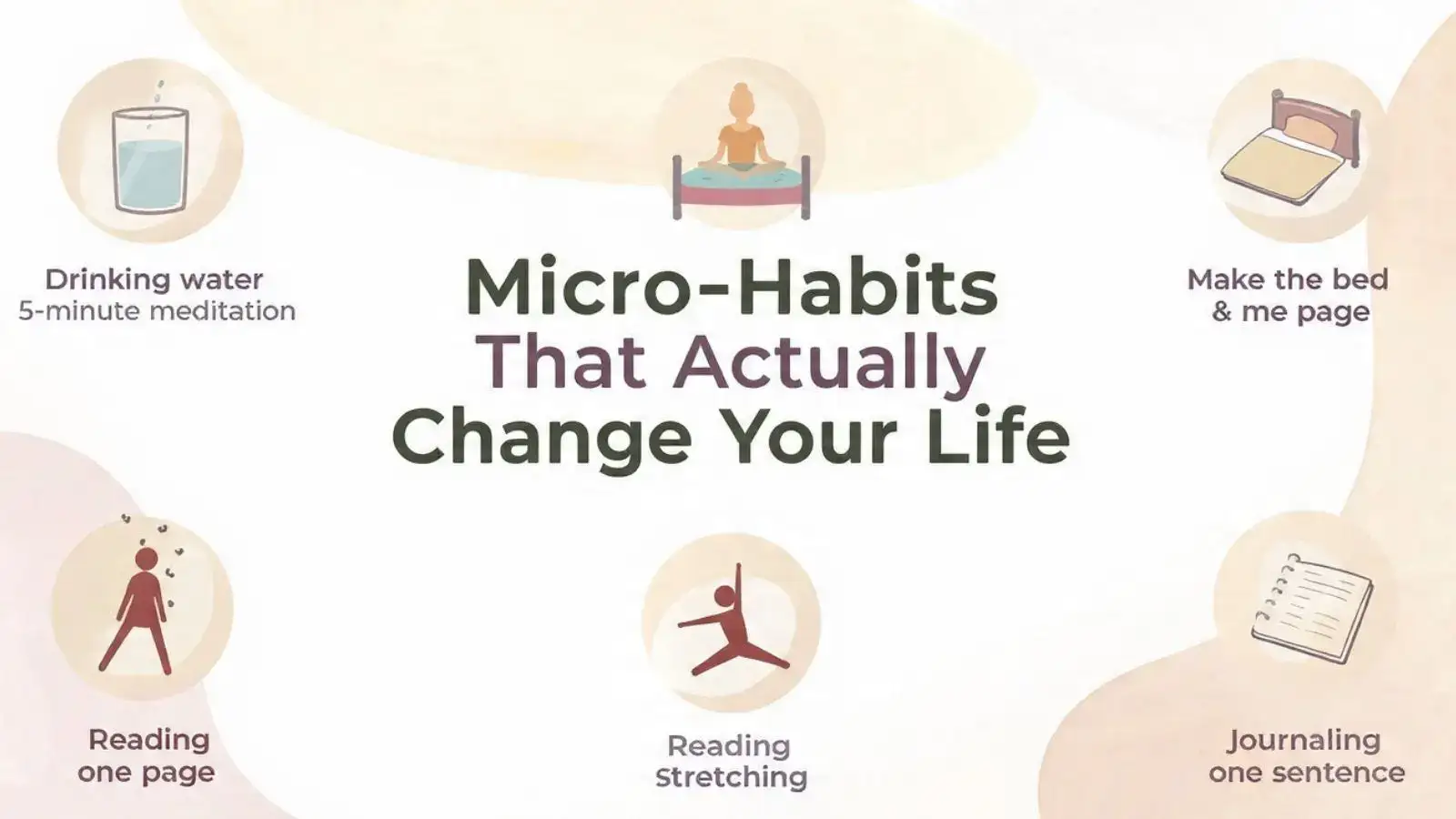
Behavioral research shows that habits form through repetition and consistency rather than intensity. Small actions performed daily are more likely to become automatic, eventually shaping larger behavioral patterns.
Why Small Changes Work Better Than Big Goals
Many people set ambitious goals, like exercising for an hour daily or completely cutting out sugar, but struggle to maintain them. This often leads to burnout or inconsistency. Micro-habits, on the other hand, lower the barrier to entry. When a task feels easy, you’re more likely to start, and starting is often the hardest part.
Psychological studies on habit formation highlight the importance of consistency over motivation. Motivation fluctuates, but small habits rely less on willpower and more on routine. Over time, these actions compound, leading to noticeable improvements.
The Science of Habit Building
Habits are formed through a loop of cue, routine, and reward. Micro-habits work effectively because they are simple enough to repeat consistently within this loop. For example, placing a book on your pillow (cue) can remind you to read one page (routine), followed by a sense of accomplishment (reward).
Neuroscience research suggests that repeated behaviors strengthen neural pathways, making the action feel more natural over time. This is why even a two-minute habit, when repeated daily, can become a permanent part of your routine.
Examples of Micro-Habits That Make a Difference
Micro-habits can be applied across different aspects of life:
The Power of Habit Stacking
One effective way to build micro-habits is through “habit stacking,” where a new habit is attached to an existing one. For example, doing five squats after brushing your teeth or listening to a podcast during your commute. This method leverages established routines, making it easier to adopt new behaviors.
Over time, multiple micro-habits can stack together to create a structured and productive daily routine without feeling overwhelming.
Overcoming Common Challenges
While micro-habits are simple, consistency can still be a challenge. Missing a day is normal, but the key is to avoid abandoning the habit entirely. Experts suggest focusing on progress rather than perfection.
Another misconception is that small actions don’t matter. In reality, their impact lies in accumulation. A one-minute habit done daily adds up to hours of effort over a year.
A Sustainable Approach to Self-Improvement
Micro-habits shift the focus from quick results to sustainable progress. Instead of chasing drastic transformations, they encourage steady improvement. This approach not only reduces stress but also builds confidence, as small wins reinforce positive behavior.
In a fast-paced world, where time and energy are often limited, micro-habits offer a practical and realistic way to create lasting change. By starting small and staying consistent, individuals can gradually transform their routines, and ultimately, their lives.
Micro-habits are small, easy-to-perform actions that require minimal effort but deliver long-term results when practiced consistently. Unlike drastic lifestyle overhauls, they focus on simplicity, think drinking a glass of water after waking up or writing one sentence in a journal daily. Their effectiveness lies in their ability to bypass resistance, making it easier to stick to them.
Behavioral research shows that habits form through repetition and consistency rather than intensity. Small actions performed daily are more likely to become automatic, eventually shaping larger behavioral patterns.
Why Small Changes Work Better Than Big Goals
Many people set ambitious goals, like exercising for an hour daily or completely cutting out sugar, but struggle to maintain them. This often leads to burnout or inconsistency. Micro-habits, on the other hand, lower the barrier to entry. When a task feels easy, you’re more likely to start, and starting is often the hardest part.
Psychological studies on habit formation highlight the importance of consistency over motivation. Motivation fluctuates, but small habits rely less on willpower and more on routine. Over time, these actions compound, leading to noticeable improvements.
The Science of Habit Building
Habits are formed through a loop of cue, routine, and reward. Micro-habits work effectively because they are simple enough to repeat consistently within this loop. For example, placing a book on your pillow (cue) can remind you to read one page (routine), followed by a sense of accomplishment (reward).
Neuroscience research suggests that repeated behaviors strengthen neural pathways, making the action feel more natural over time. This is why even a two-minute habit, when repeated daily, can become a permanent part of your routine.
Examples of Micro-Habits That Make a Difference
Micro-habits can be applied across different aspects of life:
- Health: Drinking water first thing in the morning, taking short walks, or doing five minutes of stretching daily can improve physical well-being.
- Productivity: Writing a to-do list each morning or focusing on one task for 10 minutes helps build focus and clarity.
- Mental Health: Practicing gratitude by noting one positive thing each day or taking a few deep breaths during stressful moments can reduce anxiety.
- Personal Growth: Reading a single page of a book or learning one new concept daily can accumulate into significant knowledge over time.
The Power of Habit Stacking
One effective way to build micro-habits is through “habit stacking,” where a new habit is attached to an existing one. For example, doing five squats after brushing your teeth or listening to a podcast during your commute. This method leverages established routines, making it easier to adopt new behaviors.
Over time, multiple micro-habits can stack together to create a structured and productive daily routine without feeling overwhelming.
Overcoming Common Challenges
While micro-habits are simple, consistency can still be a challenge. Missing a day is normal, but the key is to avoid abandoning the habit entirely. Experts suggest focusing on progress rather than perfection.
Another misconception is that small actions don’t matter. In reality, their impact lies in accumulation. A one-minute habit done daily adds up to hours of effort over a year.
A Sustainable Approach to Self-Improvement
Micro-habits shift the focus from quick results to sustainable progress. Instead of chasing drastic transformations, they encourage steady improvement. This approach not only reduces stress but also builds confidence, as small wins reinforce positive behavior.
In a fast-paced world, where time and energy are often limited, micro-habits offer a practical and realistic way to create lasting change. By starting small and staying consistent, individuals can gradually transform their routines, and ultimately, their lives.
Next Story