
Pink Floyd Spider Discovered: Tiny Hunter Can Catch Prey Six Times Its Size

A newly discovered spider named after a legendary rock band is drawing global attention, not just for its unusual name but for its surprising hunting ability. Despite being very small, this spider can capture prey many times its own size, proving that size is not always the deciding factor in survival.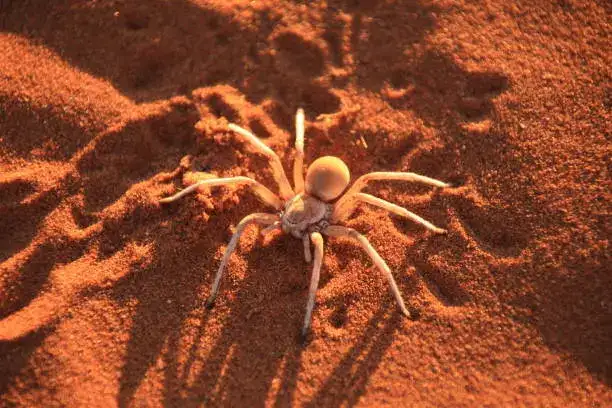
The discovery also reminds us that even in familiar surroundings, there is still so much to learn about the natural world, especially in urban spaces that are often overlooked.
What Is The ‘ Pink Floyd Spider ’?
The species, called Pikelinia floydmuraria, belongs to a group of spiders that live in narrow, hidden spaces such as cracks in walls and crevices around buildings. These spiders are well suited to environments close to human activity.
It was discovered in Colombia and has adapted well to urban life. Its name combines a tribute to the band Pink Floyd with a word that refers to walls, reflecting where it is commonly found.
This discovery was detailed in a study titled “Another web in the wall: A new Pikelinia from Colombia,” offering insights into the spider’s classification, habitat, and behaviour.
A Smart Hunter In A Small Body
One of the most fascinating aspects of this spider is its ability to trap prey that is up to six times larger than itself. This is quite unusual for such a tiny creature and highlights how effective its hunting strategy is.
"Unlike most spiders that rely on agility and physical strength, this one uses strategically placed webs that are usually erected close to artificial lighting sources, which attract insects."
By building webs in these locations, the spider increases its chances of catching larger prey without using much energy. This smart approach allows it to survive efficiently in competitive environments.
Diet And Feeding Behaviour
The spider mainly feeds on insects that are commonly found in cities and towns, such as ants, flies, and beetles. These insects are easily available in areas close to human settlements, making urban environments ideal for the species.
"Among the most consumed insects are the ants, followed by the flies, among others."
However, its ability to capture larger insects shows that it can adapt its feeding habits depending on availability. This flexibility helps it survive in different conditions.
Why This Discovery Matters
Even though the spider is small, it plays an important role in maintaining balance in the ecosystem. By feeding on insects, it helps control their population, which can benefit both humans and agriculture.
The discovery also highlights the richness of biodiversity in places we often overlook. Urban areas are not just concrete spaces. They can support a wide variety of life forms that exist quietly around us.
Thriving In Urban Environments
One of the most interesting features of this spider is its ability to adapt to life in human-made surroundings. It uses walls, cracks, and hidden corners as its home, making the most of spaces that usually go unnoticed.
"The actions of the spider exhibit a highly adaptive nature."
By placing its webs near light sources, it takes advantage of insect movement and behaviour. This shows how species can adjust and evolve to suit changing environments.
A Closer Look At Hidden Nature
This discovery is a reminder that nature is present even in the most unexpected places. Many species continue to thrive in urban environments, often unnoticed by people.
It also shows that scientific exploration is far from complete. Even in areas that seem well studied, new species and behaviours are still being discovered.
In the end, this tiny spider offers a powerful lesson. Survival is not always about size or strength. Sometimes, it is about strategy, adaptability, and making the most of the environment around you.
The discovery also reminds us that even in familiar surroundings, there is still so much to learn about the natural world, especially in urban spaces that are often overlooked.
What Is The ‘ Pink Floyd Spider ’?
The species, called Pikelinia floydmuraria, belongs to a group of spiders that live in narrow, hidden spaces such as cracks in walls and crevices around buildings. These spiders are well suited to environments close to human activity.It was discovered in Colombia and has adapted well to urban life. Its name combines a tribute to the band Pink Floyd with a word that refers to walls, reflecting where it is commonly found.
This discovery was detailed in a study titled “Another web in the wall: A new Pikelinia from Colombia,” offering insights into the spider’s classification, habitat, and behaviour.
A Smart Hunter In A Small Body
One of the most fascinating aspects of this spider is its ability to trap prey that is up to six times larger than itself. This is quite unusual for such a tiny creature and highlights how effective its hunting strategy is. "Unlike most spiders that rely on agility and physical strength, this one uses strategically placed webs that are usually erected close to artificial lighting sources, which attract insects."
By building webs in these locations, the spider increases its chances of catching larger prey without using much energy. This smart approach allows it to survive efficiently in competitive environments.
Diet And Feeding Behaviour
The spider mainly feeds on insects that are commonly found in cities and towns, such as ants, flies, and beetles. These insects are easily available in areas close to human settlements, making urban environments ideal for the species.You may also like
- India Is No Longer In The Top 5, But Experts Still See A Top 3 Economy Ahead
- Anushka Sharma breaks the jersey code with her ruffled crop top at the RCB vs LSG match, brings high-fashion drama to the athleisure valley
- कैसे एक मॉडल अपने पैरों से कमाती है लाखों रुपये हर महीने
- Easy Ways to Feel Calm in a Busy Life
- 600-Year-Old Gali Anjaneya Temple: Hanuman Miracles in Bengaluru
"Among the most consumed insects are the ants, followed by the flies, among others."
However, its ability to capture larger insects shows that it can adapt its feeding habits depending on availability. This flexibility helps it survive in different conditions.
Why This Discovery Matters
Even though the spider is small, it plays an important role in maintaining balance in the ecosystem. By feeding on insects, it helps control their population, which can benefit both humans and agriculture. The discovery also highlights the richness of biodiversity in places we often overlook. Urban areas are not just concrete spaces. They can support a wide variety of life forms that exist quietly around us.
Thriving In Urban Environments
One of the most interesting features of this spider is its ability to adapt to life in human-made surroundings. It uses walls, cracks, and hidden corners as its home, making the most of spaces that usually go unnoticed."The actions of the spider exhibit a highly adaptive nature."
By placing its webs near light sources, it takes advantage of insect movement and behaviour. This shows how species can adjust and evolve to suit changing environments.
A Closer Look At Hidden Nature
This discovery is a reminder that nature is present even in the most unexpected places. Many species continue to thrive in urban environments, often unnoticed by people. It also shows that scientific exploration is far from complete. Even in areas that seem well studied, new species and behaviours are still being discovered.
In the end, this tiny spider offers a powerful lesson. Survival is not always about size or strength. Sometimes, it is about strategy, adaptability, and making the most of the environment around you.






More from our partners


Loving Newspoint? Download the app now
