
Plants Can Now Be Seen ‘Breathing’ For The First Time: Why This Discovery Is Important

Plants have always carried out a quiet, invisible exchange with the air around them, a process scientists long understood but could never actually see in motion. That has now changed. Researchers at the University of Illinois Urbana-Champaign have created a pioneering system that allows scientists to observe and record plant breathing as it happens, offering new insight into how plants grow, survive, and respond to stress.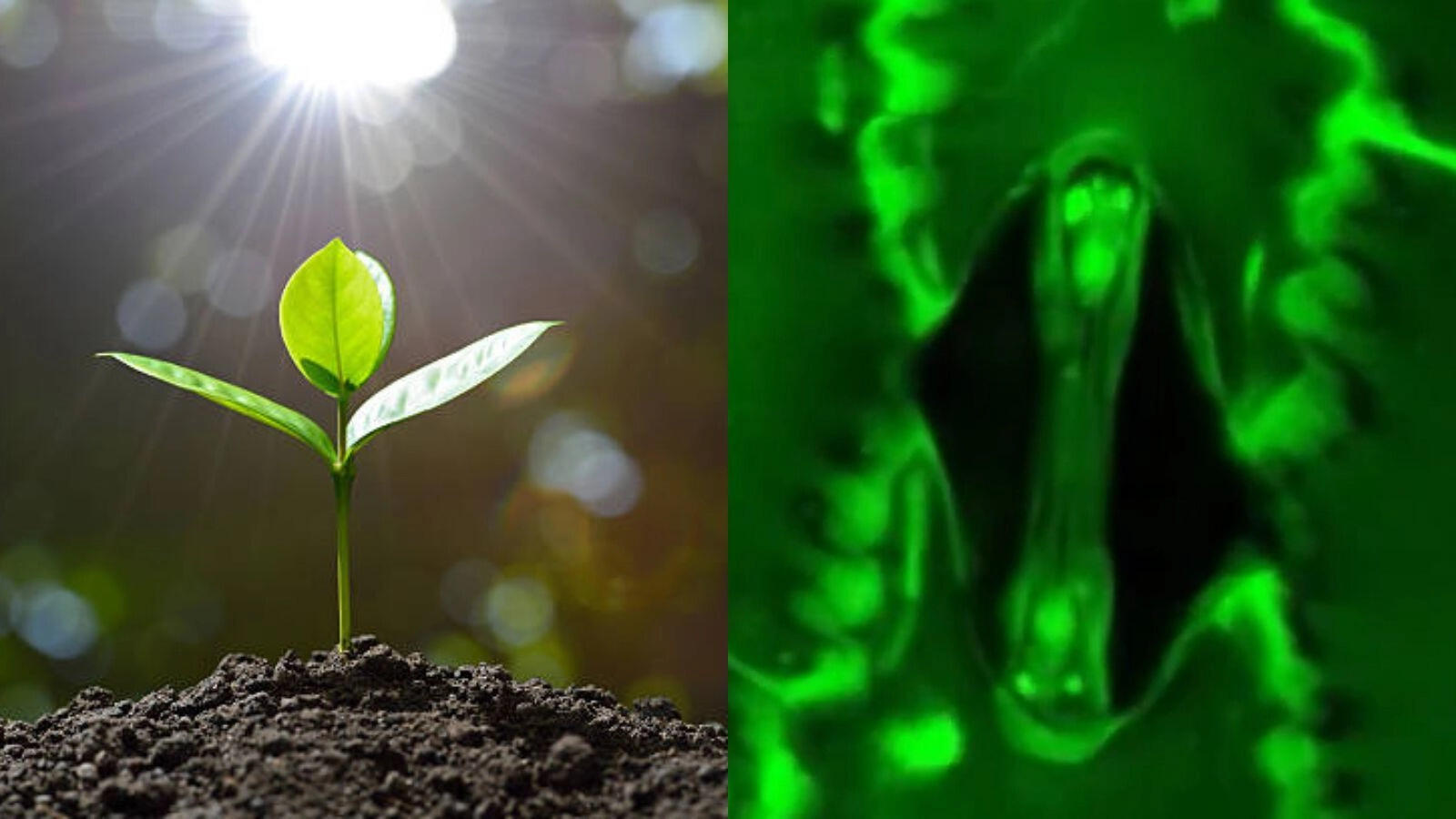
What Are Stomata And Why Do They Matter?
Stomata are microscopic pores found on the surface of leaves and are often described as the plant’s mouths. These openings play a critical role in plant survival by allowing carbon dioxide to enter for photosynthesis while releasing oxygen and water vapour. By opening and closing, stomata help plants balance growth with water conservation, especially during heat, drought, or dry conditions.
Inside The ‘Stomata In-Sight’ Breakthrough
The newly developed tool, called Stomata In-Sight, combines a high-resolution confocal microscope with a precise gas-exchange measurement system and machine-learning software for image analysis. During experiments, small sections of leaves are placed inside a compact, palm-sized chamber where researchers can tightly control temperature, humidity, light, carbon dioxide levels, and water availability.
This setup allows scientists to capture detailed videos showing gases moving in and out of leaves as plants “breathe,” something that had only been theorised until now.
What The Researchers Observed
Using advanced imaging and sensors, the research team recorded how stomata respond to changes in light, humidity, and temperature. The footage revealed subtle cellular shifts as plants adjust to their surroundings, offering valuable insight into water regulation, internal balance, and stress responses.
Explaining this process, Andrew Leakey from the Department of Plant Biology and the Institute for Genomic Biology at the University of Illinois said, “For example, they open the pore in the light and close it in the dark. This happens in order to allow photosynthesis to happen when conditions are favorable but to minimize the loss of water from the interior of the leaf to the atmosphere. When plants don't have access to enough water, because the weather is hot and dry, or because we forget to water them - they start to dry out and don't grow as well.”
Five Years Of Precision Engineering
Creating Stomata In-Sight was not an overnight success. The team spent nearly five years refining the system, overcoming technical challenges such as removing even the slightest vibrations that could disrupt ultra-fine microscopic images. After multiple prototypes, they achieved a stable and reliable design capable of capturing real-time stomatal movement.
Why This Discovery Is So Important
Understanding how stomata behave at a microscopic level could transform modern agriculture. By identifying the physical and chemical signals that control when these pores open and close, scientists can pinpoint genetic traits linked to improved water-use efficiency.
With water scarcity already the biggest environmental constraint on agriculture, this knowledge is critical. Crops that manage water more efficiently could better withstand rising temperatures and prolonged droughts, helping to secure food supplies in a changing climate.
What Comes Next?
The University of Illinois Urbana-Champaign has patented the Stomata In-Sight technology. While it is not yet available commercially, researchers hope it will soon be manufactured for wider scientific use, allowing plant scientists worldwide to study plant “breathing” in ways never possible before.
What Are Stomata And Why Do They Matter?
Stomata are microscopic pores found on the surface of leaves and are often described as the plant’s mouths. These openings play a critical role in plant survival by allowing carbon dioxide to enter for photosynthesis while releasing oxygen and water vapour. By opening and closing, stomata help plants balance growth with water conservation, especially during heat, drought, or dry conditions.Inside The ‘Stomata In-Sight’ Breakthrough
The newly developed tool, called Stomata In-Sight, combines a high-resolution confocal microscope with a precise gas-exchange measurement system and machine-learning software for image analysis. During experiments, small sections of leaves are placed inside a compact, palm-sized chamber where researchers can tightly control temperature, humidity, light, carbon dioxide levels, and water availability.This setup allows scientists to capture detailed videos showing gases moving in and out of leaves as plants “breathe,” something that had only been theorised until now.
What The Researchers Observed
Using advanced imaging and sensors, the research team recorded how stomata respond to changes in light, humidity, and temperature. The footage revealed subtle cellular shifts as plants adjust to their surroundings, offering valuable insight into water regulation, internal balance, and stress responses.
You may also like
- Wings India 2026: Brazil's Embraer to display two commercial aircraft at global aviation summit
 Women to lead 15 out of 29 Municipal Corporations in Maharashtra
- PhonePe Cofounders Sold Shares Worth INR 4,000 Cr To General Atlantic In September
- Cong slams BJP govt over MP Chief Secy's 'veiled' remarks on corruption in districts
- AFCAT 1 admit card 2026 released at afcat.cdac.in; check steps to download, exam pattern, important instructions and more
Explaining this process, Andrew Leakey from the Department of Plant Biology and the Institute for Genomic Biology at the University of Illinois said, “For example, they open the pore in the light and close it in the dark. This happens in order to allow photosynthesis to happen when conditions are favorable but to minimize the loss of water from the interior of the leaf to the atmosphere. When plants don't have access to enough water, because the weather is hot and dry, or because we forget to water them - they start to dry out and don't grow as well.”
Five Years Of Precision Engineering
Creating Stomata In-Sight was not an overnight success. The team spent nearly five years refining the system, overcoming technical challenges such as removing even the slightest vibrations that could disrupt ultra-fine microscopic images. After multiple prototypes, they achieved a stable and reliable design capable of capturing real-time stomatal movement. Why This Discovery Is So Important
Understanding how stomata behave at a microscopic level could transform modern agriculture. By identifying the physical and chemical signals that control when these pores open and close, scientists can pinpoint genetic traits linked to improved water-use efficiency.With water scarcity already the biggest environmental constraint on agriculture, this knowledge is critical. Crops that manage water more efficiently could better withstand rising temperatures and prolonged droughts, helping to secure food supplies in a changing climate.
What Comes Next?
The University of Illinois Urbana-Champaign has patented the Stomata In-Sight technology. While it is not yet available commercially, researchers hope it will soon be manufactured for wider scientific use, allowing plant scientists worldwide to study plant “breathing” in ways never possible before. 





More from our partners


Loving Newspoint? Download the app now
