
Shortest River in India: Name, Location and Interesting Facts You Should Know

Shortest River In India : India’s river systems are usually associated with mighty and expansive rivers like the Ganga and Brahmaputra. However, beyond these vast waterways exist several small and lesser-known rivers that play a crucial role in local ecosystems. Among them is the Arvari River, often regarded as one of the shortest rivers in India, stretching approximately 90 kilometers in length.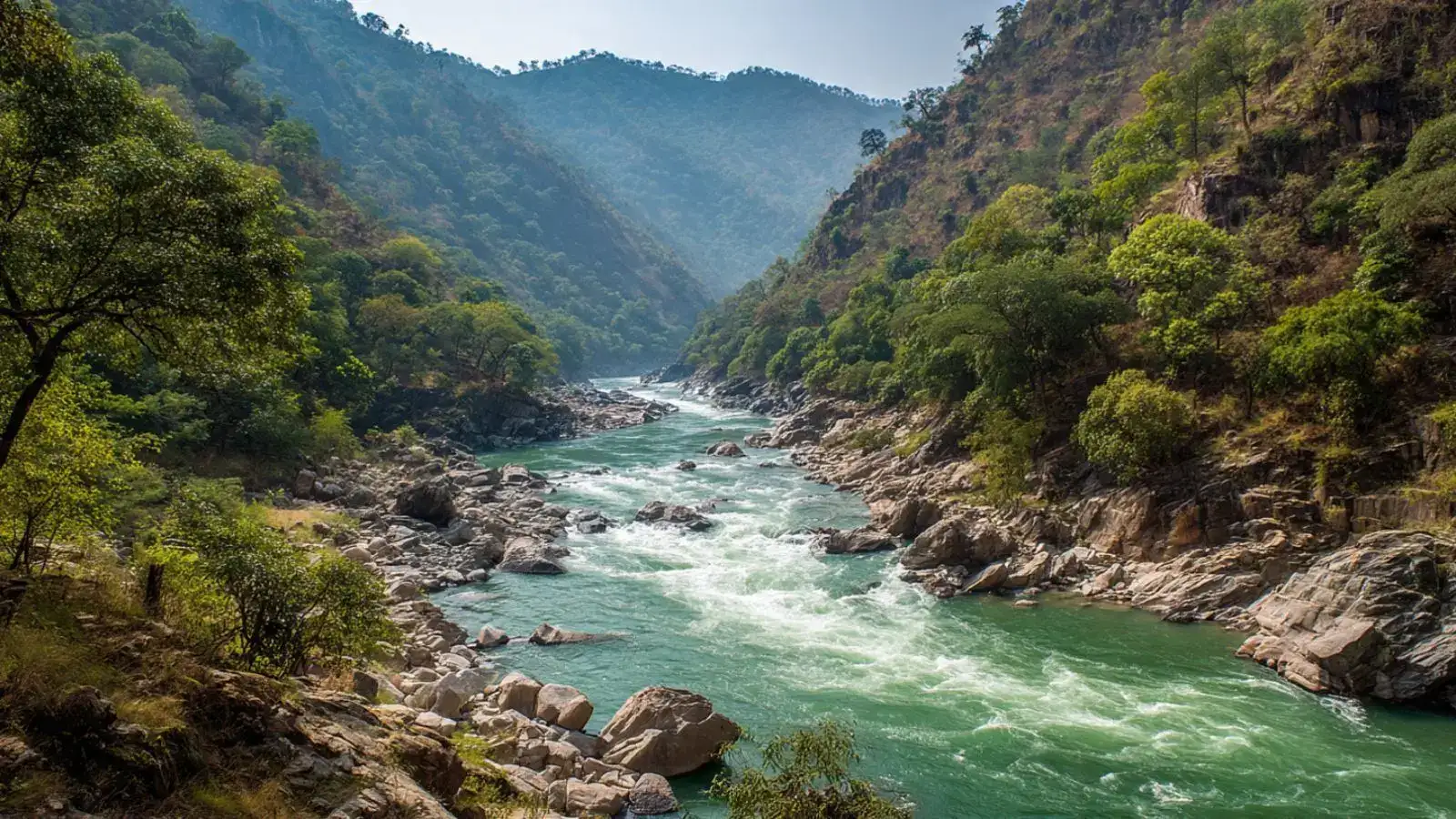
The Arvari River: A Unique Case
Flowing through the Alwar district of Rajasthan, the Arvari River is not just notable for its relatively short length but also for its remarkable revival story. Unlike many perennial rivers, the Arvari had dried up due to deforestation, overuse of groundwater, and erratic rainfall patterns.
In the 1980s, local communities, along with environmental groups, took collective action to revive the river. Through traditional water conservation techniques like johads (small earthen check dams), they managed to restore the flow of the river. By the mid-1990s, the Arvari became perennial again, marking a significant achievement in community-led environmental restoration.
Is It Really the Shortest River in India?
It’s important to note that identifying the absolute shortest river in India is not straightforward. India has numerous small streams and seasonal rivers, many of which are not officially documented or measured. While the Arvari is often cited due to its known length and significance, there may be smaller rivers or streams that are less recognized.
Globally, the concept of the “shortest river” is also debated, as definitions vary depending on whether seasonal streams or perennial rivers are considered. In India’s case, the Arvari stands out not just for its size but for its ecological and cultural importance.
Why Small Rivers Matter
Short rivers like the Arvari may not gain as much attention as larger river systems, but they are vital for sustaining local biodiversity and supporting rural livelihoods. They recharge groundwater, support agriculture, and provide drinking water to nearby communities.
In arid regions like Rajasthan, even a small river can make a significant difference. The revival of the Arvari River improved water availability, boosted agriculture, and helped restore the ecological balance in the region.
Lessons From the Arvari River
The story of the Arvari River highlights the importance of community participation in environmental conservation. It shows that even degraded ecosystems can be revived with sustained effort and traditional knowledge.
Today, the river is managed by local communities through the Arvari Parliament, a unique grassroots initiative where villagers collectively make decisions about water usage and conservation. This model has inspired similar efforts across India.
A Broader Perspective on India’s Rivers
While the Arvari River is often mentioned in discussions about the shortest rivers in India, the country’s vast geography means there are countless small water bodies that remain undocumented. These include seasonal rivulets, mountain streams, and minor tributaries that may be shorter in length but are equally important.
Understanding and protecting these smaller rivers is essential, especially in the face of climate change and increasing water scarcity. They form the backbone of local water systems and contribute to the health of larger river networks.
The question of the shortest river in India does not have a single definitive answer, but the Arvari River stands out as a strong contender due to its relatively short length and well-documented history. More importantly, it serves as a powerful reminder that the significance of a river is not measured by its length alone, but by the life and sustainability it supports.
The Arvari River: A Unique Case
Flowing through the Alwar district of Rajasthan, the Arvari River is not just notable for its relatively short length but also for its remarkable revival story. Unlike many perennial rivers, the Arvari had dried up due to deforestation, overuse of groundwater, and erratic rainfall patterns.
In the 1980s, local communities, along with environmental groups, took collective action to revive the river. Through traditional water conservation techniques like johads (small earthen check dams), they managed to restore the flow of the river. By the mid-1990s, the Arvari became perennial again, marking a significant achievement in community-led environmental restoration.
Is It Really the Shortest River in India?
It’s important to note that identifying the absolute shortest river in India is not straightforward. India has numerous small streams and seasonal rivers, many of which are not officially documented or measured. While the Arvari is often cited due to its known length and significance, there may be smaller rivers or streams that are less recognized.
Globally, the concept of the “shortest river” is also debated, as definitions vary depending on whether seasonal streams or perennial rivers are considered. In India’s case, the Arvari stands out not just for its size but for its ecological and cultural importance.
Why Small Rivers Matter
Short rivers like the Arvari may not gain as much attention as larger river systems, but they are vital for sustaining local biodiversity and supporting rural livelihoods. They recharge groundwater, support agriculture, and provide drinking water to nearby communities.
In arid regions like Rajasthan, even a small river can make a significant difference. The revival of the Arvari River improved water availability, boosted agriculture, and helped restore the ecological balance in the region.
Lessons From the Arvari River
The story of the Arvari River highlights the importance of community participation in environmental conservation. It shows that even degraded ecosystems can be revived with sustained effort and traditional knowledge.
Today, the river is managed by local communities through the Arvari Parliament, a unique grassroots initiative where villagers collectively make decisions about water usage and conservation. This model has inspired similar efforts across India.
A Broader Perspective on India’s Rivers
While the Arvari River is often mentioned in discussions about the shortest rivers in India, the country’s vast geography means there are countless small water bodies that remain undocumented. These include seasonal rivulets, mountain streams, and minor tributaries that may be shorter in length but are equally important.
Understanding and protecting these smaller rivers is essential, especially in the face of climate change and increasing water scarcity. They form the backbone of local water systems and contribute to the health of larger river networks.
The question of the shortest river in India does not have a single definitive answer, but the Arvari River stands out as a strong contender due to its relatively short length and well-documented history. More importantly, it serves as a powerful reminder that the significance of a river is not measured by its length alone, but by the life and sustainability it supports.
Next Story