
Warning signs that a snake has entered your house


A thin, ghost-like skin lying in a quiet corner can feel unsettling. Not something you expect to find inside your own home. At first glance, it might look harmless, almost fragile. But it often tells a deeper story. Snakes don’t usually make dramatic entrances. They move quietly, stay hidden, and leave behind subtle clues that are easy to overlook. A shed skin is often one of the earliest and most telling signs of their presence. Experts say these skins can appear long before you ever spot the snake itself. And that’s what makes them important. Because while one skin might suggest a passing visitor, repeated finds could mean something more. Something ongoing. A hidden presence that’s already settled in without you noticing.
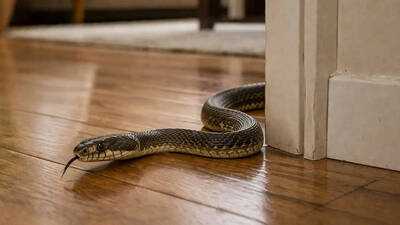
Signs of a snake hiding inside your house
Shed skins are often the first clue
One of the most obvious and consistent indicators that you have snakes at home is the presence of shed skin. As snakes mature, they tend to shed their outer layer a few times each year. What is left behind is a dried, thin, and translucent skin, which usually keeps the form of the snake’s body.
This type of skin is typically discovered in places where there is little movement, such as attics, basements, garages, and other storage places. Sometimes, one shed skin might mean that the snake was only passing through. However, discovering multiple shed skins in various areas of your home may suggest that the snake is frequently visiting your place and possibly using it as its hideout.
Unusual tracks and movement patterns
Another subtle sign is the appearance of snake tracks. These are usually marked by curved lines shaped like the letter “S.” They can be found on dusty surfaces inside buildings and even in rarely cleaned spaces such as garages and storage areas.
Outside, snake tracks are easier to spot, especially when it rains or after a downpour, since the marks will stay visible for an extended period. However, it should be noted that snake tracks can also resemble those of other creatures and even some objects; however, their unique and continuous S-curved line makes them easily distinguishable.
A lingering musky odour
Many homeowners have experienced an odour that seems to be quite specific to regions where there are snakes. This particular smell is said to emanate from the snake’s glands, especially during periods when they are under threat or involved in specific biological activities such as skin shedding or digestion.
This odour may be stronger in enclosed spaces such as the basement or attic, but it does not necessarily mean that there are snakes in the vicinity. Other causes of a similar smell could be mold or moisture, or even decaying rats. However, when accompanied by other indicators, the smell becomes a valuable indicator.
Droppings that reveal their diet
Snake droppings are another indicator that should not be ignored. They often resemble bird droppings in appearance but tend to contain visible remains of their prey. This may include small bones, fur, feathers, or scales.
You are most likely to find these droppings along walls, near hiding spots, or in areas where the snake may have been feeding. Because they can be confused with waste from other animals, it is important to consider them alongside other evidence, such as tracks or shed skins. When seen together, these signs can paint a clearer picture of snake activity.
Why your garden might be attracting snakes
Many cases arise from the external factors, which means that gardens providing safety, warmth, and nourishment can invite the snakes into the gardens. Overgrown vegetation, logs, compost, and many other similar items can be used by the snakes to create ideal hiding places.
The snakes won’t create their own shelters; they would rather use already made shelters that include old rat burrows, building foundations, or even rock crevices. Difficulty with rodents in the garden area can lead to more snake invasions since the snakes consider the rodents their primary source of nourishment.
When a snake is spotted basking under the heat on areas like driveways and patios, it means that the snake must have a shelter nearby. The snake is ectothermic and requires the surroundings to regulate its body temperature
Where are the snakes getting in from
It may sound strange, but snakes can gain entry into homes even through tiny holes. It has been found that certain types of snakes can slip through holes measuring just a few centimeters in width. Snakes usually gain entry into homes via spaces beneath doors, wall crevices, and pipe holes.
What you can do if you notice these signs
In case you think there might be snakes nearby, your first move should be to stay cool and not touch the snake directly. The majority of snakes are non-aggressive and will only attack when they are threatened.
There are easy-to-follow steps that you can take that may save the day for you. This involves ensuring that your yard is kept neat and clean, clearing overgrowth, filling any gaps and cracks in your house, and making sure that the area is free from rodents.
However, if you are still having problems, the best thing to do would be to get in touch with pest control experts.
Signs of a snake hiding inside your house
Shed skins are often the first clue
One of the most obvious and consistent indicators that you have snakes at home is the presence of shed skin. As snakes mature, they tend to shed their outer layer a few times each year. What is left behind is a dried, thin, and translucent skin, which usually keeps the form of the snake’s body.
This type of skin is typically discovered in places where there is little movement, such as attics, basements, garages, and other storage places. Sometimes, one shed skin might mean that the snake was only passing through. However, discovering multiple shed skins in various areas of your home may suggest that the snake is frequently visiting your place and possibly using it as its hideout.
Unusual tracks and movement patterns
Another subtle sign is the appearance of snake tracks. These are usually marked by curved lines shaped like the letter “S.” They can be found on dusty surfaces inside buildings and even in rarely cleaned spaces such as garages and storage areas.
Outside, snake tracks are easier to spot, especially when it rains or after a downpour, since the marks will stay visible for an extended period. However, it should be noted that snake tracks can also resemble those of other creatures and even some objects; however, their unique and continuous S-curved line makes them easily distinguishable.
A lingering musky odour
Many homeowners have experienced an odour that seems to be quite specific to regions where there are snakes. This particular smell is said to emanate from the snake’s glands, especially during periods when they are under threat or involved in specific biological activities such as skin shedding or digestion.
This odour may be stronger in enclosed spaces such as the basement or attic, but it does not necessarily mean that there are snakes in the vicinity. Other causes of a similar smell could be mold or moisture, or even decaying rats. However, when accompanied by other indicators, the smell becomes a valuable indicator.
Droppings that reveal their diet
Snake droppings are another indicator that should not be ignored. They often resemble bird droppings in appearance but tend to contain visible remains of their prey. This may include small bones, fur, feathers, or scales.
You are most likely to find these droppings along walls, near hiding spots, or in areas where the snake may have been feeding. Because they can be confused with waste from other animals, it is important to consider them alongside other evidence, such as tracks or shed skins. When seen together, these signs can paint a clearer picture of snake activity.
Why your garden might be attracting snakes
Many cases arise from the external factors, which means that gardens providing safety, warmth, and nourishment can invite the snakes into the gardens. Overgrown vegetation, logs, compost, and many other similar items can be used by the snakes to create ideal hiding places.
The snakes won’t create their own shelters; they would rather use already made shelters that include old rat burrows, building foundations, or even rock crevices. Difficulty with rodents in the garden area can lead to more snake invasions since the snakes consider the rodents their primary source of nourishment.
When a snake is spotted basking under the heat on areas like driveways and patios, it means that the snake must have a shelter nearby. The snake is ectothermic and requires the surroundings to regulate its body temperature
Where are the snakes getting in from
It may sound strange, but snakes can gain entry into homes even through tiny holes. It has been found that certain types of snakes can slip through holes measuring just a few centimeters in width. Snakes usually gain entry into homes via spaces beneath doors, wall crevices, and pipe holes.
What you can do if you notice these signs
In case you think there might be snakes nearby, your first move should be to stay cool and not touch the snake directly. The majority of snakes are non-aggressive and will only attack when they are threatened.
There are easy-to-follow steps that you can take that may save the day for you. This involves ensuring that your yard is kept neat and clean, clearing overgrowth, filling any gaps and cracks in your house, and making sure that the area is free from rodents.
However, if you are still having problems, the best thing to do would be to get in touch with pest control experts.
Next Story