
What Killed This Ancient Fish? A 150-Million-Year-Old Fossil Reveals a Shocking Feeding Error

The ancient oceans were full of predators, but survival was never guaranteed. A fascinating fossil discovery now reveals how a simple mistake led to the sudden death of a Jurassic fish, capturing a moment that has remained untouched for nearly 150 million years.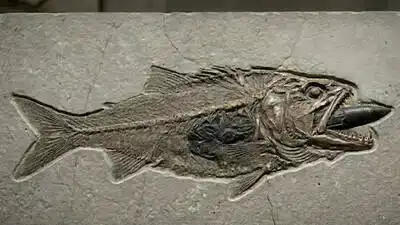
The fish appears to have choked while trying to eat a squid-like creature known as a belemnite. This type of fossil, which captures an animal’s final meal, is called a “pabulite” and offers a rare glimpse into prehistoric life and death.
They had a hard internal structure called a rostrum. This bullet-shaped piece was strong and dense, similar to bone. While it helped the creature maintain its shape, it became extremely dangerous when swallowed by a predator.
Once inside, it became tightly lodged. Its shape allowed it to enter easily, but it locked firmly in place, pressing against the fish’s inner mouth and teeth. The fish could neither swallow it nor spit it out.
This created a fatal blockage. The lodged object forced the fish’s gill covers to stay open, disrupting the flow of water needed for breathing. Without oxygen, the fish would have suffocated quickly.
These cases highlight a common risk faced by ancient predators. Even experienced hunters could fall victim to a poorly judged meal.
Over millions of years, the scene was preserved in remarkable detail, offering scientists a clear snapshot of this fatal moment.
With only a fraction of a second to react, the fish likely made a quick decision that turned out to be fatal.
It reminds us that survival in the natural world has always depended on both skill and judgment. Sometimes, one wrong move was all it took.
A Rare Fossil Tells a Dramatic Story
Scientists uncovered a remarkably preserved fossil of Tharsis, a prehistoric fish that lived during the Jurassic period. What makes this specimen extraordinary is that it preserves the exact cause of death.The fish appears to have choked while trying to eat a squid-like creature known as a belemnite. This type of fossil, which captures an animal’s final meal, is called a “pabulite” and offers a rare glimpse into prehistoric life and death.
The Hidden Danger Inside the Prey
At first, belemnites might have seemed like easy prey. Their bodies were soft, much like modern squids. But they carried a hidden threat inside.They had a hard internal structure called a rostrum. This bullet-shaped piece was strong and dense, similar to bone. While it helped the creature maintain its shape, it became extremely dangerous when swallowed by a predator.
How One Bite Turned Deadly
The fish likely used suction feeding, a method where it quickly opened its mouth and pulled in water along with its prey. In this case, the rostrum slid smoothly into the fish’s throat.Once inside, it became tightly lodged. Its shape allowed it to enter easily, but it locked firmly in place, pressing against the fish’s inner mouth and teeth. The fish could neither swallow it nor spit it out.
This created a fatal blockage. The lodged object forced the fish’s gill covers to stay open, disrupting the flow of water needed for breathing. Without oxygen, the fish would have suffocated quickly.
Another Predator, Same Fate
This was not an isolated incident. Another Jurassic fish, Pachycormus macropterus, was found to have died in a similar way after attempting to swallow a hard ammonite shell.You may also like
- Health Tips: Here Are the Health Benefits of Drinking Green Tea—Let's Explore Them
- How to avoid pore blockage and maintain clear skin
- English ivy for indoor spaces: How this simple plant spreads rapidly, adapts easily, and remains a favourite houseplant
- Quote of the day for kids by Tom Holland: "I think the important thing is to just take in one step at a time"
- Not just Virat Kohli's flying kiss - Anushka Sharma's ₹18k floral top and retro denims steal the show at IPL 2026 opener
These cases highlight a common risk faced by ancient predators. Even experienced hunters could fall victim to a poorly judged meal.
Preserved Like a Time Capsule
After the fish died, it sank to the ocean floor, where low oxygen levels prevented other creatures from disturbing it. This allowed the remains to stay intact and eventually fossilise.Over millions of years, the scene was preserved in remarkable detail, offering scientists a clear snapshot of this fatal moment.
Why Did This Happen?
Researchers believe these deadly mistakes were caused by misidentification. In the murky waters of the Jurassic seas, it would have been difficult to tell the difference between a soft-bodied animal and a floating shell.With only a fraction of a second to react, the fish likely made a quick decision that turned out to be fatal.
A Glimpse Into Prehistoric Life
This discovery is more than just a fossil. It is a story frozen in time, showing that even the most capable predators were vulnerable to error.It reminds us that survival in the natural world has always depended on both skill and judgment. Sometimes, one wrong move was all it took.






More from our partners


Loving Newspoint? Download the app now
