
Why Do We Say “Radha Krishna” and Not “Krishna Radha”?


“राधा कृष्ण प्रणय विकृतिर् ह्लादिनी शक्ति रस्मात्”
This line from the Vaishnava tradition tells us something beautiful. Radha and Krishna are not two separate beings. They are one divine truth expressed as love and the one who receives that love.
But let us step away from heavy philosophy for a moment.
If you visit Vrindavan, you will hear people greet each other not with hello, but with “Radhe Radhe.” In temples, in songs, in everyday conversations, it is almost always Radha first. Rarely does anyone say Krishna Radha.
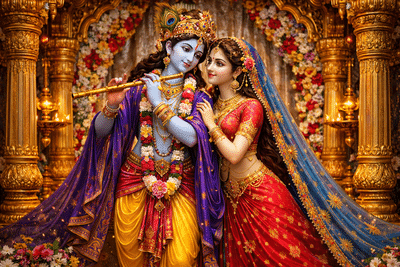
Why?
This is not just habit. It carries emotion, devotion, and centuries of spiritual understanding.
1. Because Love Comes Before God In Bhakti traditions, Radha represents pure love. Krishna represents the Supreme Being. When devotees say Radha Krishna, they are not rearranging names randomly. They are expressing a spiritual truth.
Before one reaches God, one must awaken love within. Radha symbolizes that love. She is the longing of the soul, the tenderness of devotion, the surrender that makes spiritual life real.
Krishna is the destination. Radha is the path.
So her name comes first.
2. Radha Is Krishna’s Divine Energy In the teachings of Chaitanya Mahaprabhu, Radha is described as Krishna’s internal spiritual energy, known as Hladini Shakti. This means she is not separate from Him. She is His joy, His bliss, His loving nature personified.
Think of fire and its warmth. You cannot separate them. Krishna is like the fire. Radha is like the warmth that makes the fire meaningful to us.
Devotees say Radha first because she represents the approachable, compassionate side of divinity. Through her grace, one feels closer to Krishna.
3. Devotion Believes Radha Is Compassion Itself Many devotees believe that while Krishna represents divine power, Radha represents divine mercy. In temple traditions, especially in North India, it is often said that Krishna may test His devotees, but Radha melts easily at sincere prayer.
This belief has shaped devotional culture for centuries. Saints like Mirabai sang with longing, often addressing Krishna through the mood of Radha’s love.
Placing Radha first is like saying, let compassion lead the way.
4. Scriptures and Poetry Strengthened This Tradition Although the Bhagavata Purana narrates Krishna’s divine play in detail, later devotional works gave Radha a central place. One of the most influential among them is Gita Govinda by Jayadeva. In this poetic masterpiece, Radha is not a side figure. She is the heart of the story.
Over time, poets, saints, and kirtan traditions consistently used Radha Krishna as a pair. Language carries emotion, and emotion shapes habit. Gradually, this order became natural across temples and homes.
It was not imposed. It flowed from devotion.
5. Radha Represents the Soul, Krishna the Supreme On a deeper level, Radha can be understood as the individual soul, and Krishna as the Supreme Reality. The soul longs first. The Divine responds.
When we say Radha Krishna, we are symbolically placing the seeker before the sought. It reflects the spiritual journey itself.
This interpretation resonates strongly in devotional movements like the International Society for Krishna Consciousness, where devotees pray for service to Radha before aspiring for closeness to Krishna.
The order becomes a reminder that spirituality begins with inner yearning.
6. The Feminine Principle Often Leads in Devotional Names In many sacred names in Hindu tradition, the feminine aspect appears first. Sita Ram. Lakshmi Narayan. Radha Krishna.
This reflects the philosophical idea that Shakti, divine energy, activates and expresses the Supreme. Radha is that energy of love. Krishna is the source.
Without energy, the source remains unexpressed. Without love, divinity feels distant.
So the name itself teaches balance.
7. Because Krishna Is Said to Be Incomplete Without Radha Many saints have said something very simple yet powerful. Krishna is complete in Himself, but His sweetness shines fully only with Radha.
In temples across North India, Radha stands beside Krishna, not behind Him. Their presence together expresses harmony, not hierarchy.
Placing her name first does not reduce Krishna. It honors the relationship that defines both.
This line from the Vaishnava tradition tells us something beautiful. Radha and Krishna are not two separate beings. They are one divine truth expressed as love and the one who receives that love.
But let us step away from heavy philosophy for a moment.
If you visit Vrindavan, you will hear people greet each other not with hello, but with “Radhe Radhe.” In temples, in songs, in everyday conversations, it is almost always Radha first. Rarely does anyone say Krishna Radha.
Why?
This is not just habit. It carries emotion, devotion, and centuries of spiritual understanding.
1. Because Love Comes Before God In Bhakti traditions, Radha represents pure love. Krishna represents the Supreme Being. When devotees say Radha Krishna, they are not rearranging names randomly. They are expressing a spiritual truth.
Before one reaches God, one must awaken love within. Radha symbolizes that love. She is the longing of the soul, the tenderness of devotion, the surrender that makes spiritual life real.
Krishna is the destination. Radha is the path.
So her name comes first.
2. Radha Is Krishna’s Divine Energy In the teachings of Chaitanya Mahaprabhu, Radha is described as Krishna’s internal spiritual energy, known as Hladini Shakti. This means she is not separate from Him. She is His joy, His bliss, His loving nature personified.
Think of fire and its warmth. You cannot separate them. Krishna is like the fire. Radha is like the warmth that makes the fire meaningful to us.
Devotees say Radha first because she represents the approachable, compassionate side of divinity. Through her grace, one feels closer to Krishna.
3. Devotion Believes Radha Is Compassion Itself Many devotees believe that while Krishna represents divine power, Radha represents divine mercy. In temple traditions, especially in North India, it is often said that Krishna may test His devotees, but Radha melts easily at sincere prayer.
This belief has shaped devotional culture for centuries. Saints like Mirabai sang with longing, often addressing Krishna through the mood of Radha’s love.
Placing Radha first is like saying, let compassion lead the way.
4. Scriptures and Poetry Strengthened This Tradition Although the Bhagavata Purana narrates Krishna’s divine play in detail, later devotional works gave Radha a central place. One of the most influential among them is Gita Govinda by Jayadeva. In this poetic masterpiece, Radha is not a side figure. She is the heart of the story.
Over time, poets, saints, and kirtan traditions consistently used Radha Krishna as a pair. Language carries emotion, and emotion shapes habit. Gradually, this order became natural across temples and homes.
It was not imposed. It flowed from devotion.
5. Radha Represents the Soul, Krishna the Supreme On a deeper level, Radha can be understood as the individual soul, and Krishna as the Supreme Reality. The soul longs first. The Divine responds.
When we say Radha Krishna, we are symbolically placing the seeker before the sought. It reflects the spiritual journey itself.
This interpretation resonates strongly in devotional movements like the International Society for Krishna Consciousness, where devotees pray for service to Radha before aspiring for closeness to Krishna.
The order becomes a reminder that spirituality begins with inner yearning.
This reflects the philosophical idea that Shakti, divine energy, activates and expresses the Supreme. Radha is that energy of love. Krishna is the source.
Without energy, the source remains unexpressed. Without love, divinity feels distant.
So the name itself teaches balance.
7. Because Krishna Is Said to Be Incomplete Without Radha Many saints have said something very simple yet powerful. Krishna is complete in Himself, but His sweetness shines fully only with Radha.
In temples across North India, Radha stands beside Krishna, not behind Him. Their presence together expresses harmony, not hierarchy.
Placing her name first does not reduce Krishna. It honors the relationship that defines both.
Next Story