
Why Do Jeans Have Metal Rivets? The Small Detail That Strengthens Denim

The Birth of a Practical Innovation
The small metal pieces seen on jeans are actually rivets, and their origin dates back to 1873. They were introduced when Levi Strauss & Co. partnered with tailor Jacob Davis to create a more durable pair of work pants.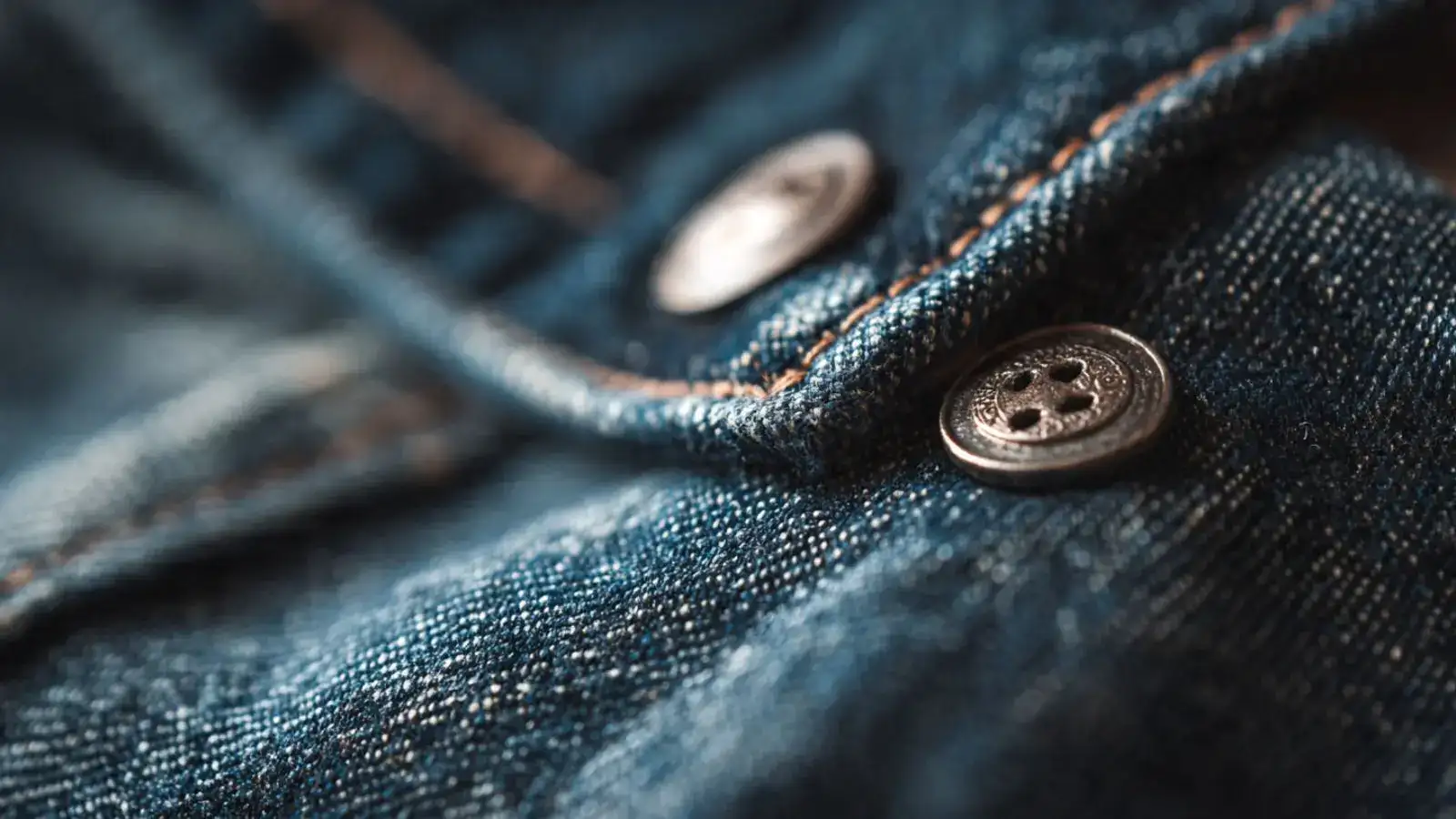
At the time, laborers such as miners, farmers, and railroad workers often complained that their trousers would tear easily, especially at stress points like pocket corners. To solve this problem, Jacob Davis came up with the idea of reinforcing these weak areas with metal rivets. He later teamed up with Levi Strauss to patent the design, marking the birth of modern blue jeans.
Why Rivets Were Necessary
Denim fabric is strong, but constant strain, especially from carrying tools or heavy items, can cause seams to rip. The corners of pockets are particularly vulnerable because they bear the most pressure during daily use.
By placing metal rivets at these high-stress points, the fabric became significantly more resistant to tearing. This simple addition extended the lifespan of jeans, making them ideal for physically demanding work environments.
What Exactly Are These “Buttons”?
Although often mistaken for buttons, these small metal pieces are rivets. Unlike buttons, which are meant for fastening, rivets are permanent fixtures used to hold layers of fabric together.
They are typically made of copper or other durable metals and are pressed through the fabric to secure it tightly. Their placement is strategic, usually at pocket corners and sometimes along seams, to provide maximum reinforcement.
Evolution Over Time
While rivets were initially added purely for function, their role has evolved. As jeans transitioned from workwear to a global fashion staple, rivets became a signature design element.
Interestingly, early jeans also had rivets on the back pockets. However, these were later removed because they caused practical issues—such as scratching furniture or saddles. This shows how functionality and user comfort influenced design changes over time.
Despite these adjustments, rivets remain an essential feature in most jeans today.
A Blend of Utility and Style
Today, rivets serve both practical and aesthetic purposes. While modern manufacturing techniques have improved fabric strength, rivets still add extra durability.
At the same time, they contribute to the classic look of jeans. Their metallic finish contrasts with denim, giving jeans their iconic rugged appeal. For heritage brands like Levi Strauss & Co., rivets are a nod to the original design that revolutionized workwear.
Why They Still Matter Today
Even in an era of advanced textiles, rivets continue to be used because they symbolize durability and authenticity. Many consumers associate riveted jeans with quality and long-lasting wear.
Moreover, removing rivets entirely could alter the identity of jeans. These small details help preserve the legacy of denim as a practical garment that evolved into everyday fashion.
The small metal “buttons” on your jeans are a testament to smart design solving real-world problems. What began as a simple fix for torn pockets became a defining feature of one of the world’s most popular garments. Today, rivets remain both functional and symbolic, proof that even the smallest details can have a lasting impact.
The small metal pieces seen on jeans are actually rivets, and their origin dates back to 1873. They were introduced when Levi Strauss & Co. partnered with tailor Jacob Davis to create a more durable pair of work pants.
At the time, laborers such as miners, farmers, and railroad workers often complained that their trousers would tear easily, especially at stress points like pocket corners. To solve this problem, Jacob Davis came up with the idea of reinforcing these weak areas with metal rivets. He later teamed up with Levi Strauss to patent the design, marking the birth of modern blue jeans.
Why Rivets Were Necessary
Denim fabric is strong, but constant strain, especially from carrying tools or heavy items, can cause seams to rip. The corners of pockets are particularly vulnerable because they bear the most pressure during daily use.
By placing metal rivets at these high-stress points, the fabric became significantly more resistant to tearing. This simple addition extended the lifespan of jeans, making them ideal for physically demanding work environments.
What Exactly Are These “Buttons”?
Although often mistaken for buttons, these small metal pieces are rivets. Unlike buttons, which are meant for fastening, rivets are permanent fixtures used to hold layers of fabric together.
They are typically made of copper or other durable metals and are pressed through the fabric to secure it tightly. Their placement is strategic, usually at pocket corners and sometimes along seams, to provide maximum reinforcement.
Evolution Over Time
While rivets were initially added purely for function, their role has evolved. As jeans transitioned from workwear to a global fashion staple, rivets became a signature design element.
Interestingly, early jeans also had rivets on the back pockets. However, these were later removed because they caused practical issues—such as scratching furniture or saddles. This shows how functionality and user comfort influenced design changes over time.
Despite these adjustments, rivets remain an essential feature in most jeans today.
A Blend of Utility and Style
Today, rivets serve both practical and aesthetic purposes. While modern manufacturing techniques have improved fabric strength, rivets still add extra durability.
At the same time, they contribute to the classic look of jeans. Their metallic finish contrasts with denim, giving jeans their iconic rugged appeal. For heritage brands like Levi Strauss & Co., rivets are a nod to the original design that revolutionized workwear.
Why They Still Matter Today
Even in an era of advanced textiles, rivets continue to be used because they symbolize durability and authenticity. Many consumers associate riveted jeans with quality and long-lasting wear.
Moreover, removing rivets entirely could alter the identity of jeans. These small details help preserve the legacy of denim as a practical garment that evolved into everyday fashion.
The small metal “buttons” on your jeans are a testament to smart design solving real-world problems. What began as a simple fix for torn pockets became a defining feature of one of the world’s most popular garments. Today, rivets remain both functional and symbolic, proof that even the smallest details can have a lasting impact.
Next Story