
Why Namibia’s Diamond Beaches Are Worth More Than Its Cities

In the southwestern reaches of Namibia, where the desert meets the Atlantic Ocean, lie some of the most unusual and valuable stretches of coastline in the world. Here, the beaches and seabed often regarded as more valuable than the urban centres inland are treasure troves of diamonds, earning them the nickname “diamond beaches.”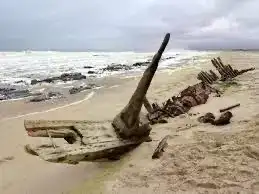
The story of these lucrative shores began in the early 20th century. In 1908, a railway worker named August Stauch discovered diamonds near Lüderitz, triggering a rush that would shape the region’s history. The colonial German administration quickly declared the surrounding region a restricted mining zone known as Sperrgebiet, German for “prohibited area”, in order to monopolise the extraction of the gems and curb illegal prospecting. Access was limited solely to authorised mining personnel, a rule that remained through World War I and beyond as the region passed under South African control before Namibia gained independence.
Geology and geography played a key role in why Namibia’s coastal zone is so diamond-rich. Diamonds form deep within the Earth’s mantle and are normally brought to the surface via volcanic eruptions. In this region, they were carried southward over millions of years by the Orange River, eventually being deposited in the Atlantic Ocean and swept back onto the shore by ocean currents. This natural concentration means that both the land and the sea floor along certain stretches of the Namibian coastline are saturated in gem-quality diamonds.
Commercial exploitation of these offshore and coastal deposits began modestly in the 1950s but expanded significantly in the 1980s with the introduction of advanced marine mining techniques. Today, mining activities extend approximately 97 km along the coast from the Orange River mouth northwards, utilising specialised vessels and heavy machinery to vacuum diamond-rich gravel from depths up to 150 m beneath the seabed. Namibia is now recognised as having the richest known marine diamond deposits in the world, with estimates suggesting around 75 million carats of diamonds lie offshore.
These marine diamonds and those washed up on the famous beaches, are typically of very high quality, often fetching premium prices relative to diamonds from many other sources. This high value has made the coastal zones economically more significant than many inland settlements and urban centres. The sheer volume and quality of the gems mean that even stretches of beach sand can be worth more than land where people live and work.
Although diamond mining remains the backbone of much of Namibia’s coastal economy, parts of the once-forbidden Sperrgebiet have opened to tourism in recent years. Visitors, permitted via guided tours, can explore historical and ghost towns like Kolmanskop, once a booming mining settlement, as well as dramatic coastal landscapes like Diaz Point and the evocative rock arch at Bogenfels.
Today, the beaches and seabed where diamonds continue to be extracted stand as a testament to the blend of natural geological fortune and human endeavour. They underscore how natural resources, geography and history can collide to transform land, even stretches of sand, into assets that rival, or exceed, the value of cities.
The story of these lucrative shores began in the early 20th century. In 1908, a railway worker named August Stauch discovered diamonds near Lüderitz, triggering a rush that would shape the region’s history. The colonial German administration quickly declared the surrounding region a restricted mining zone known as Sperrgebiet, German for “prohibited area”, in order to monopolise the extraction of the gems and curb illegal prospecting. Access was limited solely to authorised mining personnel, a rule that remained through World War I and beyond as the region passed under South African control before Namibia gained independence.
Geology and geography played a key role in why Namibia’s coastal zone is so diamond-rich. Diamonds form deep within the Earth’s mantle and are normally brought to the surface via volcanic eruptions. In this region, they were carried southward over millions of years by the Orange River, eventually being deposited in the Atlantic Ocean and swept back onto the shore by ocean currents. This natural concentration means that both the land and the sea floor along certain stretches of the Namibian coastline are saturated in gem-quality diamonds.
You may also like
 Pak faces double burden of malnutrition and obesity; women and children most affected
- Governor Shiv Pratap Shukla skips full address in HP Assembly; RDG discontinuation sparks fresh rift
- BJP to contest Raj civic polls on 'Vikas' plank, focus on last mile delivery: State BJP chief
- Telangana Human Rights Commission seeks DGP report on alleged police lapse in Advocate Swapna murder case
- Delhi HC grants interim relief to Rajpal Yadav, suspends sentence in cheque bounce cases
Commercial exploitation of these offshore and coastal deposits began modestly in the 1950s but expanded significantly in the 1980s with the introduction of advanced marine mining techniques. Today, mining activities extend approximately 97 km along the coast from the Orange River mouth northwards, utilising specialised vessels and heavy machinery to vacuum diamond-rich gravel from depths up to 150 m beneath the seabed. Namibia is now recognised as having the richest known marine diamond deposits in the world, with estimates suggesting around 75 million carats of diamonds lie offshore.
These marine diamonds and those washed up on the famous beaches, are typically of very high quality, often fetching premium prices relative to diamonds from many other sources. This high value has made the coastal zones economically more significant than many inland settlements and urban centres. The sheer volume and quality of the gems mean that even stretches of beach sand can be worth more than land where people live and work.
Although diamond mining remains the backbone of much of Namibia’s coastal economy, parts of the once-forbidden Sperrgebiet have opened to tourism in recent years. Visitors, permitted via guided tours, can explore historical and ghost towns like Kolmanskop, once a booming mining settlement, as well as dramatic coastal landscapes like Diaz Point and the evocative rock arch at Bogenfels.
Today, the beaches and seabed where diamonds continue to be extracted stand as a testament to the blend of natural geological fortune and human endeavour. They underscore how natural resources, geography and history can collide to transform land, even stretches of sand, into assets that rival, or exceed, the value of cities.






More from our partners


Loving Newspoint? Download the app now
