
Why People Keep Hanuman Chalisa Under Their Pillow


Many people keep a copy of the Hanuman Chalisa under their pillow not because they are following a formal rule of scripture, but because they are trying to sleep with less fear. The practice seems to come from lived faith more than ritual law: Hanuman is widely revered as a figure of courage, protection, steadiness, and devotion in the Ramayana, and the Hanuman Chalisa, traditionally attributed to Tulsidas in Awadhi, has long been recited as a prayer for strength in troubled moments. The custom, then, is not really about paper under a pillow. It is about what a restless mind reaches for when the room is dark and thoughts grow loud.

It begins where the mind is weakest

Night has a strange way of enlarging things. Regret becomes heavier. Fear becomes more believable. Even ordinary uncertainty can start feeling like danger. That is why so many devotional practices gather around bedtime. People want not just sleep, but inner permission to stop guarding themselves for a few hours. In the Hanuman Chalisa, Hanuman is praised as the remover of distress and as a protector against fear and harmful forces.
That language naturally makes devotees feel that keeping the text nearby creates a circle of safety. Whether one interprets that spiritually, emotionally, or both, the human need behind the act is the same: before sleep, people want reassurance stronger than their own thoughts.
The pillow is symbolic, not magical
A pillow is where the head rests. And the head is where worry repeats itself. So placing the Hanuman Chalisa under the pillow can be understood as a symbolic act: “May my thoughts sleep under courage, not under fear.” This is why the gesture matters even to people who may not recite perfectly or understand every line.
The object becomes a reminder of what Hanuman represents: disciplined strength, ego-free service, and loyalty to what is right. In that sense, people are not only keeping a booklet near them. They are placing their mind under the memory of a higher standard.
Faith also works through the nervous system
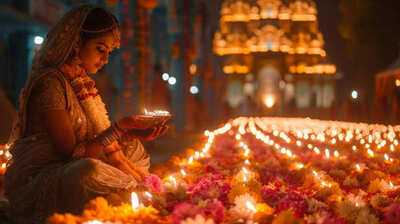
There is another layer here that is easy to miss. Repetitive prayer and calming bedtime routines can genuinely help the body settle. Harvard Health notes that repeating a short prayer or phrase can be part of the relaxation response, a measurable quieting of stress. Good sleep guidance also consistently emphasizes the value of a steady bedtime routine and a predictable sleep environment.
So for some people, keeping the Hanuman Chalisa under the pillow may work not only as an expression of devotion, but also as a ritual cue that tells the mind, “You are safe enough to rest now.” Faith and psychology do not always oppose each other. Sometimes one travels through the other.
The deeper wisdom is not in hiding the book, but in absorbing it
Still, there is an uncomfortable truth worth facing: a sacred text under the pillow cannot transform a life if its values never rise into conduct. The real power of the Hanuman Chalisa is not that it touches the bed. It is that it can touch character. Hanuman stands for courage without arrogance, strength without cruelty, and devotion without display. If someone sleeps with the Chalisa nearby but wakes up unchanged in speech, discipline, and integrity, then the ritual has remained external. The wiser reading of this custom is this: people keep the Hanuman Chalisa under their pillow because, deep down, they know the mind needs guarding. The lingering question is whether they are willing to let that guarding continue after morning.
It begins where the mind is weakest
Night amplifies fear; devotion offers emotional protection.
Night has a strange way of enlarging things. Regret becomes heavier. Fear becomes more believable. Even ordinary uncertainty can start feeling like danger. That is why so many devotional practices gather around bedtime. People want not just sleep, but inner permission to stop guarding themselves for a few hours. In the Hanuman Chalisa, Hanuman is praised as the remover of distress and as a protector against fear and harmful forces.
That language naturally makes devotees feel that keeping the text nearby creates a circle of safety. Whether one interprets that spiritually, emotionally, or both, the human need behind the act is the same: before sleep, people want reassurance stronger than their own thoughts.
The pillow is symbolic, not magical
A pillow is where the head rests. And the head is where worry repeats itself. So placing the Hanuman Chalisa under the pillow can be understood as a symbolic act: “May my thoughts sleep under courage, not under fear.” This is why the gesture matters even to people who may not recite perfectly or understand every line.
The object becomes a reminder of what Hanuman represents: disciplined strength, ego-free service, and loyalty to what is right. In that sense, people are not only keeping a booklet near them. They are placing their mind under the memory of a higher standard.
Faith also works through the nervous system
Rituals calm mind; faith supports physiological relaxation.
So for some people, keeping the Hanuman Chalisa under the pillow may work not only as an expression of devotion, but also as a ritual cue that tells the mind, “You are safe enough to rest now.” Faith and psychology do not always oppose each other. Sometimes one travels through the other.
The deeper wisdom is not in hiding the book, but in absorbing it
Still, there is an uncomfortable truth worth facing: a sacred text under the pillow cannot transform a life if its values never rise into conduct. The real power of the Hanuman Chalisa is not that it touches the bed. It is that it can touch character. Hanuman stands for courage without arrogance, strength without cruelty, and devotion without display. If someone sleeps with the Chalisa nearby but wakes up unchanged in speech, discipline, and integrity, then the ritual has remained external. The wiser reading of this custom is this: people keep the Hanuman Chalisa under their pillow because, deep down, they know the mind needs guarding. The lingering question is whether they are willing to let that guarding continue after morning.
Next Story