
Why Pi Day Holds A Special Place In Science And Culture

The Fascinating Story Behind Pi Day And Its Significance: Pi Day is celebrated annually on March 14 to honour the mathematical constant Pi, denoted by the symbol π. This day not only recognises a fundamental element of mathematics but also encourages global appreciation for science, logic, and education. The date was chosen to correspond with the first three digits of Pi (3.14), making it both symbolic and memorable. Over time, Pi Day has evolved into a combination of educational events, recreational activities, and even cultural celebrations, offering something for students, teachers, and enthusiasts alike. It serves as a reminder of the elegance of mathematics and its influence on everyday life.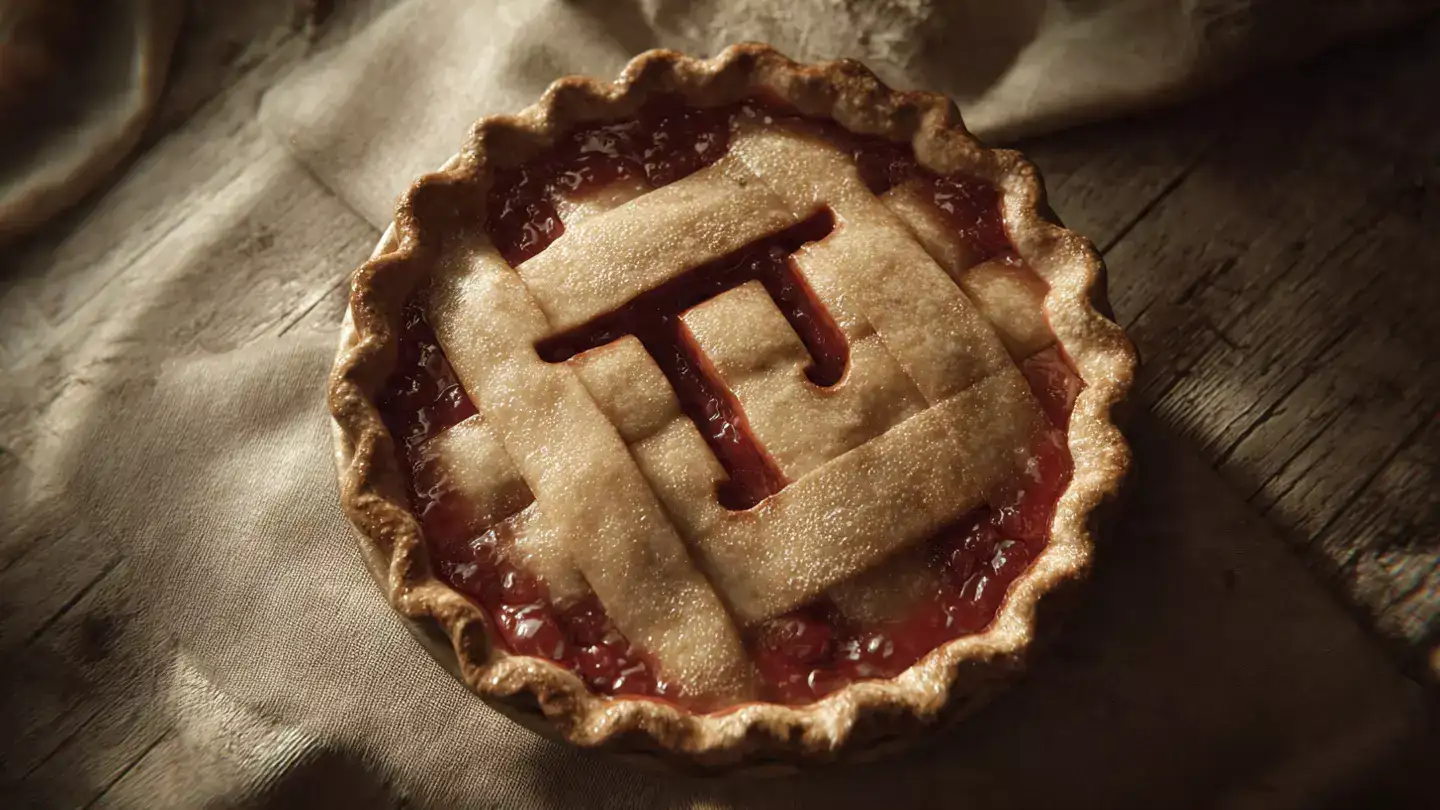
Pi Day continues to grow as a global phenomenon, blending education, creativity, and entertainment. Whether through solving math puzzles, enjoying a slice of pie, or exploring the endless digits of Pi, the celebration of this mathematical constant highlights human ingenuity, curiosity, and the timeless allure of numbers.
Image Courtesy: Meta AI
The Origin Of Pi Day
Pi Day was first officially celebrated in 1988 by physicist Larry Shaw at the San Francisco Exploratorium, where staff and visitors marched around a circular space and enjoyed fruit pies. The choice of March 14 was inspired by the numerical value of Pi rounded to two decimal places—3.14. In 2009, the United States House of Representatives passed a resolution recognising March 14 as National Pi Day, highlighting its importance in education and promoting interest in mathematics nationwide.The Mathematical Significance Of Pi
Pi represents the ratio of a circle's circumference to its diameter, a constant that has fascinated mathematicians for centuries. It is an irrational number, meaning its decimal representation never ends or repeats, which has led to countless calculations and discoveries throughout history. From ancient Babylonian approximations to modern computer-assisted computations reaching trillions of digits, Pi continues to be a symbol of mathematical curiosity and precision. Understanding Pi is fundamental in geometry, trigonometry, and even advanced fields such as engineering and physics.Global Pi Day Celebrations
Around the world, Pi Day has become an occasion for learning and fun. Schools often organise math-themed competitions, quizzes, and interactive workshops that introduce students to Pi and related concepts. In addition, many enthusiasts indulge in pie baking, where the word 'pie' becomes a playful pun linking mathematics and culinary delight. Museums, libraries, and science centres host public lectures, exhibitions, and games to engage communities and spark interest in numerical exploration. Social media also plays a role, with individuals sharing Pi facts , puzzles, and creative activities to mark the day.Pi Day In Popular Culture
Beyond education, Pi Day has found its place in popular culture. It appears in books, films, and television shows as a symbol of intelligence, curiosity, or problem-solving. Celebrations often include themed merchandise such as Pi-themed apparel, puzzles, and decorations. Some even observe Pi Approximation Day on July 22 (22/7 in date format), which represents a fractional estimation of Pi. These events demonstrate how Pi Day has transcended mathematics, connecting with broader audiences through creativity, humour, and community engagement.Why Pi Day Matters
Pi Day serves more than just a fun or academic purpose; it encourages analytical thinking and an appreciation for scientific principles. It inspires students to explore mathematics beyond textbooks and promotes a culture of curiosity. Teachers often use the day to introduce advanced concepts in an accessible way, while communities celebrate the joy of learning collectively. Ultimately, Pi Day reinforces the relevance of mathematics in everyday life, reminding us that numbers are not just abstract concepts but tools for understanding the world around us.Pi Day continues to grow as a global phenomenon, blending education, creativity, and entertainment. Whether through solving math puzzles, enjoying a slice of pie, or exploring the endless digits of Pi, the celebration of this mathematical constant highlights human ingenuity, curiosity, and the timeless allure of numbers.
Image Courtesy: Meta AI
Next Story