
Why That Extra Hole In Your Padlock Is More Important Than You Think

The Secret Function Of Padlock Drain Holes You Never Knew About: At first glance, a padlock appears to be a simple and solid piece of hardware designed purely for security. However, if you look closely at most standard padlocks, you will notice a tiny hole at the bottom. This small design element often goes unnoticed, yet it serves multiple essential functions that significantly improve the lock’s performance and longevity.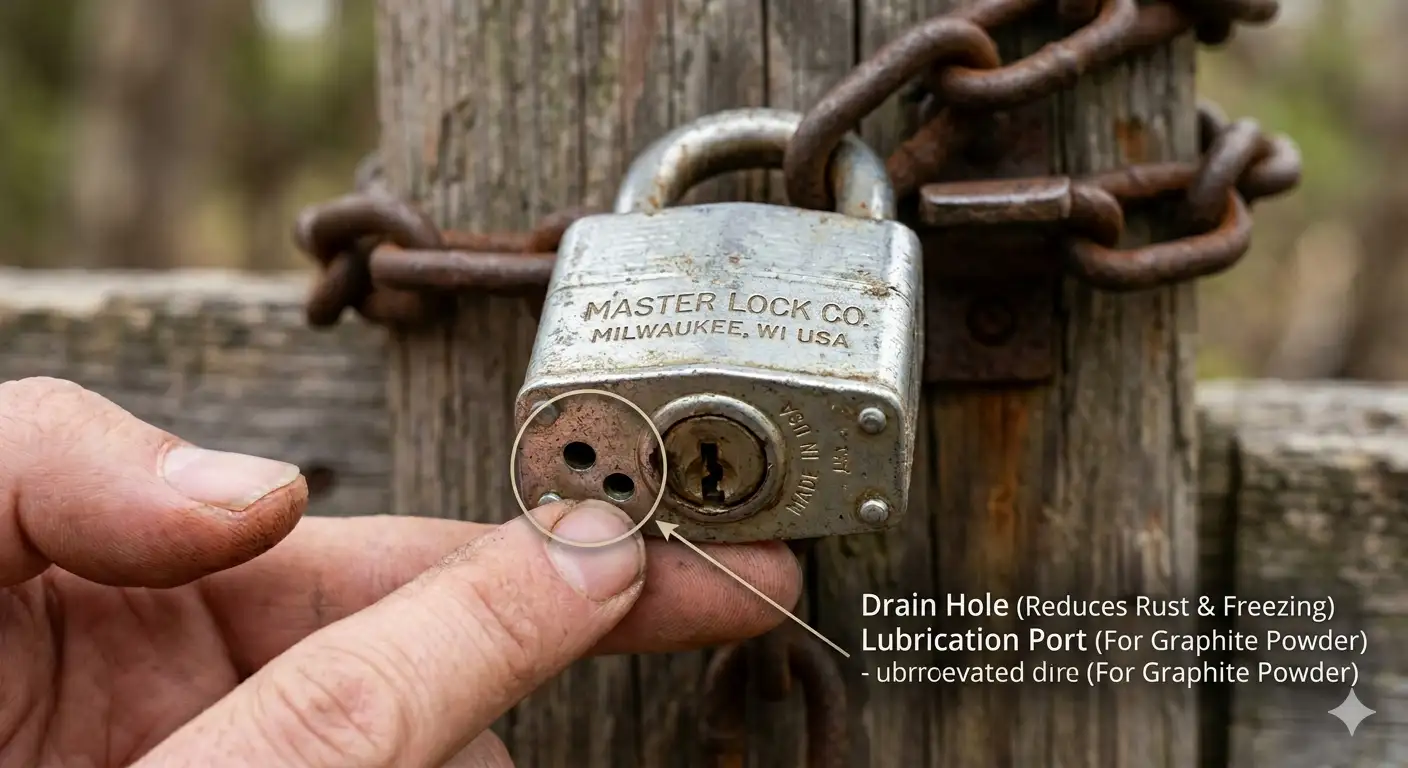
The extra hole in a padlock is not a manufacturing flaw or a decorative feature. It is a carefully engineered component that helps the lock withstand environmental stress, particularly in outdoor conditions. Whether used on gates, lockers, or storage units, padlocks are frequently exposed to rain, dust, and temperature fluctuations. Without this small hole, their internal mechanisms would deteriorate much faster.
The drainage hole allows water to flow out naturally, preventing it from accumulating inside the lock. This is particularly important in humid or rainy climates where prolonged exposure to moisture can quickly damage metal components. By enabling water to drain out, the hole helps maintain the structural integrity of the lock and ensures smooth operation.
The small hole plays a key role in reducing the chances of rust formation. By allowing moisture to escape, it keeps the internal components dry. This simple feature can significantly extend the life of a padlock, especially when used outdoors or in damp environments.
Regular exposure to water without proper drainage would otherwise cause locks to jam or fail unexpectedly. Therefore, this tiny opening acts as a protective mechanism that ensures reliability over time.
The hole allows users to apply oil or specialised lock lubricants directly into the mechanism without dismantling the lock. This makes maintenance easier and more effective. A few drops of lubricant through this opening can restore a stiff or squeaky lock, improving its functionality almost instantly.
This feature is particularly useful for those who rely on padlocks for long-term use, as it simplifies routine care and reduces the need for replacement.
The hole helps balance internal air pressure and allows moisture-laden air to escape. This reduces the likelihood of condensation buildup, which can otherwise contribute to corrosion and mechanical issues.
Although this function is less obvious, it adds another layer of protection, ensuring that the lock performs consistently across different environmental conditions.
Without this feature, padlocks would be far more vulnerable to weather damage, rust, and mechanical failure. Users would likely experience frequent jamming and shorter product lifespans. Instead, this simple addition enhances durability, reduces maintenance challenges, and ensures reliable performance.
Understanding the purpose of the padlock hole can also encourage better care practices. For instance, regularly checking for blockages in the hole and applying occasional lubrication can keep the lock functioning smoothly for years.
Another misconception is that all padlocks function the same way regardless of design. In truth, features like drainage holes differentiate high-quality locks from poorly designed ones. Paying attention to such details can help in choosing a more durable and reliable product.
Applying lubricant through the hole every few months is another effective way to maintain performance. This is especially important if the lock is used outdoors or in harsh conditions.
Storing padlocks in a dry place when not in use and avoiding prolonged exposure to standing water can further enhance their lifespan. These simple steps, combined with the built-in benefits of the drainage hole, ensure that your lock remains dependable.
The next time you notice that tiny hole in a padlock, it will no longer seem insignificant. Instead, it stands as a clever piece of design that quietly works to protect your belongings and extend the life of the lock.
Image Courtesy: Gemini
The extra hole in a padlock is not a manufacturing flaw or a decorative feature. It is a carefully engineered component that helps the lock withstand environmental stress, particularly in outdoor conditions. Whether used on gates, lockers, or storage units, padlocks are frequently exposed to rain, dust, and temperature fluctuations. Without this small hole, their internal mechanisms would deteriorate much faster.
The Role Of Drainage In Preventing Damage
One of the primary purposes of the extra hole in a padlock is to act as a drainage outlet. When a padlock is exposed to rain or moisture, water can seep into the internal chamber. Without a way to escape, this trapped moisture can lead to corrosion.The drainage hole allows water to flow out naturally, preventing it from accumulating inside the lock. This is particularly important in humid or rainy climates where prolonged exposure to moisture can quickly damage metal components. By enabling water to drain out, the hole helps maintain the structural integrity of the lock and ensures smooth operation.
Protection Against Rust And Corrosion
Rust is one of the biggest enemies of metal locks. When moisture remains trapped inside a padlock, it reacts with metal surfaces, leading to oxidation. Over time, this process weakens the internal springs and pins, making the lock stiff or completely unusable.The small hole plays a key role in reducing the chances of rust formation. By allowing moisture to escape, it keeps the internal components dry. This simple feature can significantly extend the life of a padlock, especially when used outdoors or in damp environments.
Regular exposure to water without proper drainage would otherwise cause locks to jam or fail unexpectedly. Therefore, this tiny opening acts as a protective mechanism that ensures reliability over time.
A Hidden Feature For Lubrication And Maintenance
Another important function of the extra hole is that it provides an access point for lubrication. Over time, dirt and debris can accumulate inside a padlock, affecting its performance. Applying lubricant helps keep the internal parts moving smoothly.The hole allows users to apply oil or specialised lock lubricants directly into the mechanism without dismantling the lock. This makes maintenance easier and more effective. A few drops of lubricant through this opening can restore a stiff or squeaky lock, improving its functionality almost instantly.
This feature is particularly useful for those who rely on padlocks for long-term use, as it simplifies routine care and reduces the need for replacement.
Air Circulation And Pressure Balance
Beyond drainage and lubrication, the extra hole also supports air circulation within the lock. When temperature changes occur, especially between day and night, condensation can form inside the padlock.The hole helps balance internal air pressure and allows moisture-laden air to escape. This reduces the likelihood of condensation buildup, which can otherwise contribute to corrosion and mechanical issues.
Although this function is less obvious, it adds another layer of protection, ensuring that the lock performs consistently across different environmental conditions.
Why This Small Detail Matters More Than You Think
It is easy to overlook small design features, especially in everyday objects like padlocks. However, the extra hole is a perfect example of how thoughtful engineering can make a significant difference.Without this feature, padlocks would be far more vulnerable to weather damage, rust, and mechanical failure. Users would likely experience frequent jamming and shorter product lifespans. Instead, this simple addition enhances durability, reduces maintenance challenges, and ensures reliable performance.
Understanding the purpose of the padlock hole can also encourage better care practices. For instance, regularly checking for blockages in the hole and applying occasional lubrication can keep the lock functioning smoothly for years.
Common Misconceptions About The Padlock Hole
Many people assume that the hole is either a manufacturing defect or an unnecessary design quirk. Some even worry that it might compromise security. In reality, the hole is strategically placed and designed in such a way that it does not affect the lock’s strength or resistance to tampering.Another misconception is that all padlocks function the same way regardless of design. In truth, features like drainage holes differentiate high-quality locks from poorly designed ones. Paying attention to such details can help in choosing a more durable and reliable product.
Practical Tips For Using And Maintaining Padlocks
To make the most of your padlock, it is important to keep the drainage hole clear. Dirt, dust, or debris can block the opening, preventing it from functioning properly. A quick inspection and occasional cleaning can go a long way.Applying lubricant through the hole every few months is another effective way to maintain performance. This is especially important if the lock is used outdoors or in harsh conditions.
Storing padlocks in a dry place when not in use and avoiding prolonged exposure to standing water can further enhance their lifespan. These simple steps, combined with the built-in benefits of the drainage hole, ensure that your lock remains dependable.
The next time you notice that tiny hole in a padlock, it will no longer seem insignificant. Instead, it stands as a clever piece of design that quietly works to protect your belongings and extend the life of the lock.
Image Courtesy: Gemini
Next Story