
World’s Longest Underwater Timelapse Reveals How Miami Corals Survived a Deadly Heatwave

A groundbreaking underwater project is offering a rare look at how marine life is responding to climate change in real time. The Coral City Camera has been recording continuously from 2023 to 2026, making it the longest underwater time-lapse ever created. What it has captured is both concerning and unexpectedly hopeful.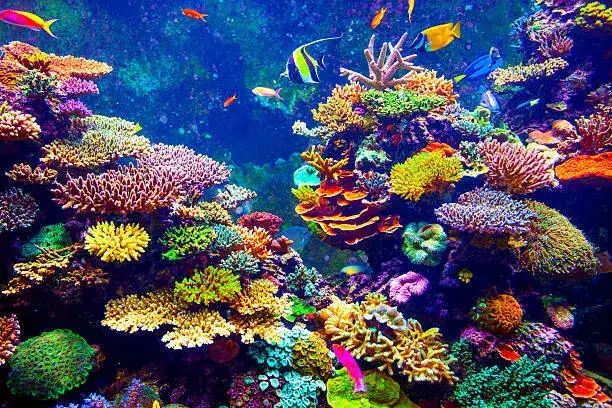
In 2023, a severe ocean heatwave led to widespread coral bleaching across many regions. Reefs in the Florida Keys, known for their clear waters and rich biodiversity, were among the hardest hit. Large sections of coral lost their colour and vitality, with many failing to recover.
Yet, in a striking contrast, corals growing in the urban waters of Miami managed to survive and even thrive.
Thriving in an unlikely environment
At first glance, Miami’s coastal waters may not seem suitable for coral life. The area is influenced by pollution, construction, and heavy marine traffic. Corals here are often attached to concrete seawalls and are regularly exposed to waves created by passing ships.
Despite these challenges, these “urban corals” have shown remarkable strength. Instead of being weakened, they appear to have adapted to constant environmental stress, making them more resilient than traditional reef corals.
Built for extremes
According to observations supported by the National Oceanic and Atmospheric Administration, some of these corals can tolerate a much wider temperature range than expected. This ability allows them to survive both unusually high and lower temperatures without severe damage.
A particularly notable example is a strain of Staghorn coral, identified as ACER ‘Ventura.’ This coral has demonstrated an impressive capacity to remain healthy in temperatures ranging from about 15.5 to over 32 degrees Celsius. It has also shown rapid growth over the years, suggesting strong genetic adaptability.
The role of constant movement
One of the most interesting findings from the time-lapse is the role of water movement. The continuous disturbance from boat traffic and waves may actually help these corals. Instead of allowing heat to build up, the movement keeps water circulating, bringing in oxygen and nutrients.
This creates small, more stable microenvironments that protect corals from extreme conditions. Some researchers describe this effect as a form of human-influenced cooling, where activity in urban waters unintentionally supports marine survival.
Rethinking reef survival
The sharp difference between the declining reefs in the Florida Keys and the thriving corals in Miami challenges long-held assumptions. It suggests that resilience may come from exposure and adaptation rather than perfect conditions.
Scientists are now studying these urban corals more closely to understand how they can be used in conservation efforts. By identifying and cultivating stronger coral strains, there is potential to restore damaged reefs in other parts of the world.
A hopeful glimpse into the future
The story captured by this long-term project is not just about loss. It is also about resilience and the ability of nature to adjust under pressure. While climate change remains a serious threat, these findings offer a new direction for protecting marine ecosystems.
In the end, the corals of Miami remind us that survival is not always about avoiding challenges. Sometimes, it is about adapting to them and finding ways to grow stronger.
In 2023, a severe ocean heatwave led to widespread coral bleaching across many regions. Reefs in the Florida Keys, known for their clear waters and rich biodiversity, were among the hardest hit. Large sections of coral lost their colour and vitality, with many failing to recover.
Yet, in a striking contrast, corals growing in the urban waters of Miami managed to survive and even thrive.
Thriving in an unlikely environment
At first glance, Miami’s coastal waters may not seem suitable for coral life. The area is influenced by pollution, construction, and heavy marine traffic. Corals here are often attached to concrete seawalls and are regularly exposed to waves created by passing ships. Despite these challenges, these “urban corals” have shown remarkable strength. Instead of being weakened, they appear to have adapted to constant environmental stress, making them more resilient than traditional reef corals.
You may also like
Built for extremes
According to observations supported by the National Oceanic and Atmospheric Administration, some of these corals can tolerate a much wider temperature range than expected. This ability allows them to survive both unusually high and lower temperatures without severe damage. A particularly notable example is a strain of Staghorn coral, identified as ACER ‘Ventura.’ This coral has demonstrated an impressive capacity to remain healthy in temperatures ranging from about 15.5 to over 32 degrees Celsius. It has also shown rapid growth over the years, suggesting strong genetic adaptability.
The role of constant movement
One of the most interesting findings from the time-lapse is the role of water movement. The continuous disturbance from boat traffic and waves may actually help these corals. Instead of allowing heat to build up, the movement keeps water circulating, bringing in oxygen and nutrients. This creates small, more stable microenvironments that protect corals from extreme conditions. Some researchers describe this effect as a form of human-influenced cooling, where activity in urban waters unintentionally supports marine survival.
Rethinking reef survival
The sharp difference between the declining reefs in the Florida Keys and the thriving corals in Miami challenges long-held assumptions. It suggests that resilience may come from exposure and adaptation rather than perfect conditions. Scientists are now studying these urban corals more closely to understand how they can be used in conservation efforts. By identifying and cultivating stronger coral strains, there is potential to restore damaged reefs in other parts of the world.
A hopeful glimpse into the future
The story captured by this long-term project is not just about loss. It is also about resilience and the ability of nature to adjust under pressure. While climate change remains a serious threat, these findings offer a new direction for protecting marine ecosystems. In the end, the corals of Miami remind us that survival is not always about avoiding challenges. Sometimes, it is about adapting to them and finding ways to grow stronger.






More from our partners


Loving Newspoint? Download the app now
