
'Game-changer' chemical Dew Cure to debut in IPL


The dew factor has long been a major influence in night games. To ensure a level playing field and eliminate excess moisture, a chemical called Dew Cure will be used in the Indian Premier League (IPL) for the first time this season. The addition aims to neutralize the toss advantage for teams across the venues, from coastal cities to inland venues like Mumbai, Chennai, Kolkata, Bengaluru and Jaipur.
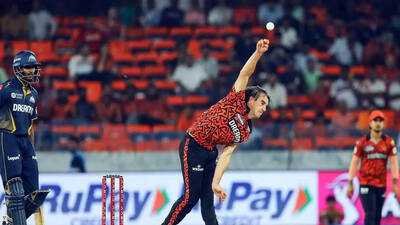
Evening humidity levels frequently climb to 70-90%, combined with temperature drops after sunset, leading to heavy condensation on the outfield grass. The ball being wet and slippery in the second innings prompts captains who win the toss to almost invariably bowl first and create a strong chasing advantage.
The solution imported from the United States was previously applied on the ground during the recently concluded T20 World Cup to fight the dew towards the fag end of the tournament, including at traditionally dew-heavy venues like Mumbai’s Wankhede Stadium and Chennai’s MA Chidambaram Stadium, to ensure more balanced contests and minimal impact from toss outcomes.
“The chemical is imported from the US and is used in Major League Baseball and golf courses. It will be a game-changer. The liquid is diluted with water and sprayed on the outfield. Dew Cure forms a water-resistant barrier on grass blades, preventing dew and guttation buildup while allowing moisture to be absorbed into the soil, keeping the ball dry and conditions consistent across both innings,” shared an expert who has hands-on experience with the product.
It has emerged that the chemical has turned out to be highly effective in neutralising dew and ensuring the outfield remains dry.
With the IPL season approaching, it has been learnt that the BCCI is now looking to use Dew Cure on a regular basis. “It will be sprayed on the ground before match day and also on the match day, aiming to eliminate dew as a variable, reduce toss dependency and promote truly skill-based, equitable contests in T20 cricket ,” said the expert.
In 2006, during the Champions Trophy and in 2023 World Cup final, a different spray was used. “Previously, on certain occasions APSA-80 chemical was used but it did not give the desired results,” the expert added.
Evening humidity levels frequently climb to 70-90%, combined with temperature drops after sunset, leading to heavy condensation on the outfield grass. The ball being wet and slippery in the second innings prompts captains who win the toss to almost invariably bowl first and create a strong chasing advantage.
The solution imported from the United States was previously applied on the ground during the recently concluded T20 World Cup to fight the dew towards the fag end of the tournament, including at traditionally dew-heavy venues like Mumbai’s Wankhede Stadium and Chennai’s MA Chidambaram Stadium, to ensure more balanced contests and minimal impact from toss outcomes.
“The chemical is imported from the US and is used in Major League Baseball and golf courses. It will be a game-changer. The liquid is diluted with water and sprayed on the outfield. Dew Cure forms a water-resistant barrier on grass blades, preventing dew and guttation buildup while allowing moisture to be absorbed into the soil, keeping the ball dry and conditions consistent across both innings,” shared an expert who has hands-on experience with the product.
It has emerged that the chemical has turned out to be highly effective in neutralising dew and ensuring the outfield remains dry.
With the IPL season approaching, it has been learnt that the BCCI is now looking to use Dew Cure on a regular basis. “It will be sprayed on the ground before match day and also on the match day, aiming to eliminate dew as a variable, reduce toss dependency and promote truly skill-based, equitable contests in T20 cricket ,” said the expert.
In 2006, during the Champions Trophy and in 2023 World Cup final, a different spray was used. “Previously, on certain occasions APSA-80 chemical was used but it did not give the desired results,” the expert added.
Next Story