
India’s 2036 Olympic Bid Under IOC Scrutiny: Governance, Doping and Performance Concerns

India’s ambitions to host the 2036 Olympic Games have emerged as a high-profile national aspiration, placing the India 2036 Olympics bid firmly in the global spotlight. However, this ambitious plan is now facing close scrutiny from the International Olympic Committee (IOC). Despite strong political backing and strategic positioning in global sports diplomacy, India’s Olympic hosting bid is being carefully evaluated amid concerns related to governance, doping, and the country’s sporting performance.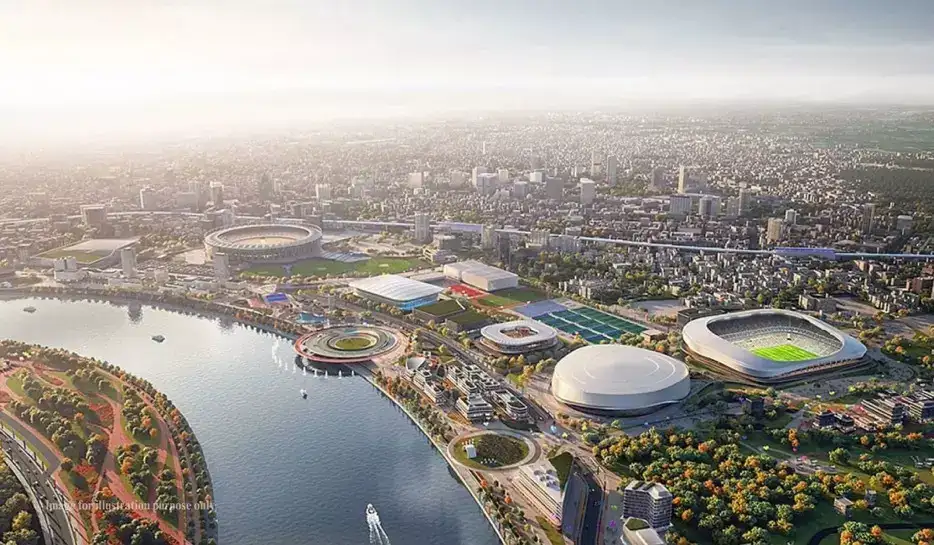
Earlier this year, Prime Minister Narendra Modi reaffirmed India’s intention to host the 2036 Games, highlighting the potential to expand sporting opportunities and project India’s growing global stature. Indian officials also travelled to the IOC headquarters in Lausanne to present Ahmedabad and neighbouring Gandhinagar as the proposed core host cities. Preliminary estimates suggest infrastructure development costs could range between $4.1 billion and $7.5 billion, reflecting the scale of the proposed Olympic project.
However, discussions with the IOC have revealed reservations that extend beyond infrastructure and financial capability. During these dialogues, three key areas of concern were highlighted: governance issues within the Indian Olympic Association (IOA), India’s history of doping violations, and its relatively modest performance at previous Olympic Games.
The governance challenge is rooted in prolonged administrative conflicts within the IOA. Disputes over leadership and organisational paralysis including lengthy delays in appointing a Chief Executive Officer have drawn criticism from international sporting bodies and are viewed as a red flag in terms of organisational maturity. This dysfunction has even led the IOC to temporarily suspend certain athlete support grants, underlining how internal administrative issues can affect India’s credibility on the global sporting stage.
Doping remains another sensitive issue. Independent reports and national anti-doping data show that India has recorded one of the highest positivity rates among major Olympic nations, with adverse analytical findings particularly high in athletics, weightlifting and combat sports. While India has argued that high testing numbers partly explain this trend, the perception of a lax anti-doping environment could significantly hamper the bid, given the IOC’s zero-tolerance policy toward banned substances.
In addition to governance and doping, India’s Olympic medal tally modest relative to its population size is another element cited by IOC evaluators. Analysts argue that a proven culture of high-performance sport and global competitiveness increases a country’s legitimacy as a host, demonstrating not just infrastructure readiness but also sporting excellence.
Under new leadership, the IOC has paused the formal host city selection process to reassess and refine its evaluation criteria. This development could work in India’s favour if the country uses this window to implement meaningful reforms. Analysts suggest that resolving governance disputes, strengthening anti-doping compliance through reforms at bodies such as the National Anti-Doping Agency (NADA), and improving elite sports performance will be crucial to repositioning the bid.
For many in India, hosting the 2036 Olympics remains a powerful aspirational milestone - one associated with national pride, economic stimulus and an unparalleled global showcase. However, observers caution that the path forward will depend as much on internal reform and international trust as it does on ambitious infrastructure plans and political will.
Earlier this year, Prime Minister Narendra Modi reaffirmed India’s intention to host the 2036 Games, highlighting the potential to expand sporting opportunities and project India’s growing global stature. Indian officials also travelled to the IOC headquarters in Lausanne to present Ahmedabad and neighbouring Gandhinagar as the proposed core host cities. Preliminary estimates suggest infrastructure development costs could range between $4.1 billion and $7.5 billion, reflecting the scale of the proposed Olympic project.
However, discussions with the IOC have revealed reservations that extend beyond infrastructure and financial capability. During these dialogues, three key areas of concern were highlighted: governance issues within the Indian Olympic Association (IOA), India’s history of doping violations, and its relatively modest performance at previous Olympic Games.
The governance challenge is rooted in prolonged administrative conflicts within the IOA. Disputes over leadership and organisational paralysis including lengthy delays in appointing a Chief Executive Officer have drawn criticism from international sporting bodies and are viewed as a red flag in terms of organisational maturity. This dysfunction has even led the IOC to temporarily suspend certain athlete support grants, underlining how internal administrative issues can affect India’s credibility on the global sporting stage.
Doping remains another sensitive issue. Independent reports and national anti-doping data show that India has recorded one of the highest positivity rates among major Olympic nations, with adverse analytical findings particularly high in athletics, weightlifting and combat sports. While India has argued that high testing numbers partly explain this trend, the perception of a lax anti-doping environment could significantly hamper the bid, given the IOC’s zero-tolerance policy toward banned substances.
In addition to governance and doping, India’s Olympic medal tally modest relative to its population size is another element cited by IOC evaluators. Analysts argue that a proven culture of high-performance sport and global competitiveness increases a country’s legitimacy as a host, demonstrating not just infrastructure readiness but also sporting excellence.
Under new leadership, the IOC has paused the formal host city selection process to reassess and refine its evaluation criteria. This development could work in India’s favour if the country uses this window to implement meaningful reforms. Analysts suggest that resolving governance disputes, strengthening anti-doping compliance through reforms at bodies such as the National Anti-Doping Agency (NADA), and improving elite sports performance will be crucial to repositioning the bid.
For many in India, hosting the 2036 Olympics remains a powerful aspirational milestone - one associated with national pride, economic stimulus and an unparalleled global showcase. However, observers caution that the path forward will depend as much on internal reform and international trust as it does on ambitious infrastructure plans and political will.
Next Story