
Historic India vs Pakistan T20 World Cup Match: Key Stats, Records and Super 8 Qualification

In one of the most anticipated encounters of the ICC Men’s T20 World Cup 2026, India once again asserted their supremacy over long-time rivals Pakistan, securing a commanding 61-run victory at the R. Premadasa Stadium in Colombo. The win not only secured India’s progression to the Super Eight stage, it also extended their head-to-head T20 World Cup record over Pakistan to an emphatic 8-1, a margin unmatched by any other team in the history of the tournament.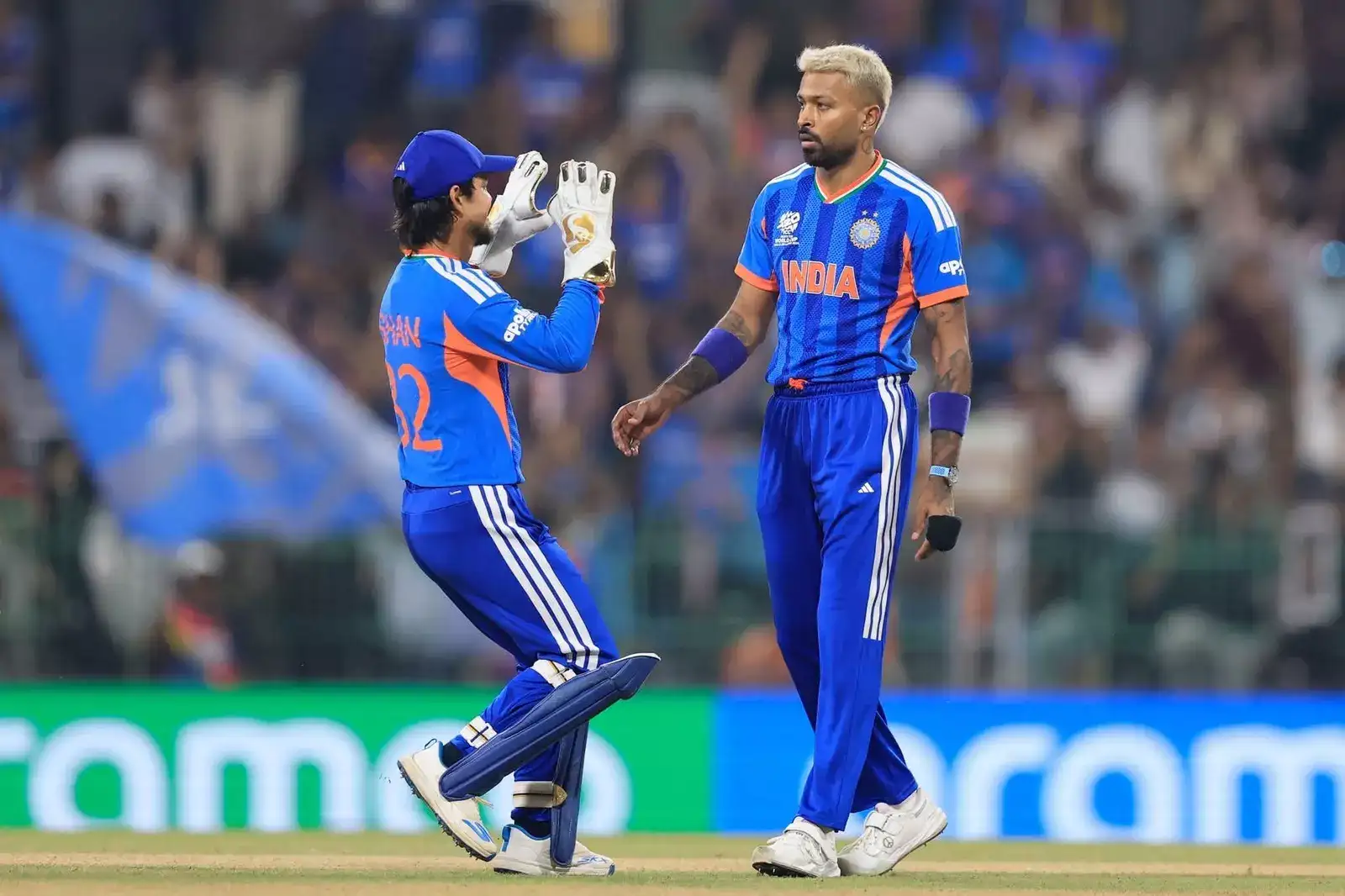
India’s innings was anchored by a breathtaking performance from Ishan Kishan, who blazed his way to 77 runs off just 40 balls. On a slow, spin-friendly wicket, Kishan’s controlled aggression, ten fours and three sixes, turned a testing surface into a competitive platform, helping India reach 175 for 7 in their allotted 20 overs. His strike rate hovered around 200, a remarkable feat given the challenging pitch conditions that saw Pakistan bowl 18 overs of spin, the joint-most by any team in a men’s T20I match.
The Pakistan bowling unit, led by spinners, failed to contain Kishan’s authority, even though they made early inroads by dismissing Abhishek Sharma cheaply. After Kishan’s dismissal, captain Suryakumar Yadav (32) and Tilak Varma (25) steadied the innings, ensuring India posted a formidable total.
Chasing 176, Pakistan never built any firm partnerships. India’s bowling attack, spearheaded by Hardik Pandya (2/16)and Jasprit Bumrah (2/17), struck early, reducing Pakistan to a fragile position. Usman Khan top-scored with a gritty 44 off 34 balls, but Pakistan’s middle and lower order collapsed, all out for 114 in 18 overs. India’s comprehensive performance highlighted their depth and balance in both batting and bowling departments.
Statistically, this victory marked several milestones:
As India now look toward the Super Eight stage unbeaten, Pakistan face a must-win situation in their remaining group fixtures to stay alive in the tournament. For fans and analysts alike, this win demonstrates not just India’s tactical edge, but also a growing psychological dominance in the shortest format of cricket.
India’s innings was anchored by a breathtaking performance from Ishan Kishan, who blazed his way to 77 runs off just 40 balls. On a slow, spin-friendly wicket, Kishan’s controlled aggression, ten fours and three sixes, turned a testing surface into a competitive platform, helping India reach 175 for 7 in their allotted 20 overs. His strike rate hovered around 200, a remarkable feat given the challenging pitch conditions that saw Pakistan bowl 18 overs of spin, the joint-most by any team in a men’s T20I match.
The Pakistan bowling unit, led by spinners, failed to contain Kishan’s authority, even though they made early inroads by dismissing Abhishek Sharma cheaply. After Kishan’s dismissal, captain Suryakumar Yadav (32) and Tilak Varma (25) steadied the innings, ensuring India posted a formidable total.
Chasing 176, Pakistan never built any firm partnerships. India’s bowling attack, spearheaded by Hardik Pandya (2/16)and Jasprit Bumrah (2/17), struck early, reducing Pakistan to a fragile position. Usman Khan top-scored with a gritty 44 off 34 balls, but Pakistan’s middle and lower order collapsed, all out for 114 in 18 overs. India’s comprehensive performance highlighted their depth and balance in both batting and bowling departments.
Statistically, this victory marked several milestones:
- India’s 8-1 lead against Pakistan in T20 World Cups, a record not equaled between two major Test nations in the format.
- The largest margin of victory by runs for India over Pakistan in men's T20Is.
- India stretched their unbeaten run in T20 World Cups to 11 matches.
- Kishan’s 77 is now the highest score by an Indian opener against Pakistan in T20Is.
- Pakistan’s decision to bowl primarily spin was a bold strategy, but it yielded minimal impact as India adapted well.
As India now look toward the Super Eight stage unbeaten, Pakistan face a must-win situation in their remaining group fixtures to stay alive in the tournament. For fans and analysts alike, this win demonstrates not just India’s tactical edge, but also a growing psychological dominance in the shortest format of cricket.
Next Story