
On This Day in Cricket: The 1948 Bridgetown Test That Introduced 12 Debutants

On 21 January 1948, a memorable chapter in cricket history was written at the Kensington Oval in Bridgetown, Barbados, as the first Test of the England tour of the West Indies got underway under bright Caribbean skies. What made this historic encounter truly exceptional was the sheer number of debutants. A total of twelve players - seven from the West Indies and five from England - made their first appearance in Test cricket, a rarity in the sport’s long and storied history.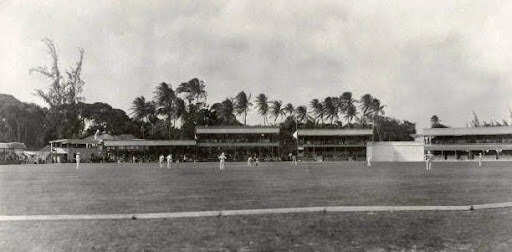
The West Indies, led by Jeffrey Stollmeyer, won the toss and chose to bat first. The hosts handed Test caps to Clyde Walcott, Everton Weekes, Robert Christiani, Wilfred Ferguson, Berkeley Gaskin, John Goddard, and Prior Jones. England’s debutants for the 1948 Bridgetown Test were Jim Laker, Maurice Tremlett, Dennis Brookes, Winston Place, and Gerald Smithson.
England off-spinner Jim Laker made an immediate impact on his Test debut. In the West Indies’ first innings, Laker produced an outstanding spell, claiming 7 wickets for 103 runs from 37 overs. One of his most notable dismissals was that of Clyde Walcott, who fell to just the fourth delivery he faced - an early moment that firmly placed Laker at the heart of the match narrative.
Walcott, one of the many debutants in the Kensington Oval Test, scored only 8 runs in his first innings. However, this modest beginning belied the greatness that lay ahead. He would later emerge as one of the West Indies’ finest batsmen, play an important role in Caribbean cricket, and even serve as a wicketkeeper in his early Tests. His remarkable contribution to the game was eventually recognised with a knighthood.
Everton Weekes, another West Indian debutant, batted at number three and scored 35 in his first innings. Although this introduction might not have hinted at his future greatness, Weekes’ career blossomed spectacularly. He went on to become one of the legendary “Three Ws”, alongside Walcott and Frank Worrell, renowned for transforming West Indies batting in the post-war era.
The match itself proved to be a high-scoring draw. West Indies posted 296 runs in their first innings, built around Gerry Gomez’s fluent 86. England replied with 253, with Jack Robertson’s 80 providing stability. England’s second innings was cut short, and despite West Indies setting a competitive target, the Test ultimately ended without a result.
Beyond the numbers, the 1948 Bridgetown Test match is remembered for ushering in players who would define an era. Laker’s debut performance hinted at his future status as a world-class spinner, culminating in his famous 10-wicket haul in 1956. Meanwhile, Walcott and Weekes went on to cement their reputations as two of the greatest batting icons in West Indies cricket history.
In cricket’s rich tapestry, this match stands out not for a dramatic result but for the beginnings of illustrious careers and a rare collective debut. It reminds fans and historians alike of how the game’s narrative is shaped not just by results, but by the players who go on to become legends.
The West Indies, led by Jeffrey Stollmeyer, won the toss and chose to bat first. The hosts handed Test caps to Clyde Walcott, Everton Weekes, Robert Christiani, Wilfred Ferguson, Berkeley Gaskin, John Goddard, and Prior Jones. England’s debutants for the 1948 Bridgetown Test were Jim Laker, Maurice Tremlett, Dennis Brookes, Winston Place, and Gerald Smithson.
England off-spinner Jim Laker made an immediate impact on his Test debut. In the West Indies’ first innings, Laker produced an outstanding spell, claiming 7 wickets for 103 runs from 37 overs. One of his most notable dismissals was that of Clyde Walcott, who fell to just the fourth delivery he faced - an early moment that firmly placed Laker at the heart of the match narrative.
Walcott, one of the many debutants in the Kensington Oval Test, scored only 8 runs in his first innings. However, this modest beginning belied the greatness that lay ahead. He would later emerge as one of the West Indies’ finest batsmen, play an important role in Caribbean cricket, and even serve as a wicketkeeper in his early Tests. His remarkable contribution to the game was eventually recognised with a knighthood.
Everton Weekes, another West Indian debutant, batted at number three and scored 35 in his first innings. Although this introduction might not have hinted at his future greatness, Weekes’ career blossomed spectacularly. He went on to become one of the legendary “Three Ws”, alongside Walcott and Frank Worrell, renowned for transforming West Indies batting in the post-war era.
The match itself proved to be a high-scoring draw. West Indies posted 296 runs in their first innings, built around Gerry Gomez’s fluent 86. England replied with 253, with Jack Robertson’s 80 providing stability. England’s second innings was cut short, and despite West Indies setting a competitive target, the Test ultimately ended without a result.
Beyond the numbers, the 1948 Bridgetown Test match is remembered for ushering in players who would define an era. Laker’s debut performance hinted at his future status as a world-class spinner, culminating in his famous 10-wicket haul in 1956. Meanwhile, Walcott and Weekes went on to cement their reputations as two of the greatest batting icons in West Indies cricket history.
In cricket’s rich tapestry, this match stands out not for a dramatic result but for the beginnings of illustrious careers and a rare collective debut. It reminds fans and historians alike of how the game’s narrative is shaped not just by results, but by the players who go on to become legends.
Next Story