
On This Day in Cricket: Gundappa Viswanath Was Born, The Gentleman of Indian Batting

On February 12, 1949, Indian cricket was gifted one of its most elegant craftsmen and noblest ambassadors, Gundappa Rangnath Viswanath. In an era of fierce fast bowling and uncompromising contests, Viswanath stood apart, not through intimidation, but through artistry and integrity.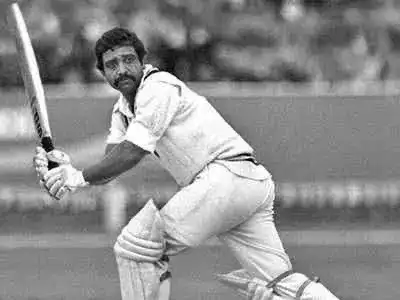
To watch Viswanath bat was to witness a symphony of wrists. Slight in build yet immense in skill, he carved attacks with precision rather than power. His cuts and flicks seemed to materialise from nowhere, played late and with a mischievous flourish that left bowlers bewildered. Across 91 Test matches, he amassed over 6,000 runs at an average of 41, numbers that reflect consistency in one of cricket’s most competitive decades.
But statistics alone do not define Viswanath. They only hint at his influence. Against the mighty West Indies, whose fast bowlers terrorised the world through the 1970s and 80s, Viswanath averaged a remarkable 53, a testament to both courage and class. Even more telling is this: in Tests India did not lose, his average soared to 51; in defeats, it dropped to 26. When India stood firm, Viswanath was often the quiet architect behind that resilience.
Yet, if one moment immortalised him beyond numbers, it came in the 1980 Golden Jubilee Test against England in Mumbai. England wicketkeeper Bob Taylor was controversially given out caught behind. India, on the cusp of a significant advantage, seemed poised to tighten their grip. But Viswanath, then India’s captain, believed Taylor had not edged the ball. In an act almost unthinkable in modern professional sport, he recalled Taylor to the crease.
The gesture altered the match’s course, England recovered and eventually won. India lost more than a Test; they lost a celebratory fixture marking 50 years of Indian cricket in Test cricket. But Viswanath gained something far greater: eternal respect. In that single act, he reminded the cricketing world that the game’s spirit outweighed its result.
His career was studded with defining innings, from a debut century at Kanpur after a first-innings duck, to countless rearguard knocks under pressure. He was rarely brash, seldom flamboyant in personality, but utterly captivating at the crease. Teammates admired his calm presence; opponents respected his skill; fans adored his humility.
In a cricketing landscape that increasingly celebrates power and spectacle, Viswanath’s legacy feels almost poetic. He represented a time when timing trumped force, and honour carried as much weight as victory.
On this day in cricket , as we remember his birth in 1949, we celebrate not just a batsman of rare finesse, but a gentleman who embodied the soul of the sport. Gundappa Viswanath was more than a run-scorer. He was, and remains, cricket’s conscience wrapped in silk-smooth wrists.
To watch Viswanath bat was to witness a symphony of wrists. Slight in build yet immense in skill, he carved attacks with precision rather than power. His cuts and flicks seemed to materialise from nowhere, played late and with a mischievous flourish that left bowlers bewildered. Across 91 Test matches, he amassed over 6,000 runs at an average of 41, numbers that reflect consistency in one of cricket’s most competitive decades.
But statistics alone do not define Viswanath. They only hint at his influence. Against the mighty West Indies, whose fast bowlers terrorised the world through the 1970s and 80s, Viswanath averaged a remarkable 53, a testament to both courage and class. Even more telling is this: in Tests India did not lose, his average soared to 51; in defeats, it dropped to 26. When India stood firm, Viswanath was often the quiet architect behind that resilience.
You may also like
 Probe Rs 2,000 crore cash stockpile by DMK ahead of Assembly polls: TN BJP urges ECI
- Supreme Court refuses to entertain plea against puja at Ladle Mashak Dargah on Mahashivaratri
- Pakistan: Police intensifies crackdown on Afghan nationals, 5,439 detained in Rawalpindi
- 'Airplane-inspired' Mahindra UDO launched: Check prices, discounts and specifications of this 'autoplane'
- Nifty IT stocks slump as AI fears and rate outlook weigh on sector
Yet, if one moment immortalised him beyond numbers, it came in the 1980 Golden Jubilee Test against England in Mumbai. England wicketkeeper Bob Taylor was controversially given out caught behind. India, on the cusp of a significant advantage, seemed poised to tighten their grip. But Viswanath, then India’s captain, believed Taylor had not edged the ball. In an act almost unthinkable in modern professional sport, he recalled Taylor to the crease.
The gesture altered the match’s course, England recovered and eventually won. India lost more than a Test; they lost a celebratory fixture marking 50 years of Indian cricket in Test cricket. But Viswanath gained something far greater: eternal respect. In that single act, he reminded the cricketing world that the game’s spirit outweighed its result.
His career was studded with defining innings, from a debut century at Kanpur after a first-innings duck, to countless rearguard knocks under pressure. He was rarely brash, seldom flamboyant in personality, but utterly captivating at the crease. Teammates admired his calm presence; opponents respected his skill; fans adored his humility.
In a cricketing landscape that increasingly celebrates power and spectacle, Viswanath’s legacy feels almost poetic. He represented a time when timing trumped force, and honour carried as much weight as victory.
On this day in cricket , as we remember his birth in 1949, we celebrate not just a batsman of rare finesse, but a gentleman who embodied the soul of the sport. Gundappa Viswanath was more than a run-scorer. He was, and remains, cricket’s conscience wrapped in silk-smooth wrists.






More from our partners


Loving Newspoint? Download the app now
