
50 years, and the five lives of Apple


The company turning 50 on April 1 isn't really one company. It's five—stitched together by a logo, a stubbornness about design, and the world's most expensive refusal to die.
There's a thought experiment from ancient philosophy—the Ship of Theseus—that asks: if you replace every plank of a ship, one at a time, is it still the same ship?
Apple has replaced every plank. Multiple times.
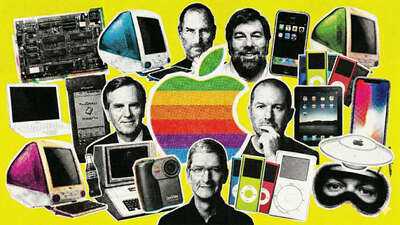
The company celebrating its 50th anniversary this week has switched processor architectures three times. It has rewritten its operating system from scratch. It has gone from selling bare circuit boards to hobbyists to selling spatial computing headsets to developers at $3,499 a pop. It has been led by seven CEOs, nearly gone bankrupt at least twice, and currently sits on a market capitalisation of roughly $3.7 trillion.
The only person who has been at Apple for all 50 years is Chris Espinosa, employee number eight, who joined when he was 14. He's 64 now. The garage he once worked in is a protected historical site. The company he helped build has 2.5 billion active devices scattered across the planet—roughly one for every three humans alive.
And yet Apple, in some fundamental way, is still arguing the same thing it argued in 1976: that computers should be for people who don't think of themselves as computer people. That technology's highest achievement is to become invisible. That the point isn't the chip or the code or the spec sheet—it's the moment a person picks up a device and it just works.
This is the story of how that argument survived five completely different companies.
I. Two Steves and a garage
There's a detail about Apple's founding that doesn't get enough attention: Steve Wozniak wanted to give it all away for free.
When he finished the basic design of the Apple I in March 1976, his plan was to share the schematics at the Homebrew Computer Club—a group of hobbyists who met in a garage in Menlo Park and traded circuit diagrams like recipes. He'd already offered the design to Hewlett-Packard, where he worked as an engineer. They turned him down. Five times.
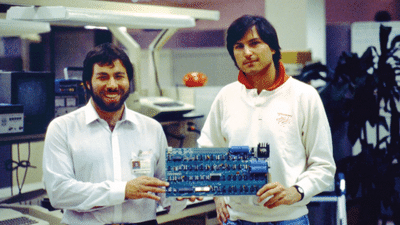
His friend Steve Jobs looked at the same machine and saw something else entirely. Not a hobby. A business. Jobs sold his Volkswagen minibus for $1,500. Wozniak sold his HP-65 calculator for $500. On April 1, 1976, they formed Apple Computer Company as a partnership, working out of the garage at Jobs' parents' house on Crist Drive in Los Altos.
There was a third co-founder. Ronald Wayne, a 42-year-old Atari engineer, took a 10% stake, drafted the partnership agreement, and designed Apple's first logo—a fussy engraving of Isaac Newton under a tree. Twelve days later, he sold his share back for $800. He was worried about personal liability. That stake would be worth somewhere north of $350 billion today.
The Apple I was a bare circuit board. No keyboard. No screen. No case. You brought your own everything. It sold for $666.66—Wozniak just liked repeating digits. About 200 units were produced.
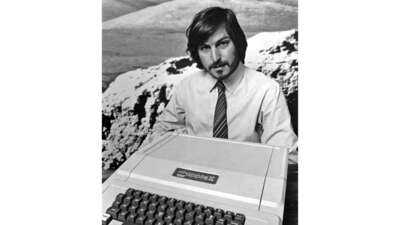
The Apple II, though, changed things. Introduced at the West Coast Computer Faire in April 1977, it was one of the first personal computers with colour graphics and an open architecture. Mike Markkula, a semi-retired Intel veteran, put in $250,000 and brought the kind of operational discipline that two twenty somethings in a garage badly needed.
When VisiCalc—the first spreadsheet program—launched on the Apple II in 1979, it gave the machine a reason to exist in offices, not just basements. Apple went public on December 12, 1980. The IPO generated more capital than any since Ford in 1956. Jobs, at 25, was worth over $200 million.
Not everything worked. The Apple III, released the same year as the IPO, was meant to build on the Apple II's success. Instead, it overheated so badly that chips melted in their sockets. Every unit sold had to be recalled. Jobs later said Apple lost "infinite, incalculable amounts" of money on it. It was the company's first real lesson in hubris—and far from its last.
Then the trouble started.
Jobs became obsessed with the Macintosh project. The Apple II division—still responsible for 85% of revenue—was treated like an embarrassment. At the January 1985 annual meeting, it wasn't even mentioned. Wozniak, who'd survived a plane crash in 1981 and gone back to Berkeley to finish his degree, told reporters the company had been going in the wrong direction for five years. He left that February.
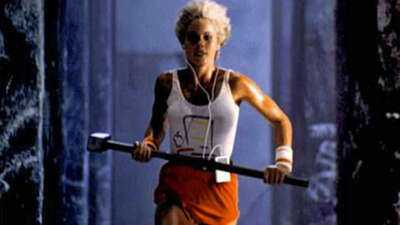
The Mac had launched in 1984 with the famous Super Bowl ad—Ridley Scott's dystopian masterpiece, a woman hurling a hammer at a giant screen. The ad was perfect. The computer was less so. Jobs had insisted on 128 kilobytes of RAM. The Mac shipped at $2,495 and ran like molasses. Sales cratered after the first three months.
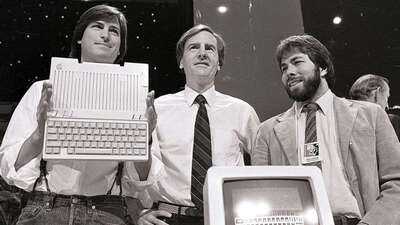
The power struggle between Jobs and CEO John Sculley—the Pepsi executive Jobs had lured to Apple by asking if he wanted to sell sugared water for the rest of his life—went nuclear. Jobs tried a boardroom coup. Sculley found out. The board sided with Sculley. Unanimously. Jobs was stripped of all operational duties, resigned in September 1985, and took a handful of loyalists with him to start NeXT.
Both Steves were gone. The first Apple was over.
II. Twelve years in the wilderness
The Sculley years get a bad rap, and not all of it is deserved. Not at first, anyway.
After Jobs left, Apple launched the LaserWriter—the first affordable PostScript laser printer—and paired it with Aldus PageMaker. Together, they basically invented desktop publishing. The Mac owned that market for years. The PowerBook, introduced in 1991, was a genuinely great laptop. Sculley brought colour to the Mac OS. Revenue hit nearly $8 billion by 1992.
But Sculley also made two decisions that would quietly destroy Apple over the next decade. He turned down Bill Gates' offer to license Mac software to other PC manufacturers. And he pursued what he called the "high-right policy"—fewer machines, higher prices, fatter margins.
Both choices made sense on a spreadsheet. Both were disastrous in practice. While Apple sold premium boxes to a shrinking audience, Microsoft's Windows—running on cheap, interchangeable Intel-powered PCs from dozens of manufacturers—swallowed the rest of the world.
Then came Newton.
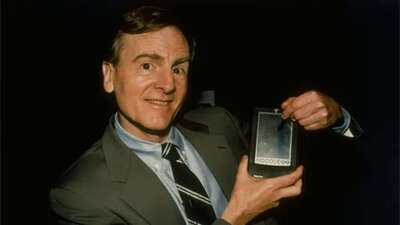
Sculley's pet project, the Newton MessagePad, launched in 1993 as the world's first "personal digital assistant." The concept was visionary. The handwriting recognition was a joke. Doonesbury mocked it. The product flopped. Sculley was pushed out that same year.
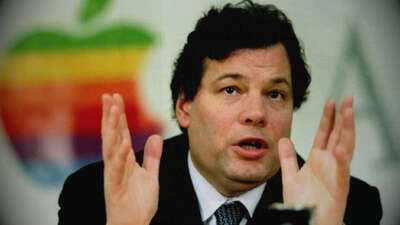
What followed was Apple at its absolute worst. Michael Spindler took over and tried to sell the company—first to IBM, then to Sun Microsystems. Both deals fell apart. He was fired in 1996.
Gil Amelio replaced him, billed as a corporate turnaround artist. He laid off thousands, tried to modernise the operating system, and failed at that too. By mid-1997, Apple had posted a net loss of $867 million. Analysts were openly writing obituaries. The company, by Jobs' later estimate, was about 90 days from bankruptcy.
In a decade without its founders, Apple had cycled through three CEOs, watched its market share crater from over 10% to below 4%, and attempted to build a modern operating system at least four times—Pink, Taligent, Copland, and a failed bid for Be Inc.'s BeOS. Each attempt collapsed.
The company was producing dozens of confusing, overlapping products that nobody could tell apart. It had lost its identity so completely that even its fans—and in the mid-90s, being an Apple fan required a kind of religious devotion—were starting to give up.
There's a buried irony here worth noting. Newton, Apple's most humiliating failure, also planted the seed for its future. To build the Newton's processor, Apple co-founded ARM—a chip design company—holding a 43% stake. When the company was weeks from bankruptcy in 1997, it sold most of those ARM shares to stay alive. That sale literally kept the lights on. And ARM's architecture would eventually power every iPhone ever made.
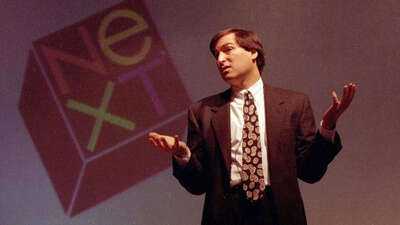
In December 1996, Apple bought NeXT Software for $429 million. Jobs came back as an "informal advisor." Within months, he'd manoeuvred Amelio out, installed NeXT people in key positions, and claimed the title of interim CEO. Or, as he called it with characteristic cheek, iCEO.
The prodigal son was home. And he was angry.
III. The Lazarus Act
Jobs' first move back was an act of demolition.
He drew a two-by-two grid on a whiteboard. One axis: Consumer, Pro. The other: Desktop, Portable. Four squares. Four products. Everything else—printers, scanners, the Newton, dozens of Mac variants nobody could keep straight—was killed. Seventy percent of the product line, gone.
Then he called Bill Gates.
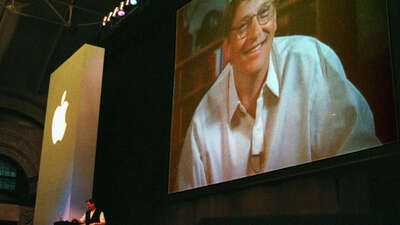
At Macworld in August 1997, Jobs announced a deal with Microsoft—$150 million in investment, plus a commitment to keep making Office for the Mac. When Gates' face appeared on the screen behind Jobs, the audience booed. Jobs didn't flinch. Apple had weeks of cash left. This wasn't the time for pride.
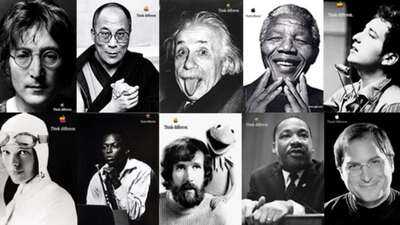
The "Think Different" campaign launched that September. Einstein. Picasso. Gandhi. Ali. The campaign didn't sell a product. It sold an idea—that Apple was for people who saw the world differently. The tagline was grammatically wrong on purpose. Jobs rejected "Think Differently" because it didn't land as hard. He was right.
The iMac showed up in August 1998. Designed by a young Brit named Jonathan Ive, it was translucent, colourful, and shaped like a gumdrop. It had a handle on top—not because anyone was going to carry it around, but because the handle made you want to touch it. It made the machine feel approachable.
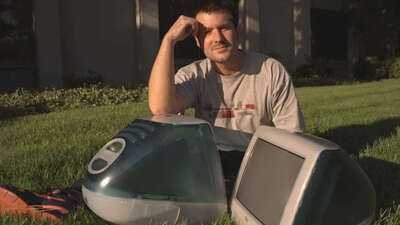
In a world of beige boxes, the iMac was a middle finger made of Bondi Blue plastic. It sold 800,000 units in five months.
But the real pivot came in 2001, with a product that had nothing to do with computers.
The iPod wasn't the first MP3 player. It wasn't even the best, technically, in its earliest form. But its tagline—"1,000 songs in your pocket"—wasn't a spec sheet. It was a feeling. Two years later, Jobs followed it with the iTunes Music Store, where you could buy individual songs for 99 cents. The music labels, terrified and disoriented by Napster, agreed to his terms. Within a year, iTunes had sold over 100 million songs.
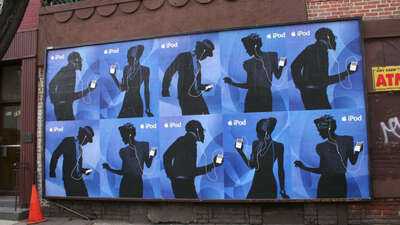
Here's what the iPod really did: it introduced Apple to hundreds of millions of people who didn't own a Mac and had never considered buying one. The white earbuds became a cultural signifier. Apple wasn't a computer company anymore. It was a lifestyle brand that happened to also make computers.
In January 2007, the company made this official. Apple Computer, Inc. became Apple Inc. The word "Computer" was dropped from the name. By then, Jobs was already onstage at Macworld, about to show the world something that would make the iPod look like a warm-up act.
IV. The device that ate the world
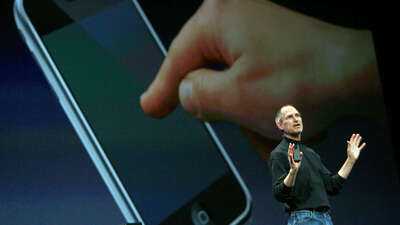
Jobs did a magic trick at Macworld 2007. He told the audience Apple was introducing three products: a widescreen iPod with touch controls, a revolutionary mobile phone, and a breakthrough internet communicator. He repeated the list. The crowd started laughing before he delivered the punchline.
It was one device. He called it iPhone.
The first iPhone went on sale on June 29, 2007. It cost $499 for the 4GB model. People camped outside stores for days. Six out of ten Americans knew about the launch. Time named it Invention of the Year. It sold a million units in 74 days.
These numbers don't tell you what actually happened.
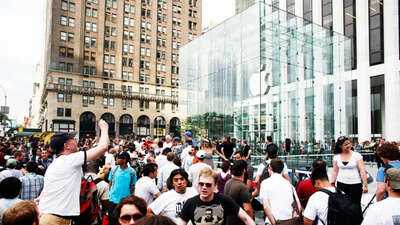
What actually happened is that the iPhone rewired human behaviour on a planetary scale. Within 13 years, more than two billion had been sold. It didn't disrupt the phone industry—it annihilated it. Nokia, BlackBerry, Motorola, Palm—gone or reduced to footnotes within half a decade. It also killed the point-and-shoot camera, the GPS device, the MP3 player (Apple's own iPod included), the alarm clock, the pocket flashlight, and—arguably—the human attention span.
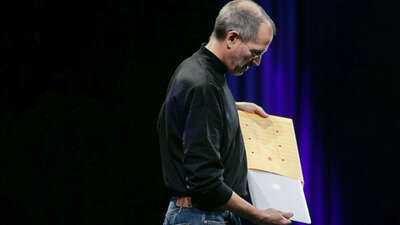
A year later, Jobs pulled another showmanship trick. He walked onstage at Macworld 2008 with a manila envelope, reached inside, and slid out a laptop. That was the MacBook Air—the thinnest notebook anyone had ever seen, and the machine that would eventually become Apple's best-selling Mac.
The App Store, launched in 2008, created an entirely new economy. Apple gave third-party developers a global storefront and took a 30% cut of every transaction. Some developers got rich. Many more found themselves trapped in a system where Apple set the rules, controlled distribution, and could change the terms whenever it pleased.
The iPhone era wasn't without its embarrassments, though. In 2010, an Apple engineer left an iPhone 4 prototype at a bar in Redwood City. It ended up in the hands of a tech blog. The world got to see Apple's next phone before Apple wanted it to—a security breach that would have been unthinkable under Jobs' obsessive secrecy regime.
Then, when the iPhone 4 actually launched, users discovered that holding it a certain way killed the signal entirely. "Antennagate" forced Apple to give away free bumper cases to millions of customers.
The iPad followed in 2010—Jobs' last major product launch. Each new device locked into the others, creating an ecosystem so tightly integrated that leaving Apple started to feel less like switching brands and more like leaving a country.
Then Steve Jobs died. October 5, 2011. He was 56. Pancreatic cancer. He'd been fighting it since 2003—initially, stubbornly, with alternative treatments before agreeing to surgery. Makeshift memorials appeared at Apple Stores around the world. People left flowers and Post-it notes on the glass.
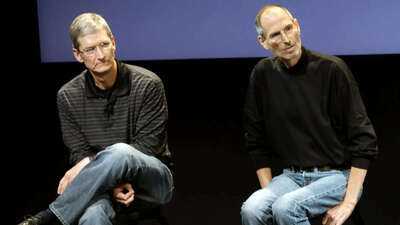
Tim Cook , the supply chain specialist from Alabama who'd been quietly running operations since 1998, stepped into the CEO role. The question was immediate and existential: could Apple survive without its prophet?
Cook answered it—first with numbers, then with products of his own.
His first launch, the iPhone 4S, was the last iPhone Jobs had directly worked on. Cook was still finding his footing. Two years later, he found it. The iPhone 5s arrived in 2013 with a fingerprint sensor and a completely new face—and iOS 7 behind it looked like nothing Apple had shipped before. Flat, stripped back, almost brutally clean. Jony Ive had taken over software. You could tell.
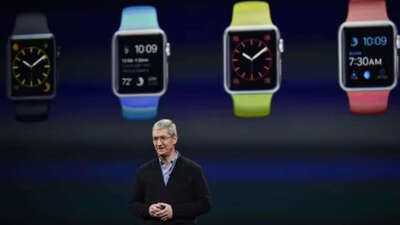
Apple Watch launched in 2015, the first entirely new product category under Cook's leadership. The reception was mixed. The original model was slow, its purpose unclear. But Apple kept iterating, and by the time the Watch added heart rate monitoring, ECG readings, and fall detection, it had quietly become something Jobs never built: a health device. Doctors started recommending it. People credited it with saving their lives. It became the best-selling watch in the world—not the best-selling smartwatch, the best-selling watch, full stop.
AirPods, introduced in 2016, were mocked on arrival. They looked like someone had snipped the wires off regular EarPods. Within two years, they were everywhere—a cultural signifier as potent as the white iPod earbuds had been a decade earlier, and a product generating more revenue than many standalone tech companies. Apple also launched Apple Music, Apple TV+, Apple Pay, and a growing stack of subscription services that would eventually become a business unto themselves.
Under Cook, revenue nearly tripled. Apple became the first publicly traded company to hit a $1 trillion market cap in August 2018. It crossed $2 trillion in 2020. The iPhone became, by most reasonable metrics, the most profitable product in the history of consumer capitalism.
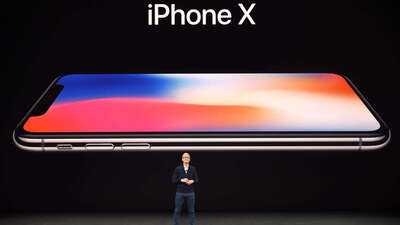
But the vibes were different. Cook's Apple shipped great products. It just didn't unveil them with the same theatrical electricity. The iPhones got better every year—thinner, faster, better cameras—in ways that were measurable, incremental, and increasingly predictable. Nobody camped outside stores anymore.
Sometimes the pursuit of thinner went too far. The iPhone 6 bent in people's pockets, spawning "Bendgate" and a thousand YouTube stress tests. The MacBook's butterfly keyboard, introduced in 2015 to shave off millimetres, became so unreliable that Apple spent four years apologising for stuck keys before quietly reverting to the old design.
Cook was a brilliant operator who built an empire. He was not a showman who started revolutions. And Apple, the company that once ran ads calling itself the misfit, the rebel, the round peg in the square hole, was now the largest company on Earth.
Empires have different problems than startups.
V. The gravity of $3.7 trillion
The fifth Apple started, fittingly, with a chip.
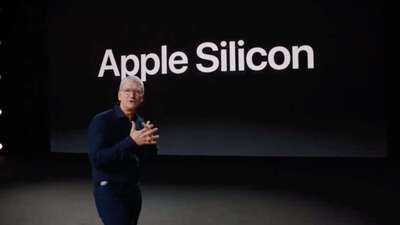
In November 2020, Apple unveiled the M1—the first custom-designed ARM-based processor for the Mac. This was Apple Silicon, and it was a declaration of independence from Intel, which had powered Macs since 2006. The M1 was faster, cooler, and more power-efficient than anything Intel offered at the time. It humiliated the world's biggest chipmaker so thoroughly that Intel's stock entered a multi-year decline.
By 2025, Apple Silicon was in every Mac. The transition was, in some ways, the most impressive technical achievement in the company's history—more so than the iPhone, even—because it was invisible. Normal people didn't need to understand chip architecture. They just noticed their MacBook lasted all day and never got hot. That's Apple's entire philosophy, condensed into a battery percentage.
But the fifth Apple isn't defined by chips alone. It's defined by the weight of its own gravity.
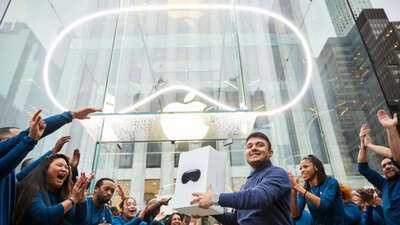
The Vision Pro, launched in early 2024 at $3,499, was Apple's first entirely new product category in nearly a decade—and its boldest bet since the iPhone. A spatial computing headset, entering the virtual reality space years after Meta, Google, and others had already staked their claims. Hopes were enormous. The technology was extraordinary. The price was prohibitive.
The use case? Wearing a headset to browse apps in your living room—never quite clicked with the mainstream. Sales were modest. Apple had arrived late to a category that wasn't sure it wanted to exist yet, and for once, arriving late didn't mean arriving better.
The Macintosh was expensive and slow in 1984 too—and it took a decade to find its audience. Then again, Newton was expensive and ahead of its time, and it found a grave. History doesn't always repeat the flattering version.
Still, a small misstep doesn’t shake an empire when its foundations run this deep.
Services revenue—Apple Music, iCloud, Apple TV+, App Store, Apple Pay, AppleCare—crossed $100 billion in fiscal 2025. That's roughly a quarter of total revenue, and it operates at significantly higher margins than hardware.
These services are also what make the ecosystem almost impossible to leave. A decade of iCloud photos, an Apple Music library, years of App Store purchases, a family's worth of shared subscriptions—switching to Android isn't a consumer choice anymore. It's a migration.
Behavioural economists call it switching costs. Antitrust regulators call it something less polite.
The EU has fined Apple for Digital Markets Act violations. The US Department of Justice has an antitrust case targeting the App Store. Epic Games spent years in court arguing that Apple's 30% commission is a monopoly tax. India's regulators have been circling too.
And India is where things get really interesting for this chapter—probably the most telling subplot of this fifth era. For decades, Apple treated India as an afterthought—a price-sensitive market where iPhones were too expensive and Android ruled unchallenged. That's changed dramatically.
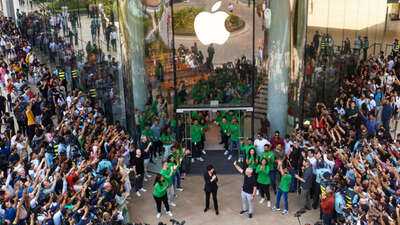
Apple opened its first flagship stores in Mumbai and Delhi in 2023. As of 2025, India assembles roughly 1 out of every 4 iPhones sold in the world. Apple made new partners in the country—Tata Electronics, which had zero smartphone manufacturing experience a few years ago, now runs multiple iPhone assembly lines. And its oldest manufacturing partner, Foxconn, is building what will be its second-largest plant in the world.
Apple plans to shift the majority of US-bound iPhone production to Indian factories by the end of 2026.
Now, India is both Apple's next factory floor and its next growth market—1.4 billion people, a rising middle class, and a smartphone penetration rate that still has room to climb. Apple isn't just hedging against China. It's planting roots in the country most likely to define its next decade of growth.
None of that, though, could insulate it from what was coming. Not a better phone. Not a cheaper rival. Something older and stranger: the sense that Apple had missed the next thing.
It had something more damning coming for it: ChatGPT.
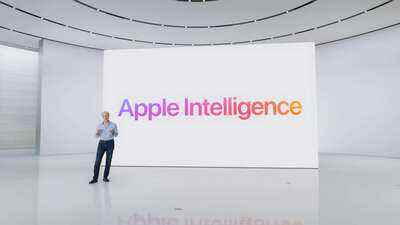
When OpenAI's chatbot broke into mainstream consciousness in late 2022, it exposed a gap Apple had spent years papering over. Siri—launched in 2011, first to market, first to become a punchline—had never become genuinely intelligent. Apple Intelligence, announced at WWDC 2024, was supposed to fix that: on-device, privacy-first, deeply integrated. It even partnered with the very OpenAI. hesitant, half-baked, and underwhelming.
Quarter after quarter, the eulogies kept coming. So did the records. Then Q1 2026.
Apple posted $143.8 billion in revenue in Q1 2026—the highest quarter in its history. More iPhones sold than in any quarter before. Services subscriptions at an all-time high. Every line on the report, a record.
Whether Apple is late to AI is almost beside the point now. It doesn't need to build AI itself. That's what Google is for—an unlikely, uncomfortable arrangement between two companies that have spent decades trying to eat each other. The smarter Siri, promised once and then promised again in 2024, is due later this year. For a CEO on his way out, it's unfinished business, though Cook has never really done unfinished.
Cook has led Apple for nearly 15 years now. That’s a long time. Longer than Jobs led it in his famous second act. He came in to fix the operations. He left—almost—having built the most valuable company in history. The foldable iPhone, coming later this year, could be his parting gift—one last product to put his name on before he hands the keys over.
John Ternus, Apple's hardware chief, is the name most often mentioned as his successor.
The fifth act is winding down. The sixth is being cast.
What makes a company the same company?
Not the products. The Apple II has nothing in common with the Vision Pro.
Not the people. The co-founders left in 1985. The CEO who brought the company back from the dead died in 2011. The designer who defined its visual identity for two decades—Jony Ive—left in 2019.
Not even the technology. Apple has moved from 8-bit processors to custom silicon, from floppy disks to spatial computing, from a garage to a spaceship-shaped campus that cost $5 billion to build.
What connects all five Apples is an argument. A conviction that technology should be designed for people who don't care about technology. That the machine should serve the human, never the other way around. That the intersection of engineering and empathy is where the interesting work happens.
Every tech company says this now. Apple said it when nobody else was saying it, and then bet the company on it—over and over, through bankruptcies and boardroom coups and the death of its founder.
Fifty years. Five companies. One argument.
It turned out to be worth $3.7 trillion. And it started with a guy who wanted to give his circuit board away for free.
There's a thought experiment from ancient philosophy—the Ship of Theseus—that asks: if you replace every plank of a ship, one at a time, is it still the same ship?
Apple has replaced every plank. Multiple times.
The company celebrating its 50th anniversary this week has switched processor architectures three times. It has rewritten its operating system from scratch. It has gone from selling bare circuit boards to hobbyists to selling spatial computing headsets to developers at $3,499 a pop. It has been led by seven CEOs, nearly gone bankrupt at least twice, and currently sits on a market capitalisation of roughly $3.7 trillion.
The only person who has been at Apple for all 50 years is Chris Espinosa, employee number eight, who joined when he was 14. He's 64 now. The garage he once worked in is a protected historical site. The company he helped build has 2.5 billion active devices scattered across the planet—roughly one for every three humans alive.
And yet Apple, in some fundamental way, is still arguing the same thing it argued in 1976: that computers should be for people who don't think of themselves as computer people. That technology's highest achievement is to become invisible. That the point isn't the chip or the code or the spec sheet—it's the moment a person picks up a device and it just works.
This is the story of how that argument survived five completely different companies.
I. Two Steves and a garage
There's a detail about Apple's founding that doesn't get enough attention: Steve Wozniak wanted to give it all away for free.
When he finished the basic design of the Apple I in March 1976, his plan was to share the schematics at the Homebrew Computer Club—a group of hobbyists who met in a garage in Menlo Park and traded circuit diagrams like recipes. He'd already offered the design to Hewlett-Packard, where he worked as an engineer. They turned him down. Five times.
His friend Steve Jobs looked at the same machine and saw something else entirely. Not a hobby. A business. Jobs sold his Volkswagen minibus for $1,500. Wozniak sold his HP-65 calculator for $500. On April 1, 1976, they formed Apple Computer Company as a partnership, working out of the garage at Jobs' parents' house on Crist Drive in Los Altos.
There was a third co-founder. Ronald Wayne, a 42-year-old Atari engineer, took a 10% stake, drafted the partnership agreement, and designed Apple's first logo—a fussy engraving of Isaac Newton under a tree. Twelve days later, he sold his share back for $800. He was worried about personal liability. That stake would be worth somewhere north of $350 billion today.
The Apple I was a bare circuit board. No keyboard. No screen. No case. You brought your own everything. It sold for $666.66—Wozniak just liked repeating digits. About 200 units were produced.
The Apple II, though, changed things. Introduced at the West Coast Computer Faire in April 1977, it was one of the first personal computers with colour graphics and an open architecture. Mike Markkula, a semi-retired Intel veteran, put in $250,000 and brought the kind of operational discipline that two twenty somethings in a garage badly needed.
When VisiCalc—the first spreadsheet program—launched on the Apple II in 1979, it gave the machine a reason to exist in offices, not just basements. Apple went public on December 12, 1980. The IPO generated more capital than any since Ford in 1956. Jobs, at 25, was worth over $200 million.
Not everything worked. The Apple III, released the same year as the IPO, was meant to build on the Apple II's success. Instead, it overheated so badly that chips melted in their sockets. Every unit sold had to be recalled. Jobs later said Apple lost "infinite, incalculable amounts" of money on it. It was the company's first real lesson in hubris—and far from its last.
Then the trouble started.
Jobs became obsessed with the Macintosh project. The Apple II division—still responsible for 85% of revenue—was treated like an embarrassment. At the January 1985 annual meeting, it wasn't even mentioned. Wozniak, who'd survived a plane crash in 1981 and gone back to Berkeley to finish his degree, told reporters the company had been going in the wrong direction for five years. He left that February.
The Mac had launched in 1984 with the famous Super Bowl ad—Ridley Scott's dystopian masterpiece, a woman hurling a hammer at a giant screen. The ad was perfect. The computer was less so. Jobs had insisted on 128 kilobytes of RAM. The Mac shipped at $2,495 and ran like molasses. Sales cratered after the first three months.
The power struggle between Jobs and CEO John Sculley—the Pepsi executive Jobs had lured to Apple by asking if he wanted to sell sugared water for the rest of his life—went nuclear. Jobs tried a boardroom coup. Sculley found out. The board sided with Sculley. Unanimously. Jobs was stripped of all operational duties, resigned in September 1985, and took a handful of loyalists with him to start NeXT.
Both Steves were gone. The first Apple was over.
II. Twelve years in the wilderness
The Sculley years get a bad rap, and not all of it is deserved. Not at first, anyway.
After Jobs left, Apple launched the LaserWriter—the first affordable PostScript laser printer—and paired it with Aldus PageMaker. Together, they basically invented desktop publishing. The Mac owned that market for years. The PowerBook, introduced in 1991, was a genuinely great laptop. Sculley brought colour to the Mac OS. Revenue hit nearly $8 billion by 1992.
But Sculley also made two decisions that would quietly destroy Apple over the next decade. He turned down Bill Gates' offer to license Mac software to other PC manufacturers. And he pursued what he called the "high-right policy"—fewer machines, higher prices, fatter margins.
Both choices made sense on a spreadsheet. Both were disastrous in practice. While Apple sold premium boxes to a shrinking audience, Microsoft's Windows—running on cheap, interchangeable Intel-powered PCs from dozens of manufacturers—swallowed the rest of the world.
Then came Newton.
Sculley's pet project, the Newton MessagePad, launched in 1993 as the world's first "personal digital assistant." The concept was visionary. The handwriting recognition was a joke. Doonesbury mocked it. The product flopped. Sculley was pushed out that same year.
What followed was Apple at its absolute worst. Michael Spindler took over and tried to sell the company—first to IBM, then to Sun Microsystems. Both deals fell apart. He was fired in 1996.
Gil Amelio replaced him, billed as a corporate turnaround artist. He laid off thousands, tried to modernise the operating system, and failed at that too. By mid-1997, Apple had posted a net loss of $867 million. Analysts were openly writing obituaries. The company, by Jobs' later estimate, was about 90 days from bankruptcy.
In a decade without its founders, Apple had cycled through three CEOs, watched its market share crater from over 10% to below 4%, and attempted to build a modern operating system at least four times—Pink, Taligent, Copland, and a failed bid for Be Inc.'s BeOS. Each attempt collapsed.
The company was producing dozens of confusing, overlapping products that nobody could tell apart. It had lost its identity so completely that even its fans—and in the mid-90s, being an Apple fan required a kind of religious devotion—were starting to give up.
There's a buried irony here worth noting. Newton, Apple's most humiliating failure, also planted the seed for its future. To build the Newton's processor, Apple co-founded ARM—a chip design company—holding a 43% stake. When the company was weeks from bankruptcy in 1997, it sold most of those ARM shares to stay alive. That sale literally kept the lights on. And ARM's architecture would eventually power every iPhone ever made.
In December 1996, Apple bought NeXT Software for $429 million. Jobs came back as an "informal advisor." Within months, he'd manoeuvred Amelio out, installed NeXT people in key positions, and claimed the title of interim CEO. Or, as he called it with characteristic cheek, iCEO.
The prodigal son was home. And he was angry.
III. The Lazarus Act
Jobs' first move back was an act of demolition.
He drew a two-by-two grid on a whiteboard. One axis: Consumer, Pro. The other: Desktop, Portable. Four squares. Four products. Everything else—printers, scanners, the Newton, dozens of Mac variants nobody could keep straight—was killed. Seventy percent of the product line, gone.
Then he called Bill Gates.
At Macworld in August 1997, Jobs announced a deal with Microsoft—$150 million in investment, plus a commitment to keep making Office for the Mac. When Gates' face appeared on the screen behind Jobs, the audience booed. Jobs didn't flinch. Apple had weeks of cash left. This wasn't the time for pride.
The "Think Different" campaign launched that September. Einstein. Picasso. Gandhi. Ali. The campaign didn't sell a product. It sold an idea—that Apple was for people who saw the world differently. The tagline was grammatically wrong on purpose. Jobs rejected "Think Differently" because it didn't land as hard. He was right.
The iMac showed up in August 1998. Designed by a young Brit named Jonathan Ive, it was translucent, colourful, and shaped like a gumdrop. It had a handle on top—not because anyone was going to carry it around, but because the handle made you want to touch it. It made the machine feel approachable.
In a world of beige boxes, the iMac was a middle finger made of Bondi Blue plastic. It sold 800,000 units in five months.
But the real pivot came in 2001, with a product that had nothing to do with computers.
The iPod wasn't the first MP3 player. It wasn't even the best, technically, in its earliest form. But its tagline—"1,000 songs in your pocket"—wasn't a spec sheet. It was a feeling. Two years later, Jobs followed it with the iTunes Music Store, where you could buy individual songs for 99 cents. The music labels, terrified and disoriented by Napster, agreed to his terms. Within a year, iTunes had sold over 100 million songs.
Here's what the iPod really did: it introduced Apple to hundreds of millions of people who didn't own a Mac and had never considered buying one. The white earbuds became a cultural signifier. Apple wasn't a computer company anymore. It was a lifestyle brand that happened to also make computers.
In January 2007, the company made this official. Apple Computer, Inc. became Apple Inc. The word "Computer" was dropped from the name. By then, Jobs was already onstage at Macworld, about to show the world something that would make the iPod look like a warm-up act.
IV. The device that ate the world
Jobs did a magic trick at Macworld 2007. He told the audience Apple was introducing three products: a widescreen iPod with touch controls, a revolutionary mobile phone, and a breakthrough internet communicator. He repeated the list. The crowd started laughing before he delivered the punchline.
It was one device. He called it iPhone.
The first iPhone went on sale on June 29, 2007. It cost $499 for the 4GB model. People camped outside stores for days. Six out of ten Americans knew about the launch. Time named it Invention of the Year. It sold a million units in 74 days.
These numbers don't tell you what actually happened.
What actually happened is that the iPhone rewired human behaviour on a planetary scale. Within 13 years, more than two billion had been sold. It didn't disrupt the phone industry—it annihilated it. Nokia, BlackBerry, Motorola, Palm—gone or reduced to footnotes within half a decade. It also killed the point-and-shoot camera, the GPS device, the MP3 player (Apple's own iPod included), the alarm clock, the pocket flashlight, and—arguably—the human attention span.
A year later, Jobs pulled another showmanship trick. He walked onstage at Macworld 2008 with a manila envelope, reached inside, and slid out a laptop. That was the MacBook Air—the thinnest notebook anyone had ever seen, and the machine that would eventually become Apple's best-selling Mac.
The App Store, launched in 2008, created an entirely new economy. Apple gave third-party developers a global storefront and took a 30% cut of every transaction. Some developers got rich. Many more found themselves trapped in a system where Apple set the rules, controlled distribution, and could change the terms whenever it pleased.
The iPhone era wasn't without its embarrassments, though. In 2010, an Apple engineer left an iPhone 4 prototype at a bar in Redwood City. It ended up in the hands of a tech blog. The world got to see Apple's next phone before Apple wanted it to—a security breach that would have been unthinkable under Jobs' obsessive secrecy regime.
Then, when the iPhone 4 actually launched, users discovered that holding it a certain way killed the signal entirely. "Antennagate" forced Apple to give away free bumper cases to millions of customers.
The iPad followed in 2010—Jobs' last major product launch. Each new device locked into the others, creating an ecosystem so tightly integrated that leaving Apple started to feel less like switching brands and more like leaving a country.
Then Steve Jobs died. October 5, 2011. He was 56. Pancreatic cancer. He'd been fighting it since 2003—initially, stubbornly, with alternative treatments before agreeing to surgery. Makeshift memorials appeared at Apple Stores around the world. People left flowers and Post-it notes on the glass.
Tim Cook , the supply chain specialist from Alabama who'd been quietly running operations since 1998, stepped into the CEO role. The question was immediate and existential: could Apple survive without its prophet?
Cook answered it—first with numbers, then with products of his own.
His first launch, the iPhone 4S, was the last iPhone Jobs had directly worked on. Cook was still finding his footing. Two years later, he found it. The iPhone 5s arrived in 2013 with a fingerprint sensor and a completely new face—and iOS 7 behind it looked like nothing Apple had shipped before. Flat, stripped back, almost brutally clean. Jony Ive had taken over software. You could tell.
Apple Watch launched in 2015, the first entirely new product category under Cook's leadership. The reception was mixed. The original model was slow, its purpose unclear. But Apple kept iterating, and by the time the Watch added heart rate monitoring, ECG readings, and fall detection, it had quietly become something Jobs never built: a health device. Doctors started recommending it. People credited it with saving their lives. It became the best-selling watch in the world—not the best-selling smartwatch, the best-selling watch, full stop.
AirPods, introduced in 2016, were mocked on arrival. They looked like someone had snipped the wires off regular EarPods. Within two years, they were everywhere—a cultural signifier as potent as the white iPod earbuds had been a decade earlier, and a product generating more revenue than many standalone tech companies. Apple also launched Apple Music, Apple TV+, Apple Pay, and a growing stack of subscription services that would eventually become a business unto themselves.
Under Cook, revenue nearly tripled. Apple became the first publicly traded company to hit a $1 trillion market cap in August 2018. It crossed $2 trillion in 2020. The iPhone became, by most reasonable metrics, the most profitable product in the history of consumer capitalism.
But the vibes were different. Cook's Apple shipped great products. It just didn't unveil them with the same theatrical electricity. The iPhones got better every year—thinner, faster, better cameras—in ways that were measurable, incremental, and increasingly predictable. Nobody camped outside stores anymore.
Sometimes the pursuit of thinner went too far. The iPhone 6 bent in people's pockets, spawning "Bendgate" and a thousand YouTube stress tests. The MacBook's butterfly keyboard, introduced in 2015 to shave off millimetres, became so unreliable that Apple spent four years apologising for stuck keys before quietly reverting to the old design.
Cook was a brilliant operator who built an empire. He was not a showman who started revolutions. And Apple, the company that once ran ads calling itself the misfit, the rebel, the round peg in the square hole, was now the largest company on Earth.
Empires have different problems than startups.
V. The gravity of $3.7 trillion
The fifth Apple started, fittingly, with a chip.
In November 2020, Apple unveiled the M1—the first custom-designed ARM-based processor for the Mac. This was Apple Silicon, and it was a declaration of independence from Intel, which had powered Macs since 2006. The M1 was faster, cooler, and more power-efficient than anything Intel offered at the time. It humiliated the world's biggest chipmaker so thoroughly that Intel's stock entered a multi-year decline.
By 2025, Apple Silicon was in every Mac. The transition was, in some ways, the most impressive technical achievement in the company's history—more so than the iPhone, even—because it was invisible. Normal people didn't need to understand chip architecture. They just noticed their MacBook lasted all day and never got hot. That's Apple's entire philosophy, condensed into a battery percentage.
But the fifth Apple isn't defined by chips alone. It's defined by the weight of its own gravity.
The Vision Pro, launched in early 2024 at $3,499, was Apple's first entirely new product category in nearly a decade—and its boldest bet since the iPhone. A spatial computing headset, entering the virtual reality space years after Meta, Google, and others had already staked their claims. Hopes were enormous. The technology was extraordinary. The price was prohibitive.
The use case? Wearing a headset to browse apps in your living room—never quite clicked with the mainstream. Sales were modest. Apple had arrived late to a category that wasn't sure it wanted to exist yet, and for once, arriving late didn't mean arriving better.
The Macintosh was expensive and slow in 1984 too—and it took a decade to find its audience. Then again, Newton was expensive and ahead of its time, and it found a grave. History doesn't always repeat the flattering version.
Still, a small misstep doesn’t shake an empire when its foundations run this deep.
Services revenue—Apple Music, iCloud, Apple TV+, App Store, Apple Pay, AppleCare—crossed $100 billion in fiscal 2025. That's roughly a quarter of total revenue, and it operates at significantly higher margins than hardware.
These services are also what make the ecosystem almost impossible to leave. A decade of iCloud photos, an Apple Music library, years of App Store purchases, a family's worth of shared subscriptions—switching to Android isn't a consumer choice anymore. It's a migration.
Behavioural economists call it switching costs. Antitrust regulators call it something less polite.
The EU has fined Apple for Digital Markets Act violations. The US Department of Justice has an antitrust case targeting the App Store. Epic Games spent years in court arguing that Apple's 30% commission is a monopoly tax. India's regulators have been circling too.
And India is where things get really interesting for this chapter—probably the most telling subplot of this fifth era. For decades, Apple treated India as an afterthought—a price-sensitive market where iPhones were too expensive and Android ruled unchallenged. That's changed dramatically.
Apple opened its first flagship stores in Mumbai and Delhi in 2023. As of 2025, India assembles roughly 1 out of every 4 iPhones sold in the world. Apple made new partners in the country—Tata Electronics, which had zero smartphone manufacturing experience a few years ago, now runs multiple iPhone assembly lines. And its oldest manufacturing partner, Foxconn, is building what will be its second-largest plant in the world.
Apple plans to shift the majority of US-bound iPhone production to Indian factories by the end of 2026.
Now, India is both Apple's next factory floor and its next growth market—1.4 billion people, a rising middle class, and a smartphone penetration rate that still has room to climb. Apple isn't just hedging against China. It's planting roots in the country most likely to define its next decade of growth.
None of that, though, could insulate it from what was coming. Not a better phone. Not a cheaper rival. Something older and stranger: the sense that Apple had missed the next thing.
It had something more damning coming for it: ChatGPT.
When OpenAI's chatbot broke into mainstream consciousness in late 2022, it exposed a gap Apple had spent years papering over. Siri—launched in 2011, first to market, first to become a punchline—had never become genuinely intelligent. Apple Intelligence, announced at WWDC 2024, was supposed to fix that: on-device, privacy-first, deeply integrated. It even partnered with the very OpenAI. hesitant, half-baked, and underwhelming.
Quarter after quarter, the eulogies kept coming. So did the records. Then Q1 2026.
Apple posted $143.8 billion in revenue in Q1 2026—the highest quarter in its history. More iPhones sold than in any quarter before. Services subscriptions at an all-time high. Every line on the report, a record.
Whether Apple is late to AI is almost beside the point now. It doesn't need to build AI itself. That's what Google is for—an unlikely, uncomfortable arrangement between two companies that have spent decades trying to eat each other. The smarter Siri, promised once and then promised again in 2024, is due later this year. For a CEO on his way out, it's unfinished business, though Cook has never really done unfinished.
Cook has led Apple for nearly 15 years now. That’s a long time. Longer than Jobs led it in his famous second act. He came in to fix the operations. He left—almost—having built the most valuable company in history. The foldable iPhone, coming later this year, could be his parting gift—one last product to put his name on before he hands the keys over.
John Ternus, Apple's hardware chief, is the name most often mentioned as his successor.
The fifth act is winding down. The sixth is being cast.
What makes a company the same company?
Not the products. The Apple II has nothing in common with the Vision Pro.
Not the people. The co-founders left in 1985. The CEO who brought the company back from the dead died in 2011. The designer who defined its visual identity for two decades—Jony Ive—left in 2019.
Not even the technology. Apple has moved from 8-bit processors to custom silicon, from floppy disks to spatial computing, from a garage to a spaceship-shaped campus that cost $5 billion to build.
What connects all five Apples is an argument. A conviction that technology should be designed for people who don't care about technology. That the machine should serve the human, never the other way around. That the intersection of engineering and empathy is where the interesting work happens.
Every tech company says this now. Apple said it when nobody else was saying it, and then bet the company on it—over and over, through bankruptcies and boardroom coups and the death of its founder.
Fifty years. Five companies. One argument.
It turned out to be worth $3.7 trillion. And it started with a guy who wanted to give his circuit board away for free.
Next Story