
Apple may let iPhone users pick Siri's AI brain in iOS 27


Apple is opening the AI floodgates. Starting with iOS 27 this fall, iPhone users will be able to choose from multiple third-party AI models to power features across the operating system—not just rely on the default Apple Intelligence setup. Bloomberg first reported the news, citing people familiar with the plans.
The move affects iOS 27, iPadOS 27 , and macOS 27 , and covers some of Apple's most-used AI tools, including Siri, Writing Tools, and Image Playground.
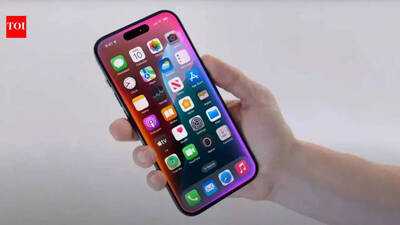
Apple's could call the feature 'Extensions,' and it works through the App StoreHere's how it'll work: AI companies can opt in by building support into their existing App Store apps. Once users install a compatible app—say, Anthropic 's Claude or Google 's Gemini—they'll be able to set it as their preferred AI model through the Settings app. Apple is already internally testing integrations with both Google and Anthropic, per Bloomberg's sources.
To make switching feel seamless, Apple is also letting users assign different Siri voices to different AI models. So if you're chatting with Claude through Siri, it'll sound distinctly different from a response powered by Apple's own models—a small but smart touch that makes it easy to know who's talking.
OpenAI is the quiet loser in all of thisChatGPT has been the only third-party model baked into Apple Intelligence so far, and it's about to lose that exclusive spot. While OpenAI will still be available as an option through Extensions, it's effectively being demoted from the only guest to just another guest at the table.
Apple, of course, still wins either way—it reportedly takes a cut from any App Store subscriptions that come from users signing up for third-party AI services through their iPhone. With WWDC 2026 on the horizon in June, the full picture of Apple's AI strategy won't stay fuzzy for long.
The move affects iOS 27, iPadOS 27 , and macOS 27 , and covers some of Apple's most-used AI tools, including Siri, Writing Tools, and Image Playground.
Apple's could call the feature 'Extensions,' and it works through the App StoreHere's how it'll work: AI companies can opt in by building support into their existing App Store apps. Once users install a compatible app—say, Anthropic 's Claude or Google 's Gemini—they'll be able to set it as their preferred AI model through the Settings app. Apple is already internally testing integrations with both Google and Anthropic, per Bloomberg's sources.
To make switching feel seamless, Apple is also letting users assign different Siri voices to different AI models. So if you're chatting with Claude through Siri, it'll sound distinctly different from a response powered by Apple's own models—a small but smart touch that makes it easy to know who's talking.
OpenAI is the quiet loser in all of thisChatGPT has been the only third-party model baked into Apple Intelligence so far, and it's about to lose that exclusive spot. While OpenAI will still be available as an option through Extensions, it's effectively being demoted from the only guest to just another guest at the table.
Apple, of course, still wins either way—it reportedly takes a cut from any App Store subscriptions that come from users signing up for third-party AI services through their iPhone. With WWDC 2026 on the horizon in June, the full picture of Apple's AI strategy won't stay fuzzy for long.
Next Story