CEO of Cursor, the company behind one of the world's most-popular coding agents, warns businesses: Things will eventually start to crumble if you…


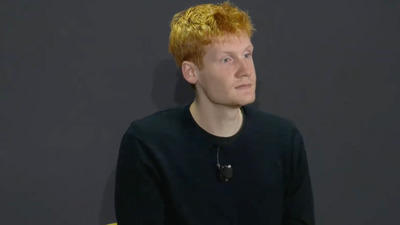
The CEO of one of Silicon Valley's hottest AI coding startups is issuing a stark warning: developers who blindly trust AI to write their software are building on shaky ground. Michael Truell , the 25-year-old CEO of Cursor—a $29.3 billion AI coding assistant used by over one million developers daily—told Fortune's Brainstorm AI conference that " vibe coding " may work for quick prototypes but creates unstable foundations for serious applications. "If you close your eyes and don't look at the code and have AIs build things with shaky foundations, as you add another floor, and another floor, things start to kind of crumble," Truell explained. He compares the hands-off approach to constructing a house without understanding the electrical wiring or plumbing. He adds that it might look fine initially, but structural problems inevitably emerge as complexity grows.
Truell's concerns come as AI is transforming software development across the industry. Google CEO Sundar Pichai revealed AI now writes over 30% of new code at Google, up from 25% just months earlier, while Anthropic CEO Dario Amodei claimed Claude generates 90% of his company's code. But Truell drew a clear line between AI-assisted coding—where developers remain engaged and understand what's being built—and vibe coding, where programmers essentially outsource everything to AI without reviewing or comprehending the output.
Even AI coding pioneers admit the approach has serious limitations
Truell isn't alone in his skepticism. Boris Cherny , who created Anthropic's Claude Code , acknowledged vibe coding works well for "throwaway code and prototypes" but fails when developers need "maintainable code" where they must be "thoughtful about every line." Andrej Karpathy , the former Tesla AI director who actually coined the term "vibe coding" earlier this year, recently admitted the method proved useless for his Nanochat project, which he wrote entirely by hand because AI agents "just didn't work well enough."
The reality on the ground supports these concerns. Research from METR found AI coding assistants actually decreased experienced developers' productivity by 19%—despite participants expecting a significant boost. Consultancy Bain & Company separately reported that programming delivered "unremarkable" cost savings despite being among the first fields to embrace generative AI.
Cursor 's rapid growth reflects hunger for AI tools despite productivity questions
Truell positioned Cursor as striking the right balance—embedding AI into developers' working environments to predict code and handle routine tasks while keeping programmers actively involved in understanding what's generated. "In the places where you want to take a step back and ask the AI to do something end-to-end, you can do that too," he said, emphasizing developers still need visibility into the code being created.
The market has responded enthusiastically. Founded by four MIT graduates in 2022, Cursor secured $8 million from OpenAI's Startup Fund in 2023 before recently closing a massive $2.3 billion funding round. The company now employs 300 people and generates $1 billion in annualized revenue. But Truell's message remains cautionary: AI coding offers tremendous power, yet treating it as a black box that magically produces working software is a recipe for disaster as applications scale and evolve.
Truell's concerns come as AI is transforming software development across the industry. Google CEO Sundar Pichai revealed AI now writes over 30% of new code at Google, up from 25% just months earlier, while Anthropic CEO Dario Amodei claimed Claude generates 90% of his company's code. But Truell drew a clear line between AI-assisted coding—where developers remain engaged and understand what's being built—and vibe coding, where programmers essentially outsource everything to AI without reviewing or comprehending the output.
Even AI coding pioneers admit the approach has serious limitations
Truell isn't alone in his skepticism. Boris Cherny , who created Anthropic's Claude Code , acknowledged vibe coding works well for "throwaway code and prototypes" but fails when developers need "maintainable code" where they must be "thoughtful about every line." Andrej Karpathy , the former Tesla AI director who actually coined the term "vibe coding" earlier this year, recently admitted the method proved useless for his Nanochat project, which he wrote entirely by hand because AI agents "just didn't work well enough."
The reality on the ground supports these concerns. Research from METR found AI coding assistants actually decreased experienced developers' productivity by 19%—despite participants expecting a significant boost. Consultancy Bain & Company separately reported that programming delivered "unremarkable" cost savings despite being among the first fields to embrace generative AI.
Cursor 's rapid growth reflects hunger for AI tools despite productivity questions
Truell positioned Cursor as striking the right balance—embedding AI into developers' working environments to predict code and handle routine tasks while keeping programmers actively involved in understanding what's generated. "In the places where you want to take a step back and ask the AI to do something end-to-end, you can do that too," he said, emphasizing developers still need visibility into the code being created.
The market has responded enthusiastically. Founded by four MIT graduates in 2022, Cursor secured $8 million from OpenAI's Startup Fund in 2023 before recently closing a massive $2.3 billion funding round. The company now employs 300 people and generates $1 billion in annualized revenue. But Truell's message remains cautionary: AI coding offers tremendous power, yet treating it as a black box that magically produces working software is a recipe for disaster as applications scale and evolve.
Next Story