
Why Your Brain Loves Short Videos and Keeps You Scrolling for Hours

Have you ever picked up your phone for a quick break, only to realize that an hour has slipped by without you even noticing? It feels almost automatic. One video leads to another, and before you know it, you are stuck in an endless loop of scrolling. This is not just about lack of discipline. There is something deeper happening inside your brain.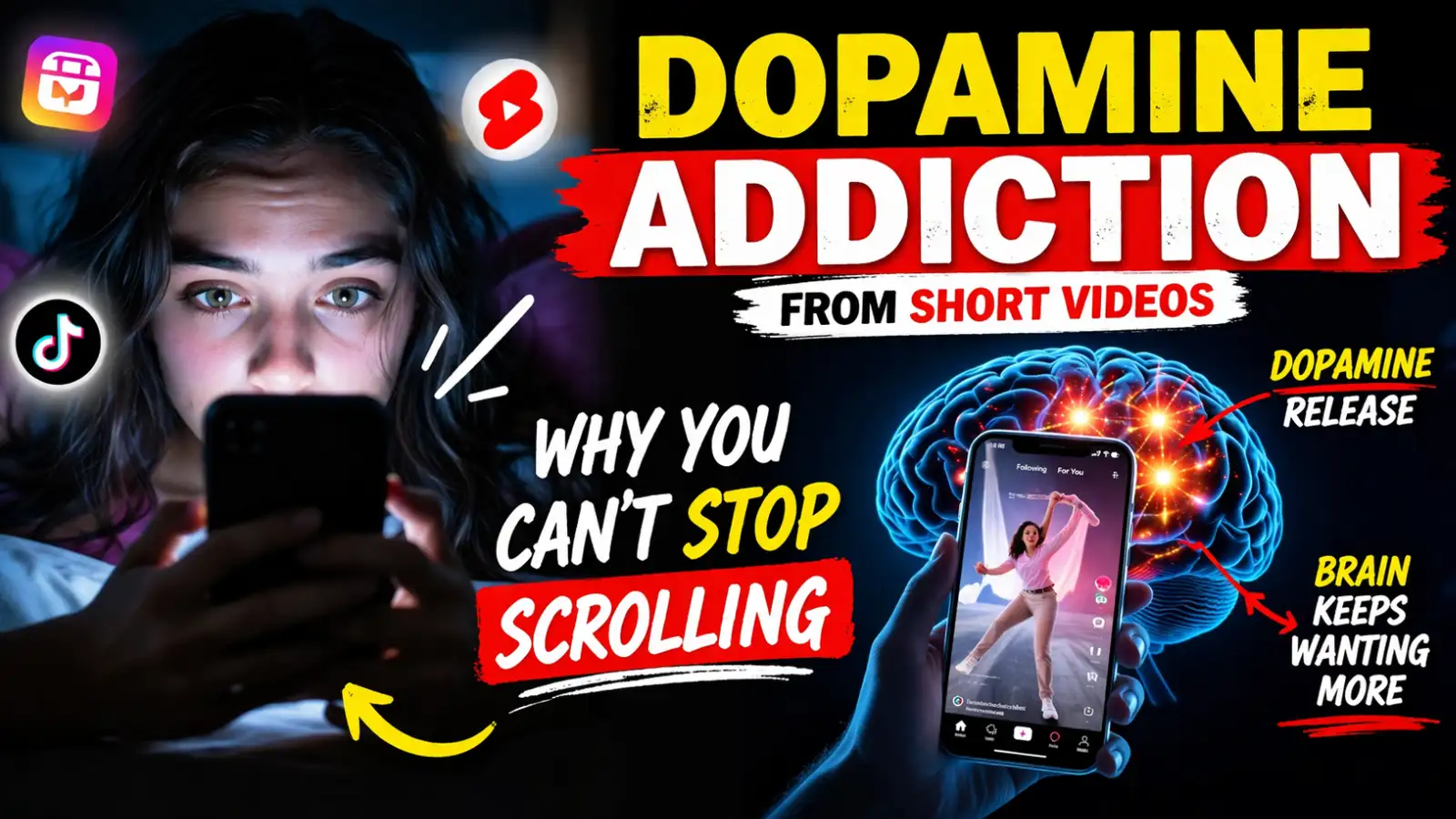
Short video platforms have quietly reshaped how we consume content. They are fast, engaging, and designed to keep you hooked. The real driver behind this behavior is dopamine, a powerful chemical in your brain that influences motivation, pleasure, and reward. When short videos constantly trigger this system, it can slowly turn into a habit that feels very hard to control.
Understanding this pattern is important because it affects focus, productivity, sleep, and even emotional well-being. This is not just about entertainment anymore. It is about how your brain is being trained every single day.
Imagine how a dog reacts when it hears the sound of food being prepared. That excitement is not just hunger. It is anticipation. Similarly, your brain lights up when you expect something interesting, surprising, or rewarding.
Short videos are built around this anticipation. Each swipe carries the promise of something new. Something funny. Something shocking. Something emotionally engaging. Your brain starts craving that next moment even before it arrives.
Over time, this constant stimulation trains your brain to seek quick rewards rather than deeper, more meaningful experiences.
Each video is short enough to hold your attention without requiring effort. You do not need to think deeply or stay focused for long. The moment you feel bored, you swipe. This creates a cycle where your brain never experiences stillness.
Think about how a cat reacts to quick, moving objects. The sudden motion grabs attention instantly. Short videos operate in a similar way. They constantly provide new stimuli that keep your brain alert and engaged.
Another key factor is unpredictability. You never know what the next video will be. This randomness keeps your brain curious and hooked. It is the same mechanism that makes certain repetitive behaviors hard to stop.
This creates what is often called a feedback loop. You scroll, you get rewarded, and your brain encourages you to scroll again. Over time, this loop becomes automatic.
Even when the content is not particularly interesting, you may still continue scrolling. That is because your brain is not just looking for content anymore. It is looking for the possibility of reward.
A monkey, for instance, can stay engaged with repetitive actions if there is a chance of a reward. Humans are not very different in this regard. The brain is wired to keep seeking.
This is why stopping can feel surprisingly difficult. It is not about willpower alone. It is about breaking a deeply ingrained pattern.
When your brain gets used to rapid content, it starts struggling with anything that requires sustained focus. Reading a book, working on a project, or even having a long conversation can feel more difficult.
Your brain begins to expect constant stimulation. Without it, things may feel dull or slow.
Consider how a rabbit stays alert to quick movements in its environment. That heightened sensitivity is useful for survival, but it does not support deep concentration. Similarly, your brain becomes tuned to fast changes instead of steady focus.
This shift can quietly affect productivity and learning over time.
Constant exposure to fast-paced content can make real life seem less exciting. Everyday moments may feel slower in comparison. This can lead to restlessness and dissatisfaction.
There is also the issue of overstimulation. When your brain is constantly flooded with content, it gets less time to rest. This can contribute to mental fatigue.
Even a lion, known for its power and focus, spends long periods resting between bursts of activity. The brain needs similar balance. Without it, energy levels and emotional stability can decline.
Over time, this pattern can affect mood, sleep, and overall well-being.
The absence of a clear stopping point plays a big role. Unlike a movie or a book, there is no natural end. The content just keeps going.
Your brain also develops a habit. The more you repeat a behavior, the stronger the neural pathways become. Eventually, picking up your phone and scrolling becomes almost automatic.
A horse trained through repetition learns patterns that become second nature. In the same way, your brain learns to associate idle moments with scrolling.
Breaking this habit requires conscious effort and awareness.
Start by becoming aware of your habits. Notice when and why you reach for your phone. Is it boredom, stress, or simply routine?
Creating small barriers can help. Keeping your phone out of reach during work or setting time limits can make a difference.
Replacing the habit is also important. When you reduce one behavior, it helps to introduce another. Activities that require focus and engagement can gradually retrain your brain.
A turtle moves slowly but steadily, showing that progress does not have to be fast to be meaningful. Rebuilding attention takes time, but it is possible.
The goal is not to eliminate them completely but to use them more intentionally. When you choose when and how to engage, you shift from being controlled to being in control.
Setting boundaries, taking breaks, and prioritizing deeper activities can help restore balance.
Your brain thrives on variety. It needs both stimulation and rest. Finding that balance is key to long-term well-being.
Short video platforms have quietly reshaped how we consume content. They are fast, engaging, and designed to keep you hooked. The real driver behind this behavior is dopamine, a powerful chemical in your brain that influences motivation, pleasure, and reward. When short videos constantly trigger this system, it can slowly turn into a habit that feels very hard to control.
Understanding this pattern is important because it affects focus, productivity, sleep, and even emotional well-being. This is not just about entertainment anymore. It is about how your brain is being trained every single day.
What Is Dopamine and Why It Matters
Dopamine is often called the "feel good" chemical, but that description only scratches the surface. It is not just about pleasure. It is about anticipation, motivation, and reward. Your brain releases dopamine when it expects something enjoyable.Imagine how a dog reacts when it hears the sound of food being prepared. That excitement is not just hunger. It is anticipation. Similarly, your brain lights up when you expect something interesting, surprising, or rewarding.
Short videos are built around this anticipation. Each swipe carries the promise of something new. Something funny. Something shocking. Something emotionally engaging. Your brain starts craving that next moment even before it arrives.
Over time, this constant stimulation trains your brain to seek quick rewards rather than deeper, more meaningful experiences.
Why Short Videos Are So Addictive
Short videos are designed in a way that perfectly matches how your brain works. They are fast, unpredictable, and endless. This combination is powerful.Each video is short enough to hold your attention without requiring effort. You do not need to think deeply or stay focused for long. The moment you feel bored, you swipe. This creates a cycle where your brain never experiences stillness.
Think about how a cat reacts to quick, moving objects. The sudden motion grabs attention instantly. Short videos operate in a similar way. They constantly provide new stimuli that keep your brain alert and engaged.
Another key factor is unpredictability. You never know what the next video will be. This randomness keeps your brain curious and hooked. It is the same mechanism that makes certain repetitive behaviors hard to stop.
The Loop of Endless Scrolling
Once you start scrolling, your brain enters a loop. Each video delivers a small dopamine hit. Not too much, but just enough to keep you going.This creates what is often called a feedback loop. You scroll, you get rewarded, and your brain encourages you to scroll again. Over time, this loop becomes automatic.
Even when the content is not particularly interesting, you may still continue scrolling. That is because your brain is not just looking for content anymore. It is looking for the possibility of reward.
A monkey, for instance, can stay engaged with repetitive actions if there is a chance of a reward. Humans are not very different in this regard. The brain is wired to keep seeking.
This is why stopping can feel surprisingly difficult. It is not about willpower alone. It is about breaking a deeply ingrained pattern.
Impact on Focus and Attention
One of the biggest effects of dopamine addiction from short videos is reduced attention span.When your brain gets used to rapid content, it starts struggling with anything that requires sustained focus. Reading a book, working on a project, or even having a long conversation can feel more difficult.
Your brain begins to expect constant stimulation. Without it, things may feel dull or slow.
Consider how a rabbit stays alert to quick movements in its environment. That heightened sensitivity is useful for survival, but it does not support deep concentration. Similarly, your brain becomes tuned to fast changes instead of steady focus.
This shift can quietly affect productivity and learning over time.
Emotional and Mental Effects
Dopamine addiction does not just affect focus. It also impacts how you feel.Constant exposure to fast-paced content can make real life seem less exciting. Everyday moments may feel slower in comparison. This can lead to restlessness and dissatisfaction.
There is also the issue of overstimulation. When your brain is constantly flooded with content, it gets less time to rest. This can contribute to mental fatigue.
Even a lion, known for its power and focus, spends long periods resting between bursts of activity. The brain needs similar balance. Without it, energy levels and emotional stability can decline.
Over time, this pattern can affect mood, sleep, and overall well-being.
Why It Feels Hard to Stop
If you have ever tried to limit your screen time and found it difficult, you are not alone. The design of short video platforms makes stopping feel unnatural.The absence of a clear stopping point plays a big role. Unlike a movie or a book, there is no natural end. The content just keeps going.
Your brain also develops a habit. The more you repeat a behavior, the stronger the neural pathways become. Eventually, picking up your phone and scrolling becomes almost automatic.
A horse trained through repetition learns patterns that become second nature. In the same way, your brain learns to associate idle moments with scrolling.
Breaking this habit requires conscious effort and awareness.
Reclaiming Control Over Your Attention
The good news is that this pattern can be changed. Your brain is adaptable. With small adjustments, you can regain control.Start by becoming aware of your habits. Notice when and why you reach for your phone. Is it boredom, stress, or simply routine?
Creating small barriers can help. Keeping your phone out of reach during work or setting time limits can make a difference.
Replacing the habit is also important. When you reduce one behavior, it helps to introduce another. Activities that require focus and engagement can gradually retrain your brain.
A turtle moves slowly but steadily, showing that progress does not have to be fast to be meaningful. Rebuilding attention takes time, but it is possible.
Building a Healthier Relationship with Content
Short videos are not inherently bad. The issue arises when consumption becomes excessive and uncontrolled.The goal is not to eliminate them completely but to use them more intentionally. When you choose when and how to engage, you shift from being controlled to being in control.
Setting boundaries, taking breaks, and prioritizing deeper activities can help restore balance.
Your brain thrives on variety. It needs both stimulation and rest. Finding that balance is key to long-term well-being.
Next Story