
Google's $15B data centre in Vizag to host 5-GW capacity


Google Cloud's upcoming $15 billion artificial intelligence (AI) ready data centre in Vishakhapatnam will host capacity going up to 5 gigawatts (GW), CEO Thomas Kurian told ET on Thursday. While the company has till now only maintained the upcoming AI hub will be 'gigawatt scale', a 5 GW capacity is much more than India's current total data centre capacity which was 1.5 GW as of 2025-end, according to official figures.
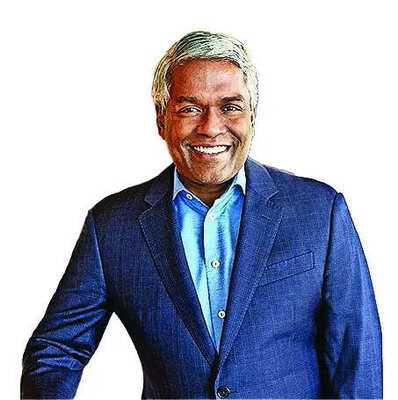
Speaking on the sidelines of the ongoing Google Cloud Next 2026 annual summit here, Kurian told a select media roundtable that the upcoming campus will have multiple data centres. "And then, that goes up to 5 GW. That is a very, very large campus," he said.
Set to be made over five years (2026-2030), the investment is Google’s largest investment in India to date, and the single largest investment by the tech major outside the US.
When operational, the new data centre campus will join Google’s network of existing AI data centres that span 12 countries. Google Cloud can transfer workflows between the centres in times of crisis, doing so most recently after the outbreak of hostilities in the Middle East.
Asked how India's move towards data localisation impacts the potential free flow of data between Google Cloud data centres, Kurian pointed out governments have waived data localisation mandates during the moment of crisis.
"If you look at the Middle East during the crises, the government did give companies, particularly critical infrastructure companies like banks or utilities or others that may be at risk from an external attack, the freedom to move their information and put it in multiple places," Kurian said.
However, he pointed out that data will be easily copied and stored across the company's multiple cloud regions in Mumbai (asia-south1) and Delhi (asia-south2) during a hypothetical moment of crisis, considering these are homogenous. "In a crisis, you can replicate from any of these to any of the other ones within India," Kurian said.
While the Digital Personal Data Protection (DPDP) Act, 2023 and its subsequent rules generally allows cross-border data flows to facilitate global trade, it also empowers the Centre under Section 16 to restrict transfers to specific "blacklisted" countries or territories.
Kurian expressed confidence in Google Cloud's ability to monetise the investments being made in AI. Case in point, he said, was API throughput, or the volume of 'AI brainpower' customers are buying to run their own apps, which have seen a sharp increase in recent months.
"Between December and March, there has been an increase from 10 billion tokens a minute to 16 billion tokens a minute. That's a 50% increase in 3 months," he said. The company's Gemini tokens are the fundamental units of text, images, or audio (typically ~4 characters per token) that models process as input prompts or generate as output.
On how the company is prioritising the allocation of compute capacities, Kurian said global demand is outstripping supply. "We have dedicated demand locations and are constantly measuring and trying to meet it.
(The writer is at Google Cloud Next 2026 in Las Vegas at the invitation of Google.)
Speaking on the sidelines of the ongoing Google Cloud Next 2026 annual summit here, Kurian told a select media roundtable that the upcoming campus will have multiple data centres. "And then, that goes up to 5 GW. That is a very, very large campus," he said.
Set to be made over five years (2026-2030), the investment is Google’s largest investment in India to date, and the single largest investment by the tech major outside the US.
When operational, the new data centre campus will join Google’s network of existing AI data centres that span 12 countries. Google Cloud can transfer workflows between the centres in times of crisis, doing so most recently after the outbreak of hostilities in the Middle East.
Asked how India's move towards data localisation impacts the potential free flow of data between Google Cloud data centres, Kurian pointed out governments have waived data localisation mandates during the moment of crisis.
"If you look at the Middle East during the crises, the government did give companies, particularly critical infrastructure companies like banks or utilities or others that may be at risk from an external attack, the freedom to move their information and put it in multiple places," Kurian said.
However, he pointed out that data will be easily copied and stored across the company's multiple cloud regions in Mumbai (asia-south1) and Delhi (asia-south2) during a hypothetical moment of crisis, considering these are homogenous. "In a crisis, you can replicate from any of these to any of the other ones within India," Kurian said.
While the Digital Personal Data Protection (DPDP) Act, 2023 and its subsequent rules generally allows cross-border data flows to facilitate global trade, it also empowers the Centre under Section 16 to restrict transfers to specific "blacklisted" countries or territories.
Kurian expressed confidence in Google Cloud's ability to monetise the investments being made in AI. Case in point, he said, was API throughput, or the volume of 'AI brainpower' customers are buying to run their own apps, which have seen a sharp increase in recent months.
"Between December and March, there has been an increase from 10 billion tokens a minute to 16 billion tokens a minute. That's a 50% increase in 3 months," he said. The company's Gemini tokens are the fundamental units of text, images, or audio (typically ~4 characters per token) that models process as input prompts or generate as output.
On how the company is prioritising the allocation of compute capacities, Kurian said global demand is outstripping supply. "We have dedicated demand locations and are constantly measuring and trying to meet it.
(The writer is at Google Cloud Next 2026 in Las Vegas at the invitation of Google.)
Next Story