
Why Using One Phone Number Everywhere Can Be Dangerous

A new app asks for your number. A shopping website wants quick verification. A bank account needs alerts. A social media platform asks for recovery access. A delivery service wants updates. And almost every time, we type in the same ten digits.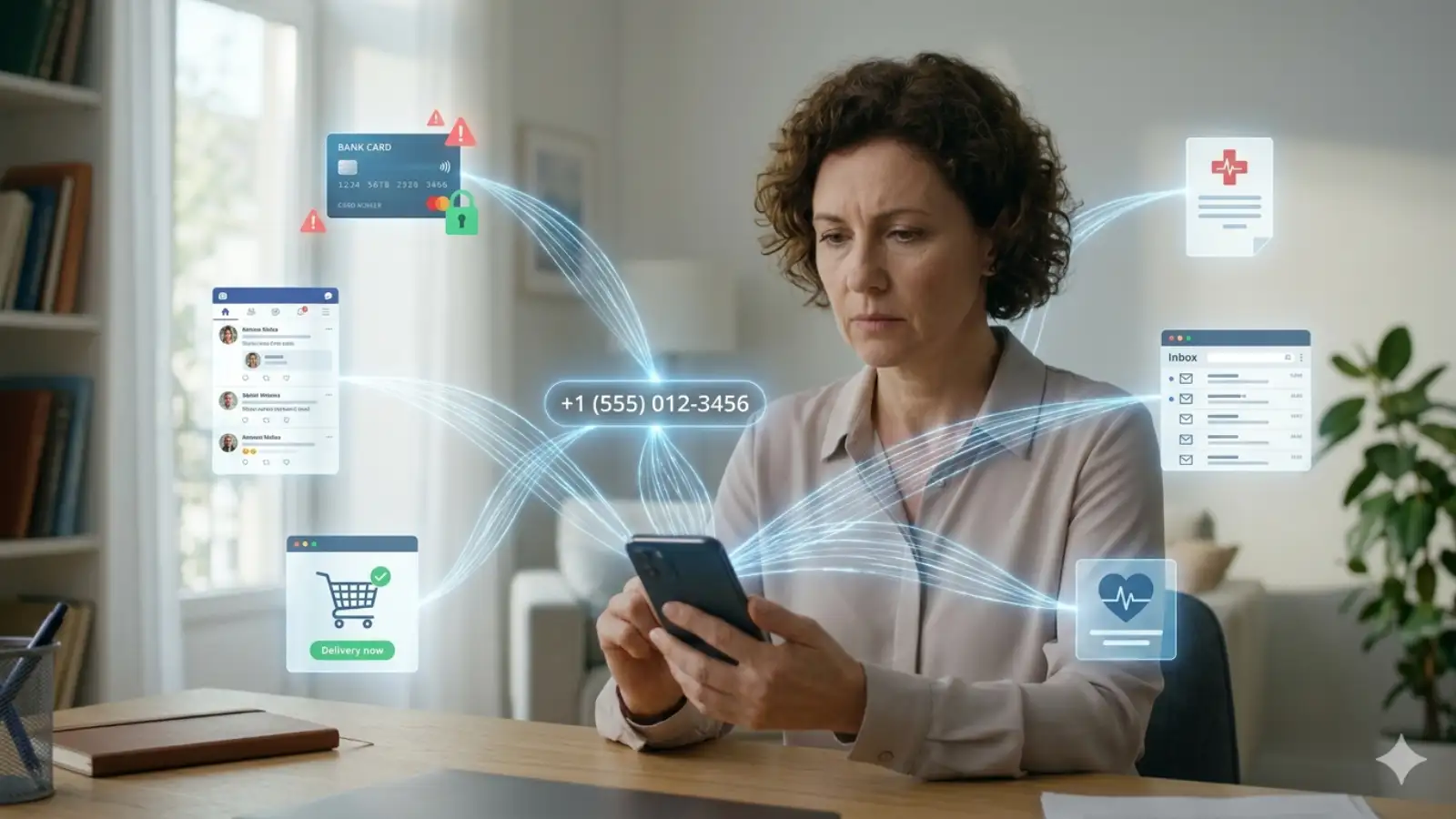
It feels harmless. In fact, it feels practical.
Your phone number has slowly become the master key to modern life. It opens doors, confirms identity, resets passwords, receives one-time passwords, and helps services recognize you instantly. It is simple, fast, and familiar.
But hidden inside that convenience is a problem many people do not notice until it becomes difficult to ignore.
Using the same phone number for everything creates a quiet digital trail. It connects parts of your life that were never meant to be tied together so closely. Work, shopping, finances, entertainment, social conversations, and private accounts can all begin to orbit around one single identifier.
That might not sound alarming at first. But when one small piece of information becomes the center of your entire digital identity , it starts carrying more weight than most people realize.
Like a deer moving through a forest, you may feel invisible. But every step leaves a trace.
This is why phone number privacy matters more today than it did a few years ago.
Now it does much more.
It has become a universal digital shortcut. Instead of creating usernames or remembering separate credentials, many services use mobile verification as the fastest way to identify you. It feels secure because the number seems personal. It feels trustworthy because it belongs to you.
But from a privacy standpoint, that is exactly what makes it powerful.
Unlike a password, most people keep the same number for years. Unlike an email address, people often hesitate to change it. That stability makes it valuable.
Your number becomes a kind of permanent label.
Once dozens of apps, websites, and services attach themselves to that label, your digital identity becomes more connected than you probably intended.
That is where the hidden phone number risk begins.
One room holds your finances. Another holds personal chats. Another contains work conversations. Another tracks purchases, subscriptions, travel bookings, and daily habits.
Ideally, those rooms stay somewhat separate.
But when every room uses the same phone number, the walls start getting thinner.
A single identifier can link activities across different platforms. That means companies may find it easier to recognize patterns, match profiles, and understand more about you than you knowingly shared.
It does not always happen in an obvious way. That is why people often overlook it.
You may sign up for something small and forget about it. Months later, that same number may help connect your activity somewhere else. Little by little, your number becomes a bridge between pieces of your life that once felt unrelated.
Like a fox slipping quietly between shadows, this connection often moves unnoticed.
And that is the real issue. Not drama. Not panic. Just silent accumulation.
When too much depends on one thing, that one thing becomes incredibly important.
If your phone number is linked to account recovery, login verification, banking alerts, and personal identity checks, then losing control of it can create a chain reaction.
This does not always mean something dramatic has happened. Sometimes it is much more ordinary.
A number changes. A SIM stops working. A device is lost. An old account is forgotten. A service still holds outdated information. Suddenly, access becomes harder than expected.
Because the same number is tied to so many services, a small disruption can spread.
Think of it less like losing a key and more like discovering the same key opened every door in the house.
That is why mobile verification is useful, but it should not become the only pillar holding up your digital security.
It is not.
A number can quietly reveal identity, location patterns, long-term usage habits, and connections between accounts. Even when platforms do not openly display this information, the number itself can still act as a useful linking tool.
This is especially important in an age where digital identity is built through fragments.
One app knows when you shop. Another knows where you travel. Another knows when you log in. Another knows how often you engage. If they all rely on the same number, that number becomes the thread.
People often worry about passwords, but overlook phone number privacy.
That is understandable. A password feels sensitive. A number feels ordinary.
But ordinary information can become powerful when it appears everywhere.
A rabbit leaves small footprints. One set means little. Hundreds create a trail.
A phone number feels personal. It feels familiar. You have probably known it for years. You may even remember it better than your own email address.
Because it feels familiar, it feels safe.
That sense of comfort makes people less cautious. They share it faster. They type it without thinking. They hand it over because it feels routine.
And routine rarely feels risky.
But many digital privacy concerns are built exactly this way. Not through one major mistake, but through small repeated habits.
That is why digital security is often less about fear and more about awareness.
Not every request for your number is dangerous. But not every request truly needs it either.
That small pause matters.
It is accumulation over time.
Years pass. You forget how many places have your number. Old apps remain dormant. Unused websites still store your information. Accounts you barely remember still connect back to the same identity marker.
Your current life and your past digital behavior remain linked.
That can make digital cleanup surprisingly difficult.
Even people who care deeply about online privacy often discover how hard it is to untangle years of habits.
This is where the problem becomes real.
Not because something immediately goes wrong, but because the longer one number becomes your universal identity, the harder it becomes to separate anything later.
Like an owl watching from a branch, the internet has a long memory.
That is what better online privacy really looks like. Not secrecy. Just smarter boundaries.
It feels harmless. In fact, it feels practical.
Your phone number has slowly become the master key to modern life. It opens doors, confirms identity, resets passwords, receives one-time passwords, and helps services recognize you instantly. It is simple, fast, and familiar.
But hidden inside that convenience is a problem many people do not notice until it becomes difficult to ignore.
Using the same phone number for everything creates a quiet digital trail. It connects parts of your life that were never meant to be tied together so closely. Work, shopping, finances, entertainment, social conversations, and private accounts can all begin to orbit around one single identifier.
That might not sound alarming at first. But when one small piece of information becomes the center of your entire digital identity , it starts carrying more weight than most people realize.
Like a deer moving through a forest, you may feel invisible. But every step leaves a trace.
This is why phone number privacy matters more today than it did a few years ago.
Why Your Phone Number Became So Important
Years ago, a phone number was mainly for calls and messages.Now it does much more.
It has become a universal digital shortcut. Instead of creating usernames or remembering separate credentials, many services use mobile verification as the fastest way to identify you. It feels secure because the number seems personal. It feels trustworthy because it belongs to you.
But from a privacy standpoint, that is exactly what makes it powerful.
Unlike a password, most people keep the same number for years. Unlike an email address, people often hesitate to change it. That stability makes it valuable.
Your number becomes a kind of permanent label.
Once dozens of apps, websites, and services attach themselves to that label, your digital identity becomes more connected than you probably intended.
That is where the hidden phone number risk begins.
One Number Quietly Connects Every Part of Your Life
Imagine your digital life as a collection of separate rooms.One room holds your finances. Another holds personal chats. Another contains work conversations. Another tracks purchases, subscriptions, travel bookings, and daily habits.
Ideally, those rooms stay somewhat separate.
But when every room uses the same phone number, the walls start getting thinner.
A single identifier can link activities across different platforms. That means companies may find it easier to recognize patterns, match profiles, and understand more about you than you knowingly shared.
It does not always happen in an obvious way. That is why people often overlook it.
You may sign up for something small and forget about it. Months later, that same number may help connect your activity somewhere else. Little by little, your number becomes a bridge between pieces of your life that once felt unrelated.
Like a fox slipping quietly between shadows, this connection often moves unnoticed.
And that is the real issue. Not drama. Not panic. Just silent accumulation.
Convenience Can Create a Security Weak Spot
The biggest problem with relying on one number everywhere is concentration.When too much depends on one thing, that one thing becomes incredibly important.
If your phone number is linked to account recovery, login verification, banking alerts, and personal identity checks, then losing control of it can create a chain reaction.
This does not always mean something dramatic has happened. Sometimes it is much more ordinary.
A number changes. A SIM stops working. A device is lost. An old account is forgotten. A service still holds outdated information. Suddenly, access becomes harder than expected.
Because the same number is tied to so many services, a small disruption can spread.
Think of it less like losing a key and more like discovering the same key opened every door in the house.
That is why mobile verification is useful, but it should not become the only pillar holding up your digital security.
Your Number Reveals More Than You Think
Many people think a phone number is just contact information.It is not.
A number can quietly reveal identity, location patterns, long-term usage habits, and connections between accounts. Even when platforms do not openly display this information, the number itself can still act as a useful linking tool.
This is especially important in an age where digital identity is built through fragments.
One app knows when you shop. Another knows where you travel. Another knows when you log in. Another knows how often you engage. If they all rely on the same number, that number becomes the thread.
People often worry about passwords, but overlook phone number privacy.
That is understandable. A password feels sensitive. A number feels ordinary.
But ordinary information can become powerful when it appears everywhere.
A rabbit leaves small footprints. One set means little. Hundreds create a trail.
Why It Feels Safe Even When It Is Not
Part of the reason this problem stays hidden is psychological.A phone number feels personal. It feels familiar. You have probably known it for years. You may even remember it better than your own email address.
Because it feels familiar, it feels safe.
That sense of comfort makes people less cautious. They share it faster. They type it without thinking. They hand it over because it feels routine.
And routine rarely feels risky.
But many digital privacy concerns are built exactly this way. Not through one major mistake, but through small repeated habits.
That is why digital security is often less about fear and more about awareness.
Not every request for your number is dangerous. But not every request truly needs it either.
That small pause matters.
The Long-Term Problem Nobody Thinks About
The hidden issue with using one number everywhere is not just today.It is accumulation over time.
Years pass. You forget how many places have your number. Old apps remain dormant. Unused websites still store your information. Accounts you barely remember still connect back to the same identity marker.
Your current life and your past digital behavior remain linked.
That can make digital cleanup surprisingly difficult.
Even people who care deeply about online privacy often discover how hard it is to untangle years of habits.
This is where the problem becomes real.
Not because something immediately goes wrong, but because the longer one number becomes your universal identity, the harder it becomes to separate anything later.
Like an owl watching from a branch, the internet has a long memory.
A Better Way to Think About Phone Number Privacy
- The smartest approach is not panic.
- It is intentionality.
- Treat your phone number like an important personal identifier, not just a casual form field.
- Before sharing it, ask a simple question: does this service genuinely need it?
- That question alone changes how you interact online.
- The goal is not to disappear from the digital world. That is unrealistic. The goal is to reduce unnecessary connections.
- The fewer places that rely on the same identifier, the less tightly your digital life gets stitched together.
That is what better online privacy really looks like. Not secrecy. Just smarter boundaries.
Next Story